

Operated crane lifts for Centralia and Chehalis port parks and neighborhoods, plus steel buildings framed, closed in, and finished on one contract.
Crane service in Centralia and Chehalis covers the industrial parks in both port districts and the streets of both towns, and the steel buildings on that ground go up under a Westmore commercial construction contract. Inside the parks the work is warehouse and light-industrial: rooftop units set or swapped, structural steel picked into place, tanks and vaults rigged and landed. In the neighborhoods it is a spa, tub, or sauna cleared over a fence. Every quote prices the machine, its gear, and the certified operator as one item, and the class of crane follows the weight and the reach rather than the size of the company asking.
The first question on any street-side job here is which town the address falls in, because the two cities run separate desks. Centralia issues its own right-of-way permit; Chehalis handles construction, occupancy, and street-vacation right-of-way permits through Public Works. On port-owned ground inside either industrial park, access is arranged with that port instead of a city counter. Westmore determines which of the three applies and submits it. Give the tonnage, the height of the set, the street address, and one picture of the working area, and the permit path comes back alongside the pricing.
Most of the work between the two towns falls into three kinds of picks, and each starts with a different question about the site.
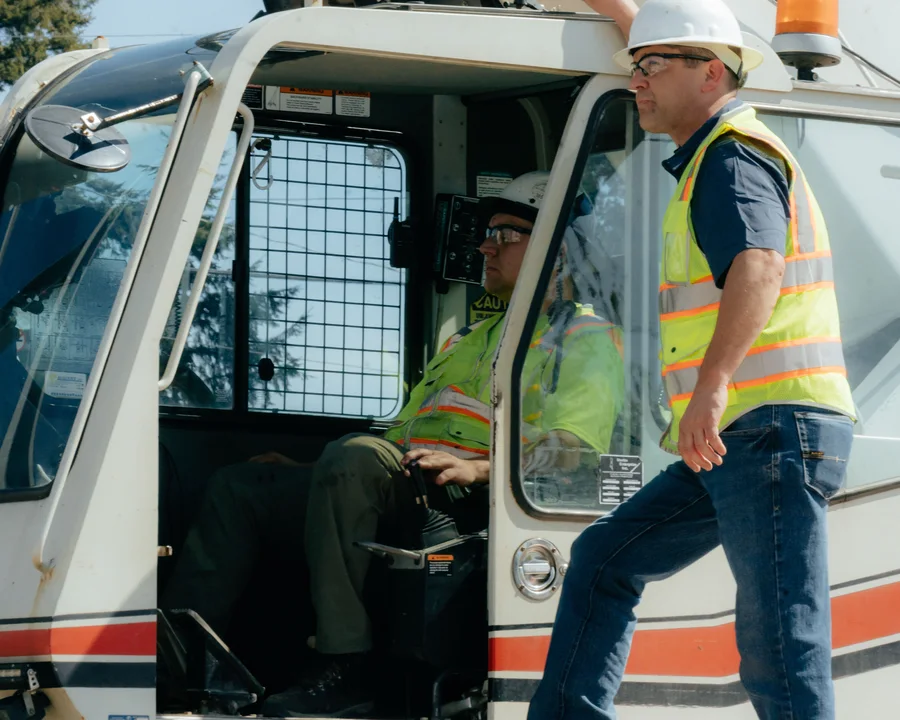
Structural steel, tanks, and precast vaults rigged and set inside the industrial parks of either port district.

A rooftop unit landed on a warehouse or light-industrial roof, sequenced with the mechanical contractor so the crane is not waiting on a crew.
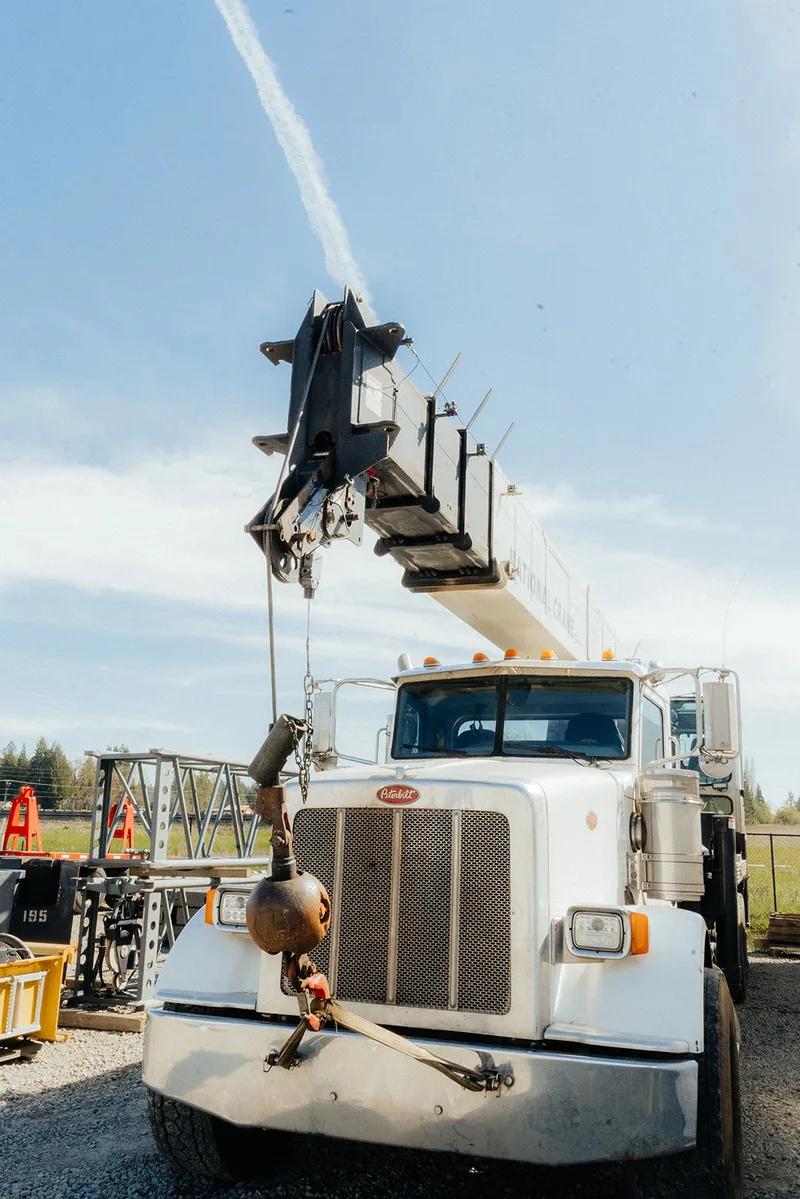
A hot tub or swim spa craned across the roof onto its pad, out at Fords Prairie the same as in either town.

A lift inside Park I or Park II at the Port of Centralia, or on the Port of Chehalis's own industrial ground, is not a city street job. Access, escort, and the working window come from the port and sometimes from the tenant on that lot, and who controls the gate varies by lot.
Westmore sorts out who controls the gate before the crane is loaded, because a machine turned away at a checkpoint burns the day either way. Give the park, the building or lot number, and the site contact who can authorize entry, and the crew arrives with the paperwork the gate expects rather than a phone call from the cab.
The setup ground inside these parks is usually generous, which is where the real advantage shows: a crane that can stand well back and reach in beats one squeezed alongside the building. Tell us how much yard sits beside the pick and the right class gets named rather than guessed high.

Book a lift here between November and March and the schedule gets built with slack in it. Westmore holds a two-day window rather than a single morning, so a saturated site or a wind hold moves the crane inside the booking instead of pushing it to the back of the calendar. The site contact who can authorize that move gets named when the date is set.
Ground gets the same treatment in those months. Soft yard, a saturated shoulder, or a gravel lane that held fine in August can all push a setup onto mats or move the machine to firmer ground. Tell Westmore what the site turns into when it rains and the pad plan is built for that day, not for the day of the site visit.
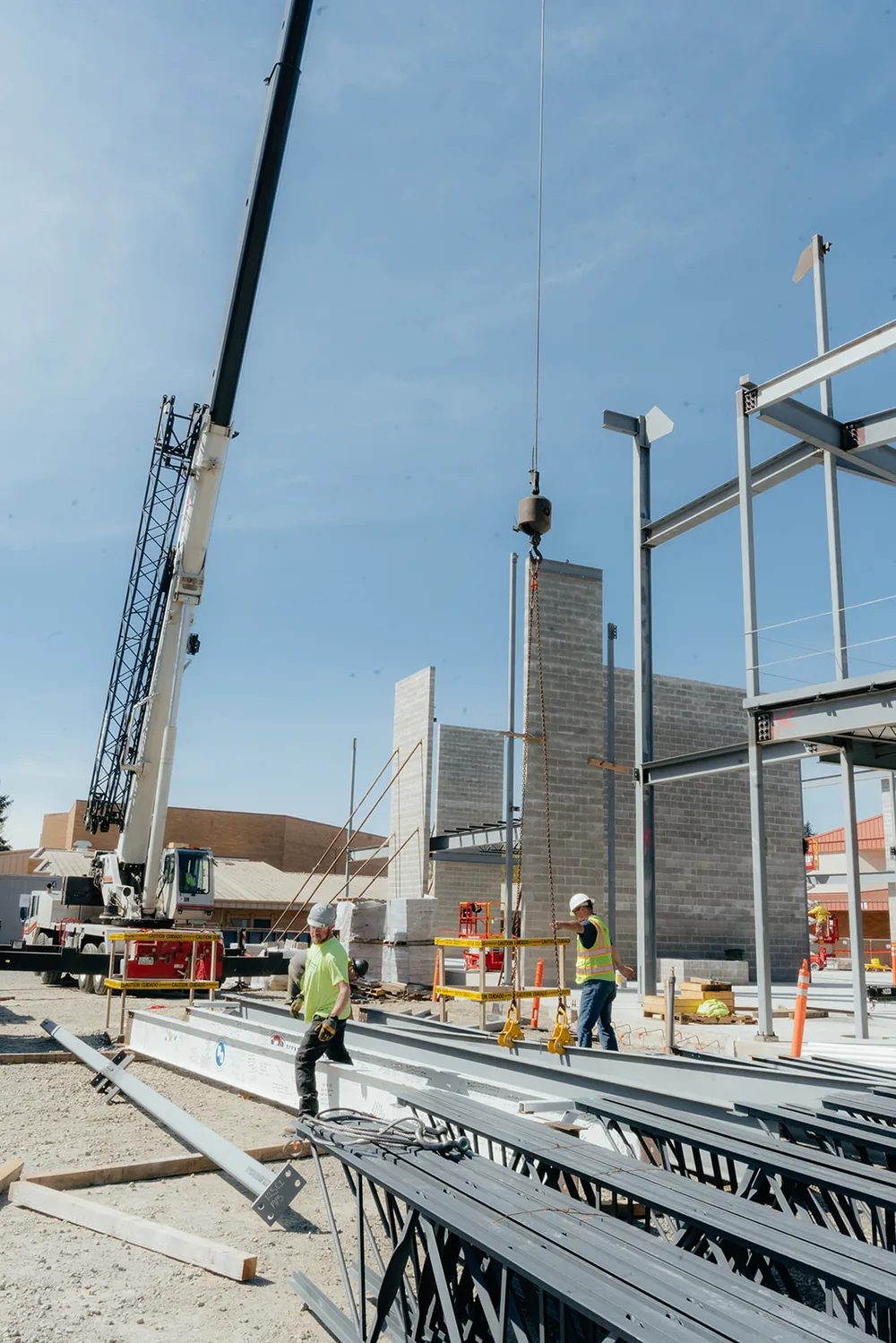
Steel buildings on this ground are industrial work: warehouse and light manufacturing shells inside the port parks, plus additions onto buildings a business has outgrown. Westmore raises the structure, closes it in, and puts the exterior finish on, with the columns stood by cranes it owns.
For a build rather than a single pick, the season runs the schedule the same way. Steel erection and the commercial general contracting around it both sit with one company here, so the frame, the panels, and the picks get sequenced against the weather instead of against three subcontractors.
A hot tub near Fords Prairie calls for the lighter end of that range, while a rooftop swap or a steel pick inside either port district's industrial park reaches toward the larger classes.
The right size for HVAC units, hot tubs and spas, beams, and tight residential or commercial sites where a bigger crane cannot set up.

The workhorse for steel erection, precast and tilt panels, transformers, vaults, and rooftop equipment on commercial jobs.

Heavy and long-reach picks: generators, large mechanical equipment, and lifts that have to clear a building from the street.
Call with the load weight, the address, and the date you have in mind, or send the basics below and we call back within 24 hours.
"Think Seal Team 6 of Crane Work! Westmore was able to scramble, rearrange their schedule and drive a Crane 15 hours across the state to get us out of a jam on Generator set for Walmart, highly recommend these Professionals"
Google review
"They were quick to help us with our project. Showed up when scheduled and filed the required paperwork for the job."
Google review
"Westmore Construction is amazing to work with. Nothing is to big or small for these guys. We have done a lot of projects with them and every time the project goes smoothly."
Google review
Yes, both cities and the Lewis County ground around them, including Fords Prairie. Two things govern the date: which crane class the load and the radius call for, and whether the setup borrows public right of way, since that application clears on the city's timeline rather than the jobsite's. A lift that never leaves private property carries only the first constraint. Send the street address, the pick weight, and the reach.
Yes, because they are two separate cities. Centralia issues street work permits through the city itself. Chehalis issues construction, occupancy, and vacation right-of-way permits through its Public Works Department under Chehalis Municipal Code Chapter 12.56. A lift kept entirely on private property in either city needs neither. The parcel, not the mailing address, decides which counter an application crosses.
The heaviest piece and the radius it has to travel decide it, across a 55 ton, a 100 ton, and a 350 ton machine. A crane gives up capacity as the boom lengthens and rises, so a beam one class could handle from beside the frame can need a bigger machine from across the lot. Soft or sloped ground moves it again, or puts the outriggers on mats.
There is no flat rate for a lift. The number follows the class the job needs, the radius, and how many hours the crew stays on site. Room for outriggers and swing changes how much of the day goes to setup, and a street permit brings its own cost and its own lead time. An operator and the rigging gear are included in the machine, not added later.
Yes. Westmore Construction holds Washington contractor license WESTMCL836OJ and carries $1 million in liability coverage, and every crane operator on the fleet is NCCCO certified. The same license stands behind commercial general contracting, the steel erection crews, and the exterior finishing on Lewis County jobs. Any contractor should be able to hand over that number and proof of coverage before work starts.
Level, compacted ground under the outriggers, wide enough for them to spread fully. Soft fill, wet clay, buried utilities, and septic lids all change where a machine can stand, and mats go under the pads when bearing is doubtful. Nothing energized can sit over the boom path, so overhead lines and tree limbs need flagging when the job is booked. A photo of the setup zone answers most of it.
Yes. A spa that cannot fit through a gate or around the side of a house goes over the roof line instead, lifted from the street or the driveway and set down on its pad. It goes out operated, with a certified operator and the slings the load needs. Send the dry weight, the spot the pad occupies, and a photo down the flight path.
A lift out at Fords Prairie books the way a job inside either city does, one crew and one quote.
Start with the weight, the reach, and which of the two cities or port districts the address falls in. One reply names the machine, the crew, and the permit path.
Battle Ground, WA
Fields marked * are required.
We call back within 24 hours. Prefer to talk? (360) 772-1040