

Operated crane lifts and steel buildings for Portland contractors, businesses, and homeowners, one company for the lift and the build.
Westmore runs two kinds of work for Portland customers: operated crane lifts, and the steel buildings its commercial construction division erects. On the crane side that means mechanical units set on a downtown or eastside roof, heavy machinery and structural members rigged into place inside the city's freight districts, and hot tubs and spas flown over a house into a backyard. On those jobs the machine, the rigging, and an NCCCO certified operator are a single line item, never three vendors. On the construction side one crew raises the frame and finishes the exterior, so a warehouse or shop owner hires a single company for the building and for the crane that puts it in the air.
Two things set the date on a Portland job. The first is paperwork. A lift that puts a load over a public street cannot be scheduled until the city signs off, and it is that approval, not the crane calendar, that usually decides which week the work lands in. Call before the equipment is ordered and the filing starts moving with the rest of the job. The second is what the machine can stand on. An open yard in the freight districts takes outriggers almost anywhere, an older eastside block leaves one workable position, and a steep driveway can change the class entirely. Give the crew the load weight, the reach it has to travel, and one photo of the spot where the crane would sit.
Six ways Portland contractors, building owners, and homeowners put the crane and construction crews to work.
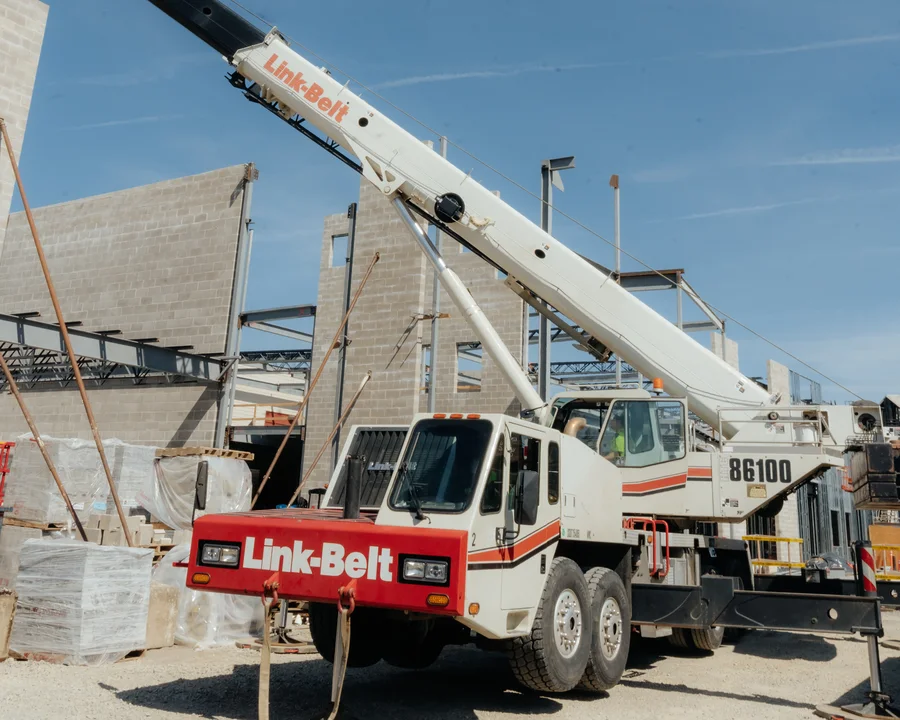
Operated lifts for Portland jobs, from a freight-district steel pick to a rooftop unit downtown to a spa over a back fence.

Warehouse, shop, and distribution frames erected and closed in for Portland commercial and industrial owners.

Mechanical contractors get the old unit off and the new one landed inside the closure window the block below allows.
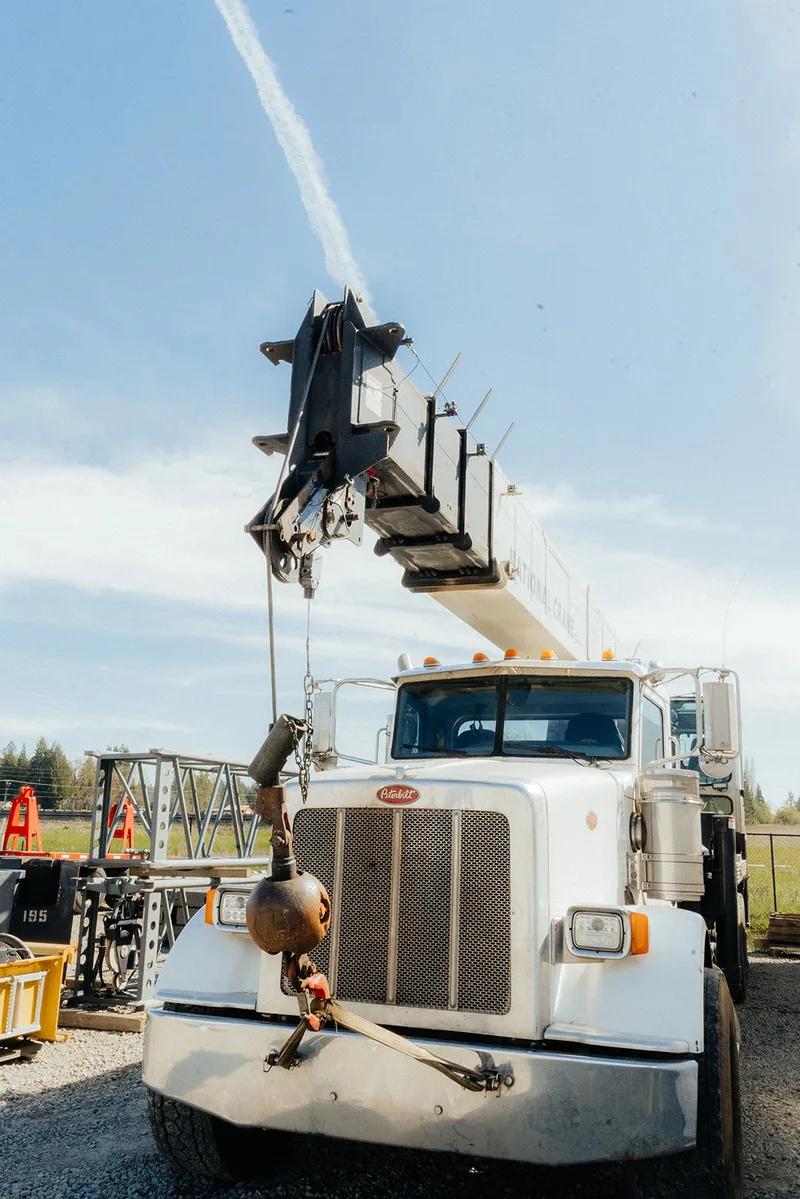
The spa comes down on its pad out back without a fence panel, a deck section, or a gate post coming out first.

Load charts, setup positions, and swing paths worked out on paper before a hard pick or a long reach gets a date.

Street use, right of way, and oversize transport paperwork filed by Westmore instead of left for the customer to chase.
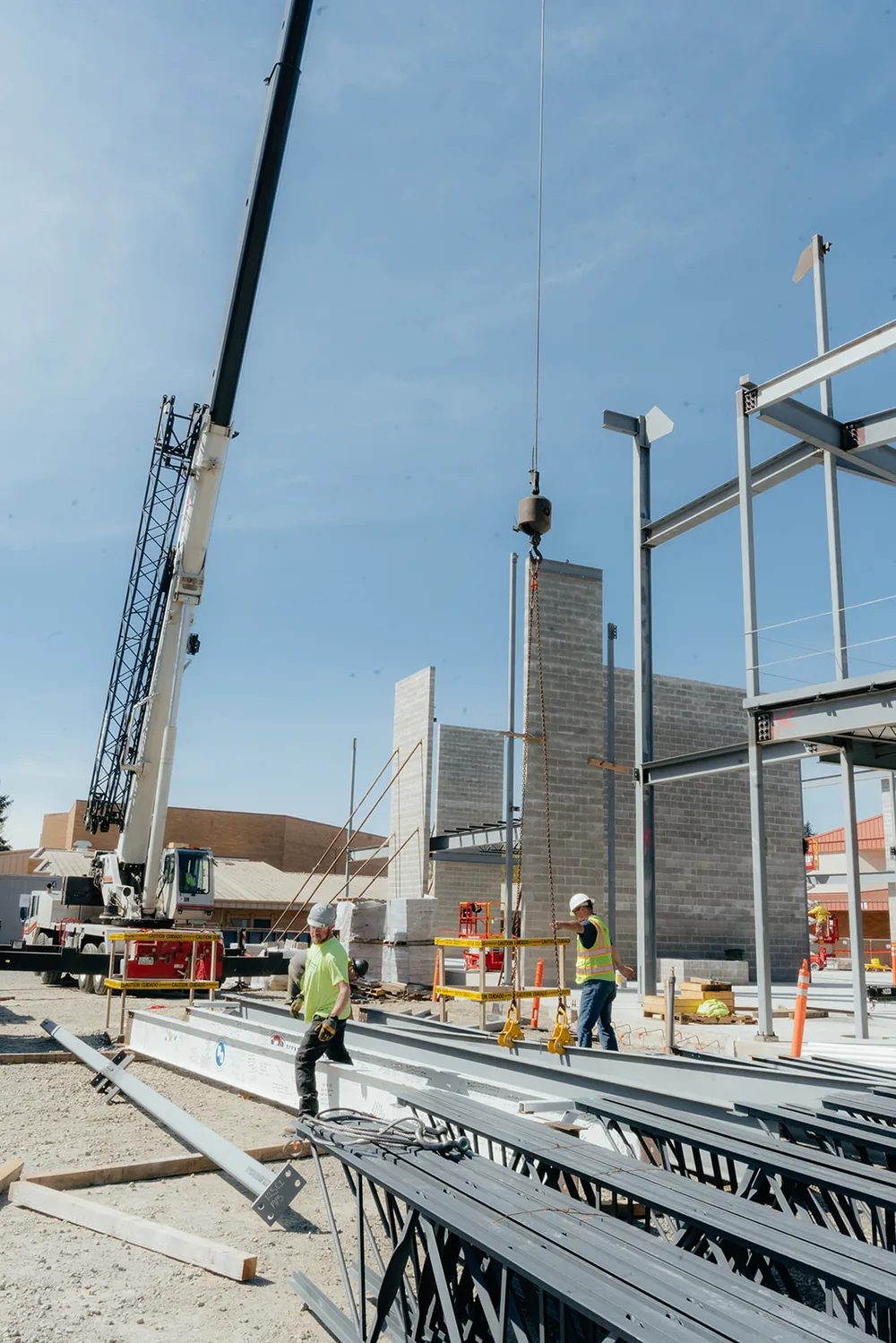
Most Portland steel work is warehouse, distribution, and light manufacturing space, and the industrial districts strung along the Columbia and out toward the airport hold the bulk of it. Buildings on that footprint get framed in steel rather than wood or masonry, which makes the early questions simple ones: clear span, eave height, and how many dock and drive-in openings the tenant actually needs. Bring those three plus the parcel address and a real scope comes back.
Westmore keeps the erection in house. The crew that raises columns and beams is the crew that hangs wall panels, sets the roof system, and trims out doors and glazing, so a Portland owner never hands a bare frame to a second contractor halfway through. Expect a site walk before any number, because the ground under the foundation and the room around it move a schedule further than the steel package does.
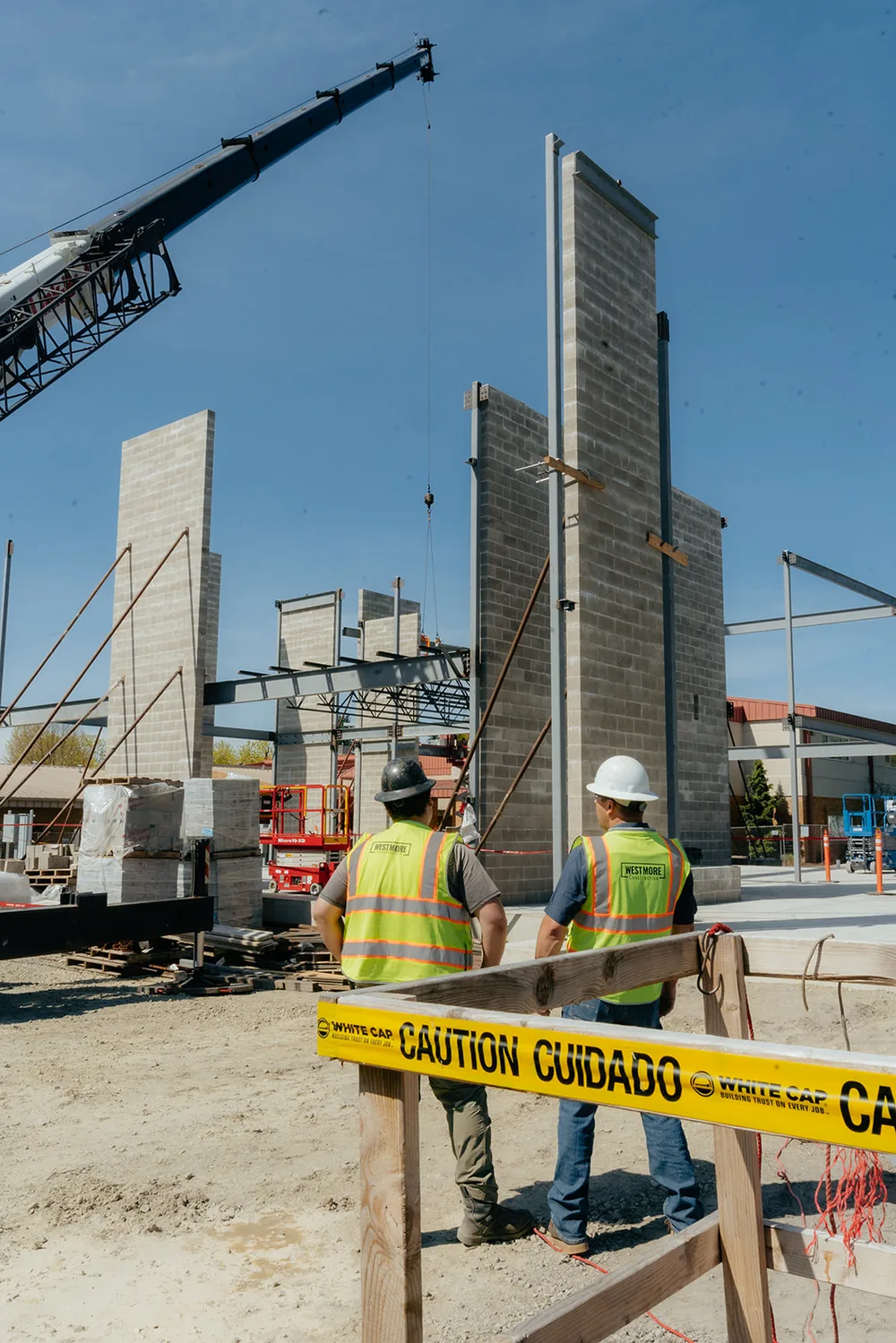
Portland callers split into two camps and Westmore quotes both. An owner who wants keys on a promised date buys the whole thing, steel and crane hours living inside a single schedule instead of arriving as separate orders from separate outfits. Say so at the start and the number comes back covering the structure through closeout.
A contractor who already controls a Portland site usually wants the other half. In that case the crane division sells the machine, the operator, and the gear on their own, dropped into somebody else's sequence for the day or the week the steel is in the air. Tell the crew which half you are buying when you call, and the quote comes back in the right shape the first time.

Portland's freight districts are the forgiving end of the work. Around Rivergate, a tilt-up or steel warehouse usually has yard enough to put outriggers down and swing without closing anything public, which keeps the job off the permit calendar and out of the queue that comes with it. Tell the crew the roof height and where a truck can back in, and the day gets planned in one call.
Swan Island is the heavier end. The ship repair yard there is routine ground for structural and equipment rigging, but everything in and out uses the Swan Island Bridge on North Going Street, an industrial arterial rather than a freeway ramp. Wide or tall components get their route confirmed before a trailer is loaded, so mention the dimensions of the piece when the job is booked, well ahead of the pick date.

Downtown blocks are small and a lot of the streets run one way, so a mobile crane rigging a high-rise rooftop unit is working in a footprint measured in parking spaces. That is why the street use permit and the traffic control plan get filed ahead of anything else. What costs people their preferred date is almost never crane availability, it is the lead time on that filing. Book the lift and the closure window together.
The Central Eastside behaves the same way on older industrial stock: a narrow grid, buildings that predate the equipment now going onto their roofs, and neighbors who need the lane back by a certain hour. The setup gets planned around the lane hours the permit allows. Send the roof height, the unit weight, and the nearest cross street to start that off.
One crane fleet, sized for a downtown rooftop unit or a 350-ton industrial pick, run by NCCCO certified operators.
The right size for HVAC units, hot tubs and spas, beams, and tight residential or commercial sites where a bigger crane cannot set up.

The workhorse for steel erection, precast and tilt panels, transformers, vaults, and rooftop equipment on commercial jobs.

Heavy and long-reach picks: generators, large mechanical equipment, and lifts that have to clear a building from the street.
Call with the load weight, the address, and the date you have in mind, or send the basics below and we call back within 24 hours.
"Fast to work with me when I had a short notice crane pick request for downtown Portland. Yikes. No problem for these guys. They nailed the permit, traffic, and planning submittals in no time... They were safe, they worked fast... From the big boy 350 Ton to little boy crane needs - they are our team now."
Google review
"This company does excellent crane work. I've worked with several crane companies in the past and none of them showed up as prepared as Westmore. Their crew had a great attitude, communicated well, and safely set our sign bridge in under an hour. I highly recommend Westmore Construction."
Google review
"Dan Tapani Excavating has had the pleasure of working with Westmore as a subcontractor on their commecial projects for a few years now. They are highly skilled, quality focused, and treat everyone fair. We hope to continue working with them for years to come!"
Google review
Both, under Oregon CCB 234945. Westmore works as a commercial general contractor and construction manager, self-performs steel erection and exterior finishing, and runs its own crane fleet with NCCCO certified operators. A Portland owner can hire the whole building, the steel package alone, or a single operated crane lift. The divisions share one schedule, so a project does not have to be split between a builder and a crane company.
Only when the crane touches public right of way. A lift that stays inside a private lot needs no city permit. The moment the machine, its outriggers, or its truck occupy a Portland street, sidewalk, or parking lane, the Bureau of Transportation requires a Temporary Street Use Permit, applied for through the city's TSUP program with a traffic control plan. Permit navigation is part of the crane service Westmore provides.
Yes, the whole city, from St. Johns and the Columbia Corridor over to Sellwood, Montavilla, and Lents. The date turns on which crane class the pick needs and whether a street use permit has to clear first, since that permit review has its own queue. A lift on private ground carries only the first constraint. Give the address, what the piece weighs, and how much boom the setup takes.
Yes, on both counts. Westmore holds Oregon CCB 234945 as a Level 1 commercial general contractor and Washington license WESTMCL836OJ, plus $1 million in liability coverage in each state. NCCCO certification covers every operator on the fleet. Ask any contractor for the license numbers and a certificate of insurance before work starts on your property.
Both, on the same fleet. Homeowners call for hot tubs, spas, saunas, and the occasional tree or shed too heavy to carry out. Those picks go out operated, with the rigging gear the load needs, exactly like a commercial job. The difference is the size of the load and the permits involved, not the crew that shows up.
The contractor carries the whole building, the erector carries the frame. As the commercial general contractor, Westmore signs the contract, pulls the permits, and carries the trades from site work through exterior finish. Hired as the erector, it sets the steel a manufacturer supplied and hands the shell to whoever runs the rest of the job. Portland customers hire Westmore both ways.
The weight of what is being lifted, the site address, and photos of where a crane can stand. Lift height and anything hanging over the boom path matter next, since a crane rates less the farther out it has to work. For a building, the engineered drawings and the parcel line carry the most information. A site walk usually follows, because access is what a lift quote is really pricing.
Every district on this list gets the same operators, the same machines, and the same permit handling.
Tell us the load, the parcel, or the scope you are pricing, and the job gets sized before anyone puts a price on it.
Battle Ground, WA
Fields marked * are required.
We call back within 24 hours. Prefer to talk? (360) 772-1040