

Seattle project teams get operated crane work and commercial steel erection from the firm that also carries the street permit.
Westmore works two Seattle markets that have almost nothing in common, and erects commercial steel buildings in both. Out in the industrial flats through SoDo, Georgetown, South Park and West Seattle, most sites have room for outriggers, so the puzzle is sequencing around rail spurs and truck movement rather than sidewalk width. Downtown and up on the hillsides everything gets solved from the street instead, because the load waits behind a facade or above a slope. The operator and the rigging gear come with the crane on either kind of job, and the machine is picked off weight and radius.
Settle who carries the permit before you settle a date. SDOT issues a Heavy Crane permit for staging a machine rated over 100 tons on public street right of way, after which the city puts that crane company itself on the application, with a certificate of insurance from the same firm. Other uses of the right of way still take a Street Use permit, and on an arterial the application arrives with a traffic control plan drawn for that specific block. Buildings are permitted separately by the Seattle Department of Construction and Inspections. Ground mapped for liquefaction, steep slope or landslide under the critical areas code requires a geotechnical report before any grading. Send the radius, the weight, and one picture taken from the intended setup spot.
Half of this list gets solved with yard room in the valley, and half of it gets solved from a closed lane or a hillside street.

Package units swapped out above an occupied building, with the arterial lane closure and the mechanical crew lined up for the same hour.
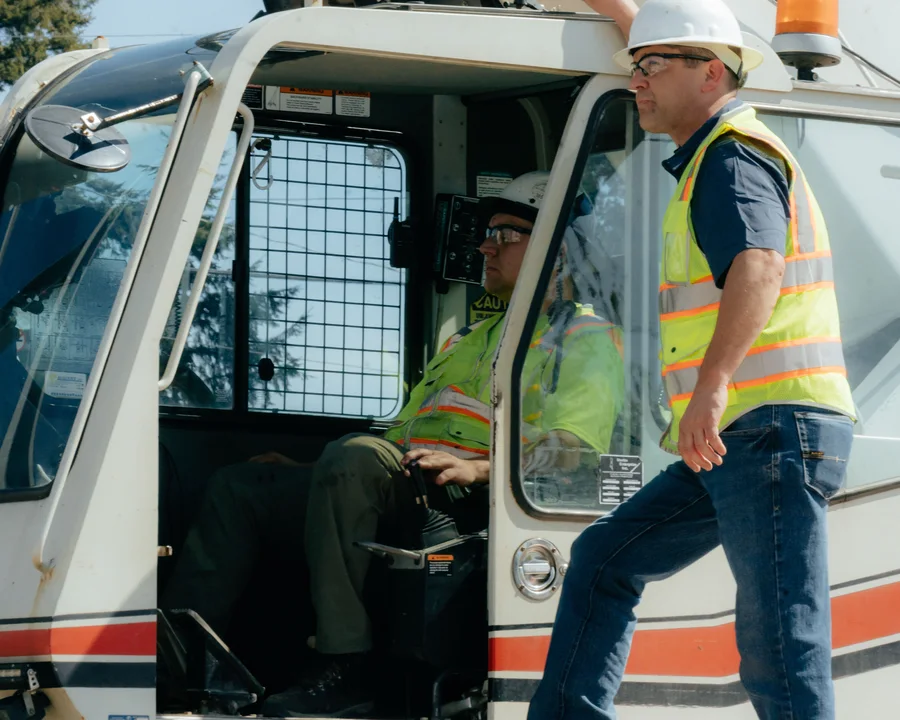
Heavy machinery, tanks and precast vaults set inside working industrial sites, with the pick threaded between rail spurs and moving trucks.
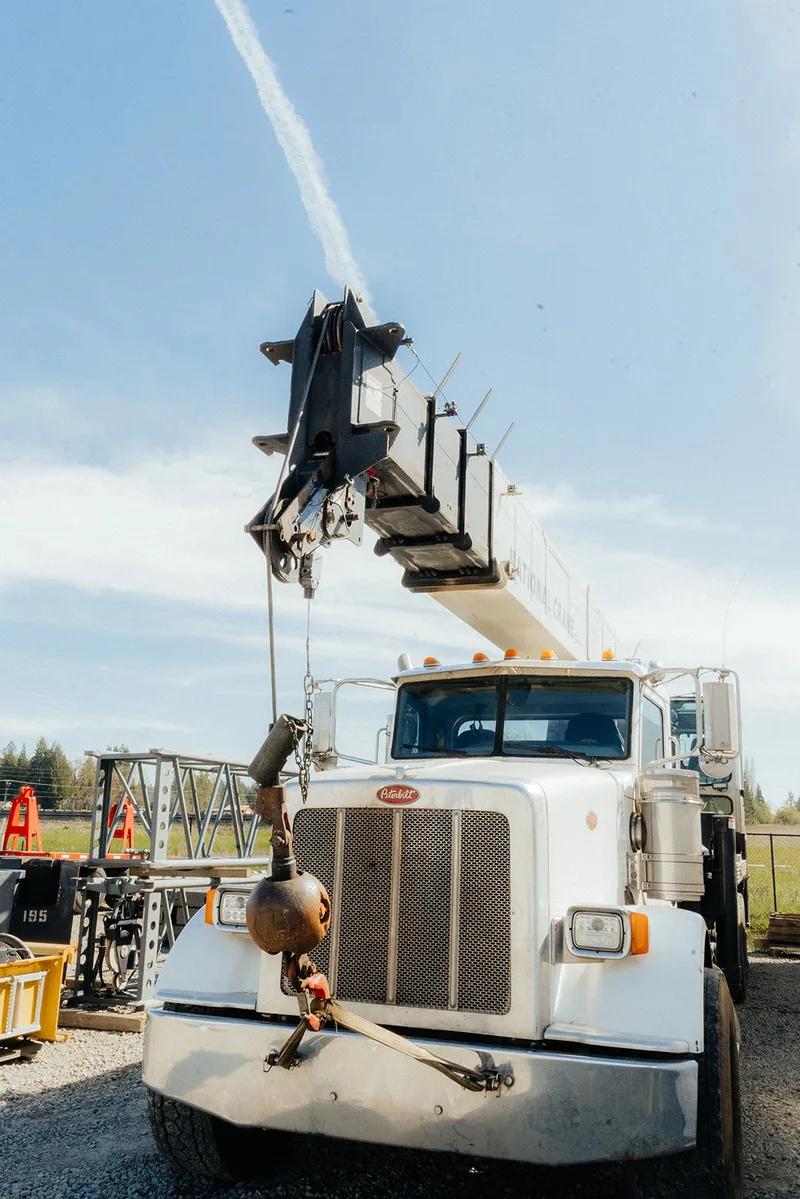
Spas land on a pad behind a hillside house with the boom working off the street, so nothing along the deck or the fencing has to be taken apart.
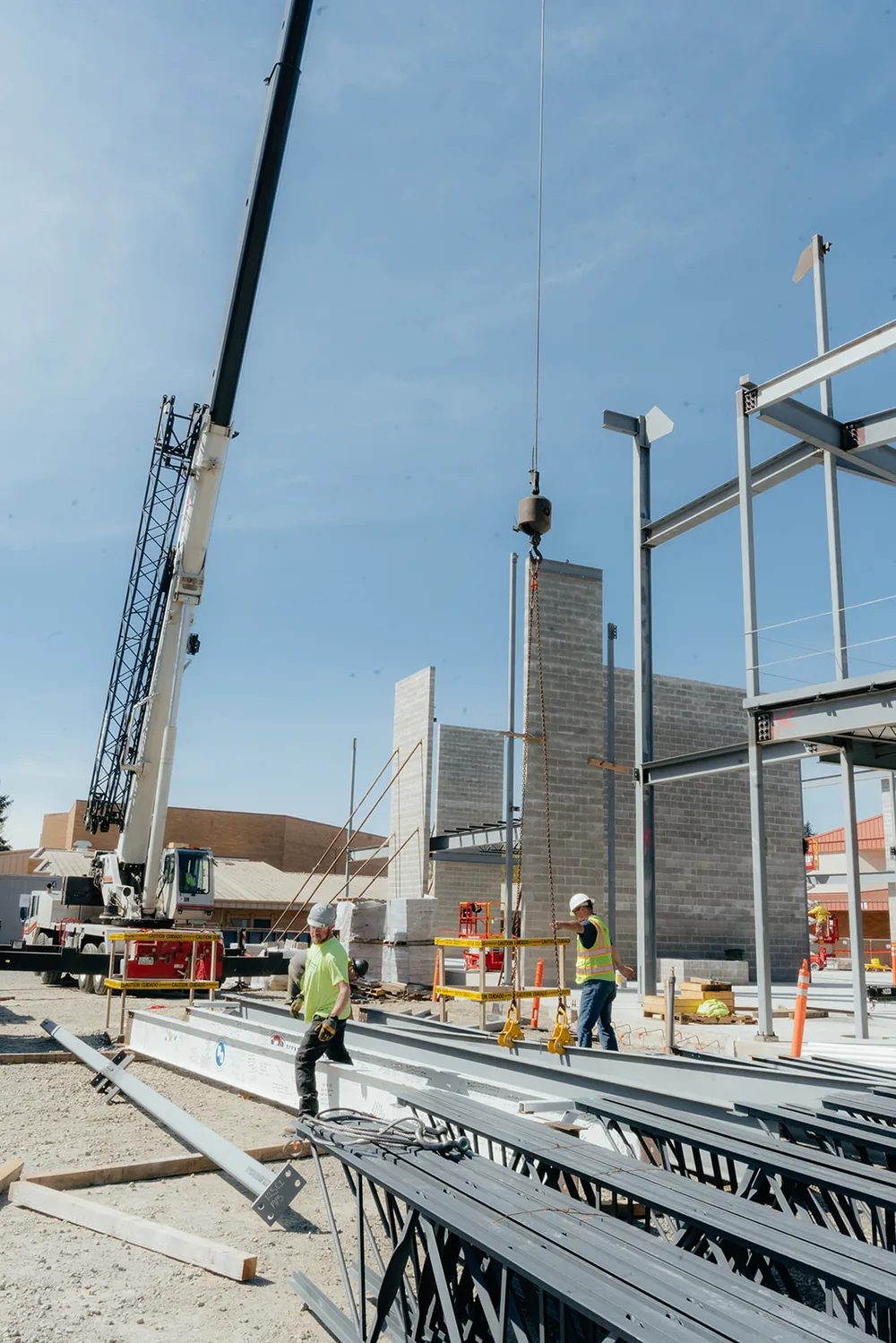
A commercial frame raised, plumbed and bolted by the crew that also owns the machine under the hook.

SDOT treats a heavy crane as its own permit type. Staging a machine rated over 100 tons on public street right of way is a Heavy Crane permit, and the city puts the crane company on the application with its own certificate of insurance attached. The permit sits with the crane company rather than with your project team.
Every other use of that same right of way runs through a Street Use permit, and on an arterial street the application comes bundled with a traffic control plan specific to that block. Downtown and on hillside streets that plan is the job. The load waits behind a facade or above a slope, so the answer comes out of boom length and radius worked off a closed lane, not from parking any closer.
Ground counts as much as the curb. The critical areas code maps liquefaction, steep slope and landslide prone land across the waterfront, the river valley and the hills, and grading on that land brings a geotechnical report. On filled soil the cribbing and mat sizing under the outriggers get engineered instead of eyeballed.

Westmore erects steel buildings in Seattle from anchor bolts through the exterior finish, and the machine standing that frame is owned by the same outfit that employs the ironworkers making the connections. The picking and the erecting come from one company, so the frame does not wait on a separate crane contract.
New commercial, industrial and mixed use buildings in the city are permitted by the Seattle Department of Construction and Inspections through the Seattle Services Portal. The critical areas mapping that governs a lift plan also drives foundation depth under a frame, so settling the geotechnical work and the permit path early is what protects a steel schedule.
Westmore contracts here as commercial general contractor, or works purely as the erector for whoever already has the contract. Both happen on Seattle jobs, and they are different scopes with different drawings behind them. Which half is in play is the first thing to settle, so name it when you send a site plan.
Radius and height eat into capacity before weight ever does, which is why a rooftop unit worked off a closed lane needs more machine than a heavier pick made in a valley yard with room to spare. Cranes on hand run 55, 100 and 350 tons.
The right size for HVAC units, hot tubs and spas, beams, and tight residential or commercial sites where a bigger crane cannot set up.

The workhorse for steel erection, precast and tilt panels, transformers, vaults, and rooftop equipment on commercial jobs.

Heavy and long-reach picks: generators, large mechanical equipment, and lifts that have to clear a building from the street.
Call with the load weight, the address, and the date you have in mind, or send the basics below and we call back within 24 hours.
"Think Seal Team 6 of Crane Work! Westmore was able to scramble, rearrange their schedule and drive a Crane 15 hours across the state to get us out of a jam on Generator set for Walmart, highly recommend these Professionals"
Google review
"Westmore is that perfect balance of cost vs what you get. They self perform their own work creating value there while delivering the project on time and on budget. These guys hustle, they have a great attitude, they're friendly, they never complain... they just get the job done. I would hire them again in a heart beat. This project scope was a building over 20,000 sq ft. They have the expertise to pull it off."
Google review
"The Westmore team is a tight-knit group of professionals who know their stuff. Their communications and teamwork is a joy to watch. They are fast and efficient without sacrificing quality or workmanship. Watching them work is "poetry in motion"!"
Google review
Yes. Seattle is inside the served area, and street involvement is what usually sets the date. A pick that stays wholly on private ground needs no city approval. Anything staged on the street waits for SDOT, since the application must be approved before outriggers touch pavement. Send the address and the intended setup point.
The crane company, not the client. SDOT issues that permit for staging a machine rated over 100 tons on public street right of way. It wants the application and a certificate of insurance from the crane company itself. Westmore is the applicant on crane work it does here. Everything else on the street runs through a standard Street Use permit.
On an arterial street, yes. SDOT attaches a traffic control plan to Street Use permits along arterials, and along non arterial streets inside areas it has designated high impact. A lift kept behind the fence line never triggers one. That plan gets drawn around the outrigger footprint and the swing path, so the exact setup spot has to be agreed first.
By weight and radius together, never by weight alone. A package unit weighs very little against a crane rating. What sets the class is the horizontal distance out to the roof from wherever a truck may lawfully park, plus how much height must be cleared above the parapet. Class follows that reach, not the number on the equipment tag.
Crane class, radius, the room an operator actually gets for outriggers and swing, and whether the setup puts anything out on the street. A machine that has to reach across a building is a bigger machine than one that can stand beside the load. An industrial pick with real yard room and a downtown lift off a closed lane land far apart on that scale.
Both. The company erects commercial steel frames and finishes the skin, and it owns the crane doing the picking. New commercial, industrial and mixed use buildings here get permitted by the Seattle Department of Construction and Inspections. If a builder already has the job, the erection work and the crane work can each be bought separately.
Piece weight, the street address, the landing point, and the spot a truck may lawfully occupy, plus one photo shot down the flight path. Vertical clearance over the obstruction matters as much as horizontal distance. Mention it when the site is mapped for liquefaction or steep slope, because outrigger bearing gets engineered on that ground. Drawings help when the pick is structural steel work.
An address in the industrial flats, out on Harbor Island, or up in Ballard gets the same crew, the same permit work and the same operator as a downtown job.
Send the piece weight, the radius the setup needs, and whether the machine stands behind the fence line or out on the street. That last answer decides whether SDOT joins the schedule.
Battle Ground, WA
Fields marked * are required.
We call back within 24 hours. Prefer to talk? (360) 772-1040