

Crane service and commercial steel building work across Bellevue, Redmond and Kirkland, with the crane sized off a load chart and the operator included.
Two jobs dominate the Bellevue call sheet, and they could not be less alike. Downtown, Wilburton and Bel-Red are tower and mid rise sites where the city deliberately made floorplates slimmer, leaving less block to stage on and more of the job fed off a permitted lane. East and south of the core the ground turns hillside residential, where a spa or hot tub is landed over a house because the lot offers no gate and nothing wide enough beside it. Commercial steel building work runs through both halves. A certified operator runs the machine, and the rigging travels with it.
Two things settle before a date does: the curb and the slope. A Bellevue Street Use Permit, issued by the Right of Way Division through MyBuildingPermit.com, covers travel lane, sidewalk and parking lane closures along with oversized loads, and the submittal expects a site plan plus traffic control drawings. Up on the hillsides the land use code puts landslide hazard at 15 percent slope and steep slope at 40 percent, with a 50-foot buffer measured from the top of slope, so the machine frequently stands well back from what it lifts. Send the weight, a setup point, and one photo taken along the flight path.
The Eastside splits its crane work between a permitted curb lane downtown and a boom reaching over a house on a slope. These four calls sit on both sides of that line.
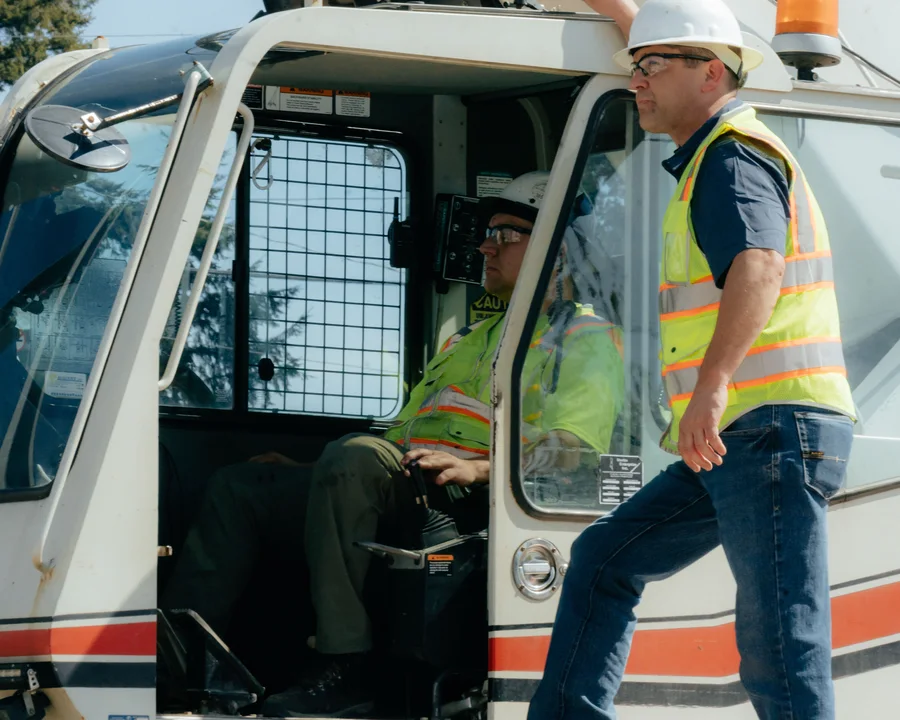
Generators, transformers and mechanical gear rigged into position where a guideway or a tower wall fixes the swing envelope.

Units swapped above occupied office floors, with the curb lane permitted and the mechanical crew standing by for that window.
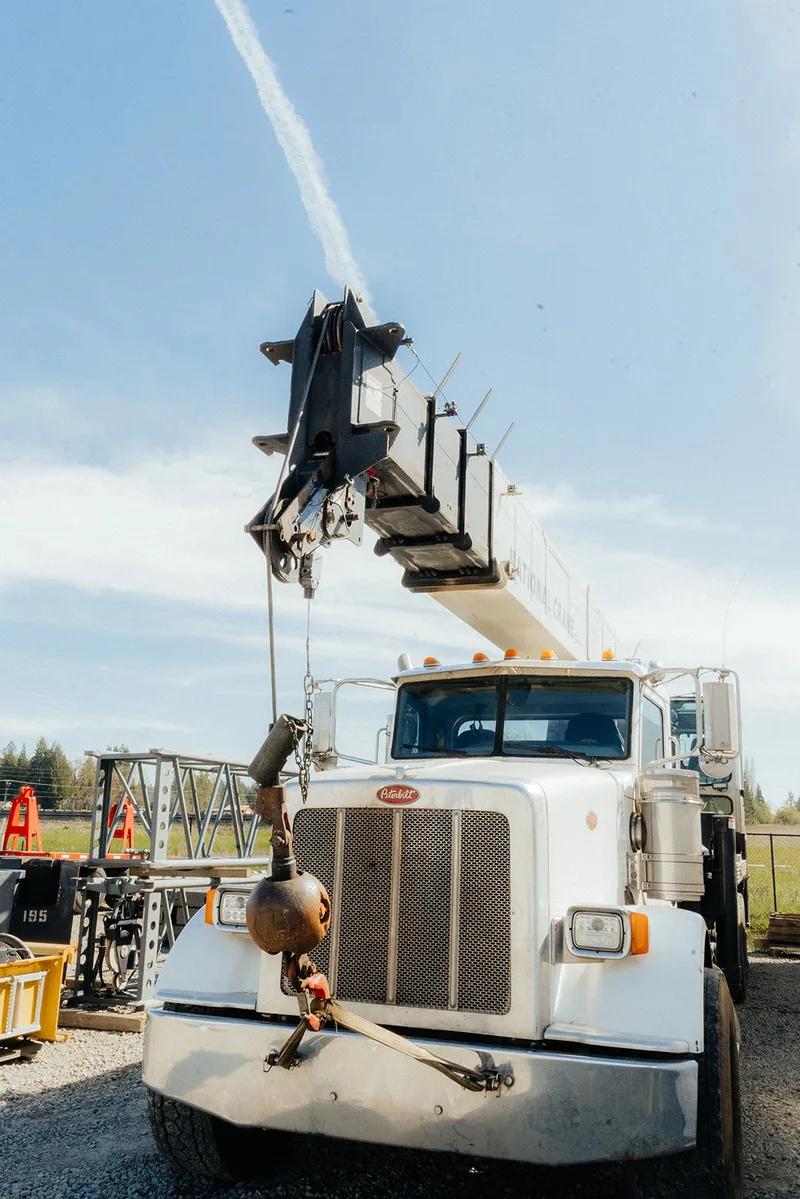
Lakefront and hillside lots with no gate send the tub above the roofline and onto a deck pad instead.
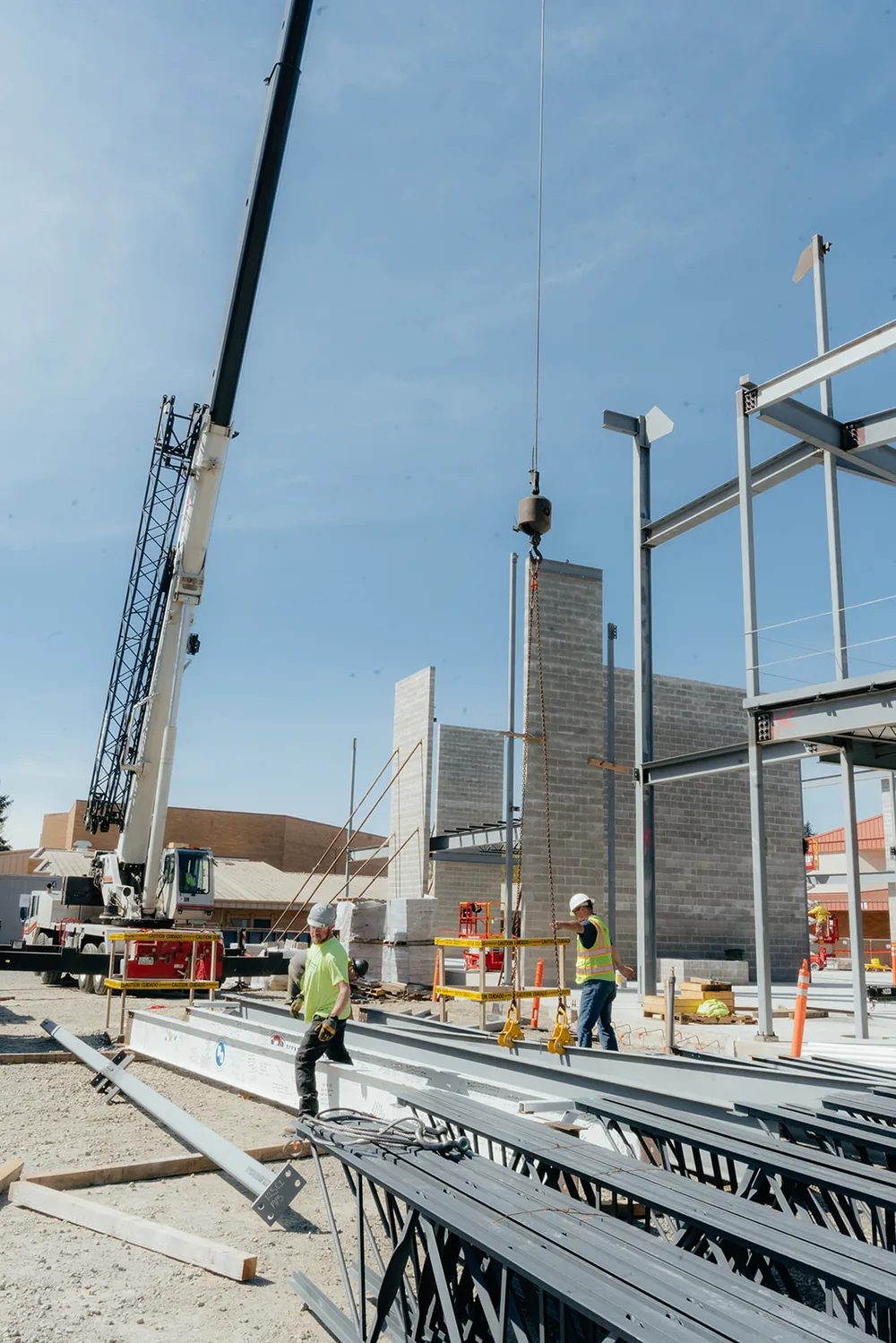
Frames stood, decked and closed in on Eastside commercial sites, with one crew running the erection and the pick.
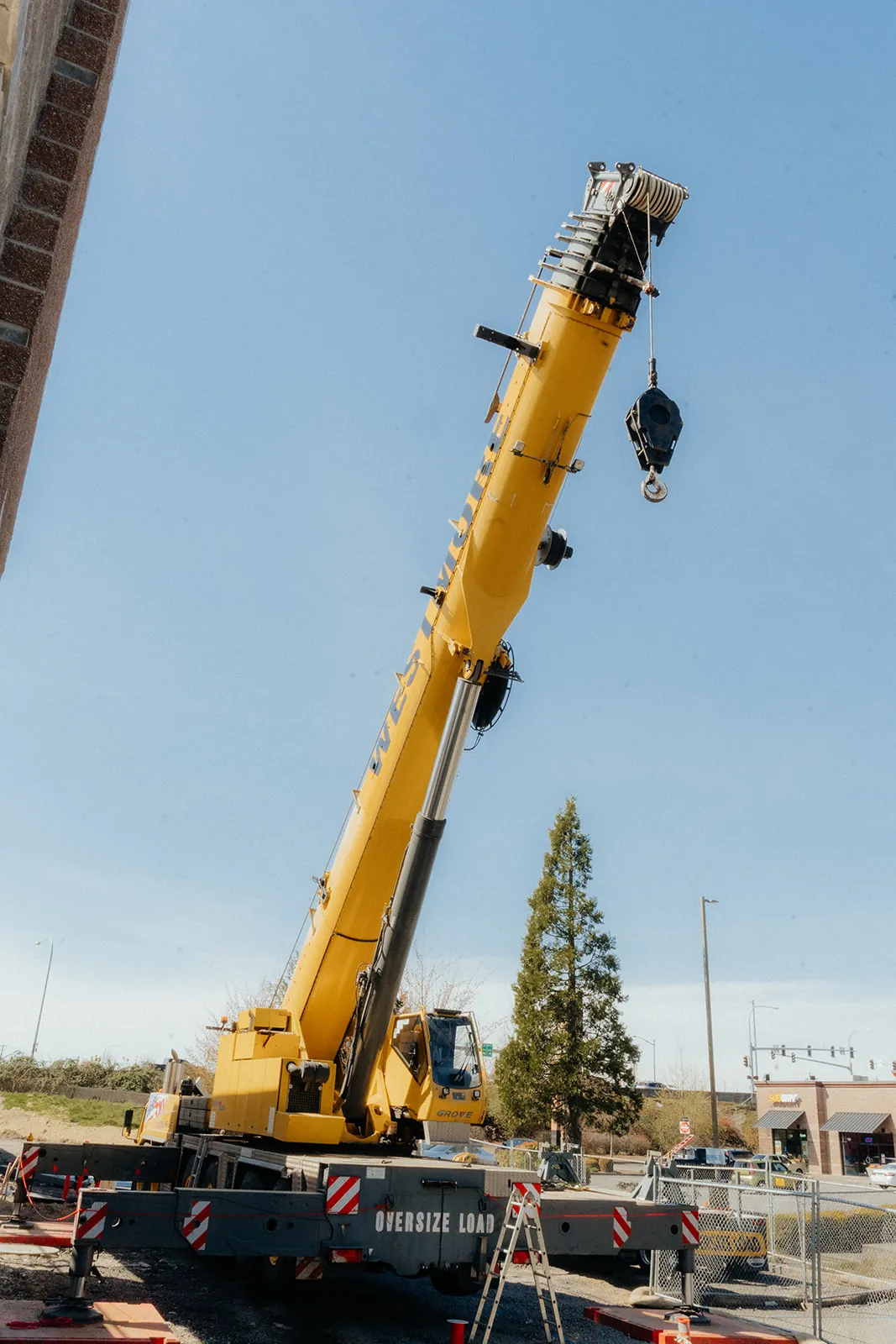
A Bellevue Street Use Permit is not only about travel lanes. The city lists parking and loading zones right beside lane and sidewalk closures, which matters in the core, where the real squeeze is the curb rather than the roadway. Outriggers, a delivery truck and a full swing radius all have to live inside that permitted space, so it belongs in the plan from the first site walk.
The submittal carries a site plan together with traffic control drawings, reviewed by the Right of Way Division against city standards. Newer downtown and Wilburton buildings are intentionally slimmer, which leaves less block to stage anything on, so the difference between a workable pick and a stalled morning is usually the footprint an operator gets to work inside.
Fixed structures shape the swing as well. Light rail guideway, overhead wire and station structures through the Bel-Red corridor create envelopes a boom cannot enter, and that is a clearance problem before it is ever a capacity problem. Send a site plan and those obstructions go into the lift plan up front.
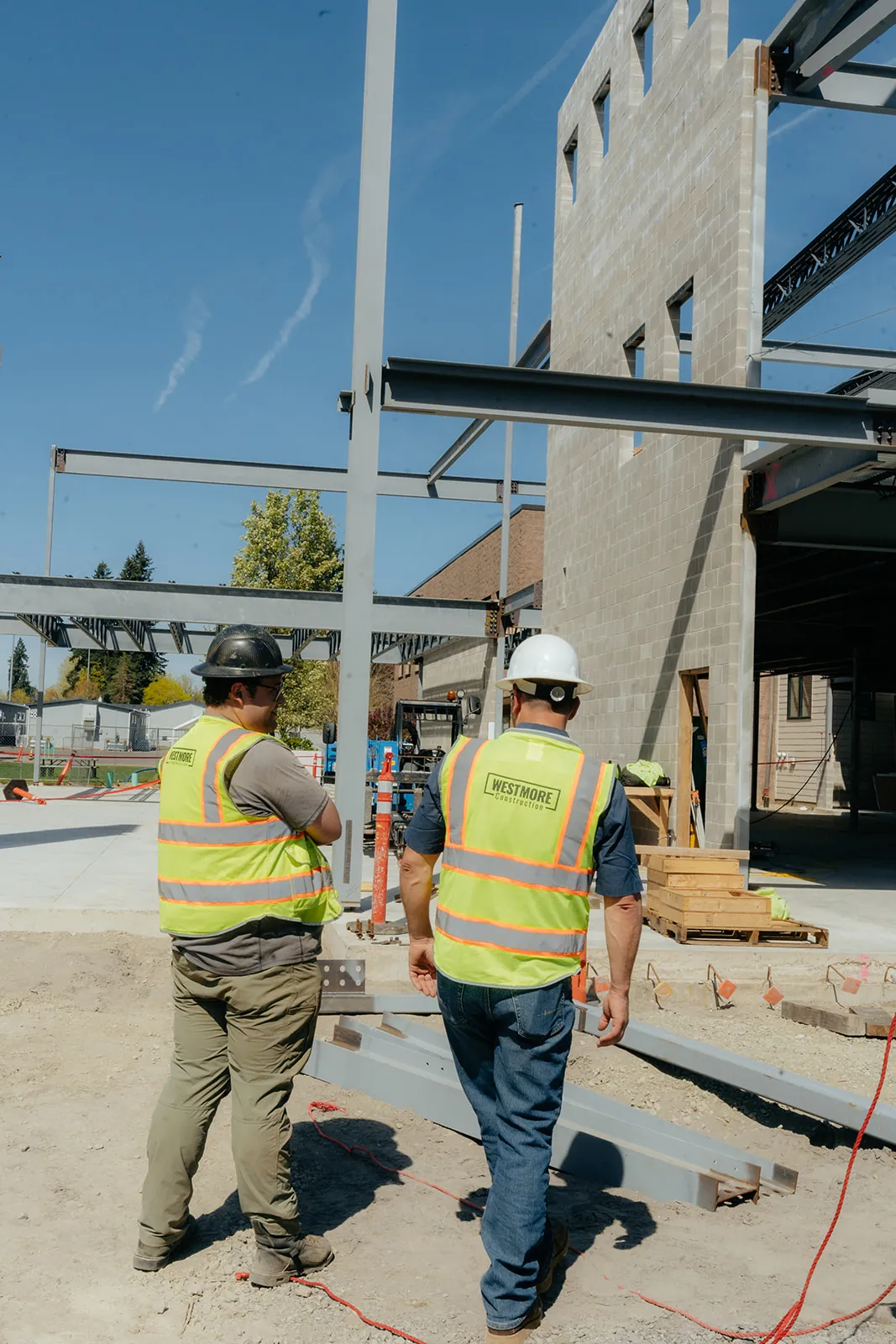
Westmore erects steel buildings on the Eastside and finishes them, anchor bolts through exterior skin, with the crane raising the frame and the ironworkers bolting it employed by one company. Wilburton and Bel-Red are rezoned for mid rise and mixed use on parcels that are low slung commercial today, and that is structural steel work.
Foundations are where local code shows up on the building side. Landslide hazard, steep slope and coal mine hazard areas are all mapped geologic hazards under the land use code, and touching a steep slope buffer or setback takes a Critical Areas Land Use Permit supported by a report with subsurface exploration in it. That path gets settled before a frame is ordered.
Bellevue jobs come either way. Westmore can hold the prime contract as commercial general contractor, or erect steel for the firm that does, and both arrangements are available on Eastside work. Building permits are filed with Development Services. Erection alone and a full build are two different conversations, so say which one you are asking about.
On a hillside lot the buffer and the slope set the radius before anyone weighs the load, and the machine that reaches the pad from a compliant setup point is the one that goes.
The right size for HVAC units, hot tubs and spas, beams, and tight residential or commercial sites where a bigger crane cannot set up.

The workhorse for steel erection, precast and tilt panels, transformers, vaults, and rooftop equipment on commercial jobs.

Heavy and long-reach picks: generators, large mechanical equipment, and lifts that have to clear a building from the street.
Call with the load weight, the address, and the date you have in mind, or send the basics below and we call back within 24 hours.
"Think Seal Team 6 of Crane Work! Westmore was able to scramble, rearrange their schedule and drive a Crane 15 hours across the state to get us out of a jam on Generator set for Walmart, highly recommend these Professionals"
Google review
"Westmore is that perfect balance of cost vs what you get. They self perform their own work creating value there while delivering the project on time and on budget. These guys hustle, they have a great attitude, they're friendly, they never complain... they just get the job done. I would hire them again in a heart beat. This project scope was a building over 20,000 sq ft. They have the expertise to pull it off."
Google review
"The Westmore team is a tight-knit group of professionals who know their stuff. Their communications and teamwork is a joy to watch. They are fast and efficient without sacrificing quality or workmanship. Watching them work is "poetry in motion"!"
Google review
Yes, all three, along with the Bel-Red and Wilburton districts inside Bellevue itself. Redmond and Kirkland are separately incorporated, so the permit counter changes even though the crew and the machine do not. A date usually turns on one question: does the crane take curb or lane space, because that adds a street use approval ahead of the work.
Yes, and on hillside and lakefront lots it is frequently the only way in. Plenty of Eastside properties offer no gate, no side access and a deck above grade, so the tub rises from the curb, clears the roofline, and settles on its pad. Class comes from the span between curb and pad plus the height being cleared. One photo along that path answers it.
The load chart, read at the radius the setup point allows. On a hillside lot the machine sits back from the top of the slope, so the boom is reaching across ground it cannot park on. Longer reach means less capacity at the hook, and more radius means more crane for the identical weight.
Yes, as soon as the crane takes curb or lane space from the city. That permit covers travel lane, sidewalk and parking lane closures, and the submittal includes a site plan plus traffic control drawings reviewed by the Right of Way Division. Applications run through MyBuildingPermit.com. A pick held completely on private property does not need one, and Westmore prepares the application on jobs it runs.
Because radius, access and street occupancy move independently of tonnage. A downtown pick taking the curb lane carries permit work and traffic control drawings that a job inside a fenced site never sees. A light rail guideway or a station structure near the setup can also fix where the boom may swing. Slope and setback push an identical load into a larger class.
Yes. Commercial steel building work is a division of the company, sitting beside crane and rigging, so one company supplies both the crane and the ironworkers, on one schedule. Building permits go through Development Services on MyBuildingPermit.com, and a mapped geologic hazard pulls a critical areas report into foundation design. Erection alone remains available to a contractor already on site.
Weight of the piece, the address, and the place a truck can park and set outriggers legally. A picture from that spot toward the landing point settles most of the sizing, since vertical clearance counts as heavily as horizontal span. Flag it early when the setup needs the travel lane or the parking lane, because that adds the street use step.
Redmond and Kirkland are separate cities with their own permit counters, so the paperwork changes at the city line even where the work does not.
Give us the weight, the place a crane can stand, and what sits between that spot and the landing point. On a hillside lot a single photo along the flight path usually answers the sizing question by itself.
Battle Ground, WA
Fields marked * are required.
We call back within 24 hours. Prefer to talk? (360) 772-1040