

One crew for the pick and the build: operated crane service and commercial steel buildings for Everett industrial, marina, and rooftop work.
Three kinds of job sit inside the Everett city limits, and none of them behaves like the others. The Paine Field industrial district holds large span buildings carrying heavy rooftop mechanical equipment, wrapped around an active airport, which turns boom height into a scheduling question. The waterfront and marina district is marine work, where oversize project cargo wants an engineered rigging arrangement instead of a hook and a strap. North of the city, open industrial ground finally has room to erect a pre-engineered metal building properly. Operated cranes and an in house erection crew cover the whole set, and commercial steel goes up across all three.
The city runs its own permit path, and that is worth understanding before anyone picks a date. A partial closure of a street, parking lane or sidewalk for construction is a Traffic Street Use permit issued straight out of Traffic Engineering through the online portal the city operates, and traffic control drawings only count once approved as part of that permit or by the City Traffic Engineer. Both directions of traffic have to stay open unless a detour was approved in advance. Construction permits come from City of Everett Permit Services, not the multi city portal the King County jurisdictions share. The setup point is the detail that changes everything else, so name it early along with the weight and the reach.
What gets picked here ranges from a package unit on a large span roof to an awkward piece of project cargo on the water.
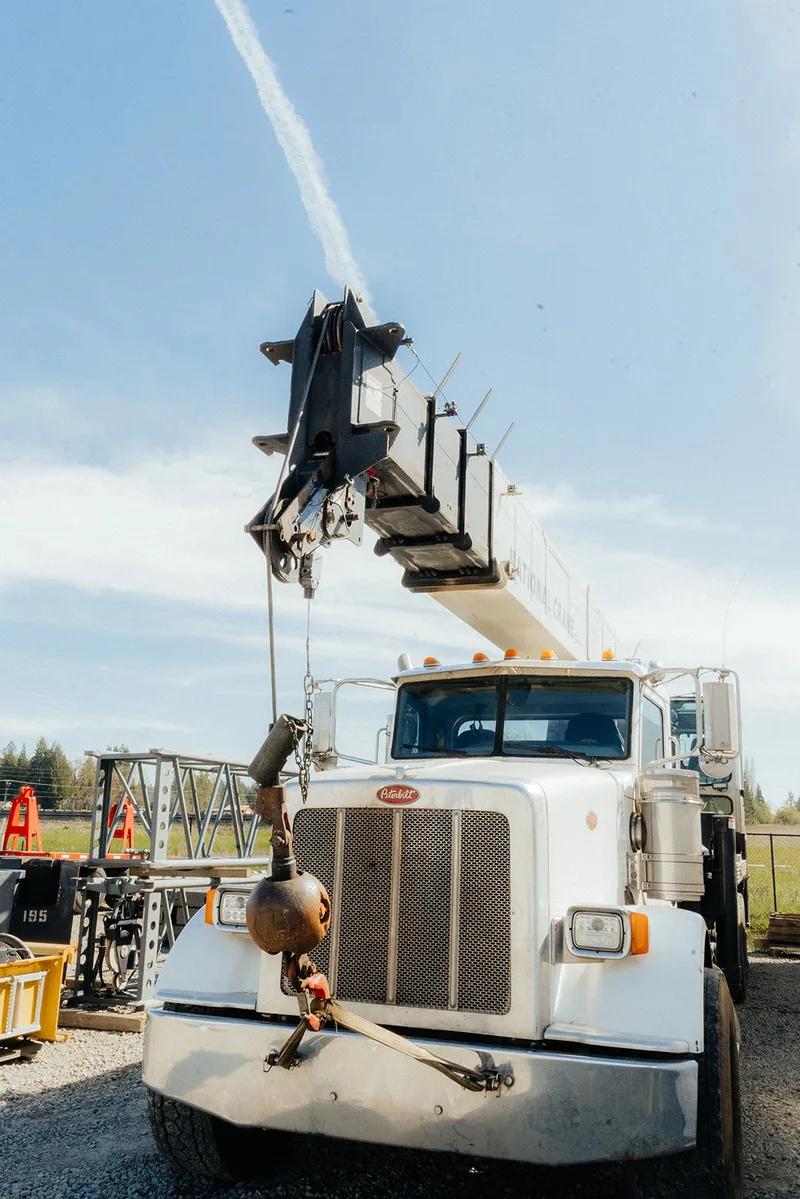
Bluff lots where the front street is the only way in take the spa over the roofline and onto its pad.
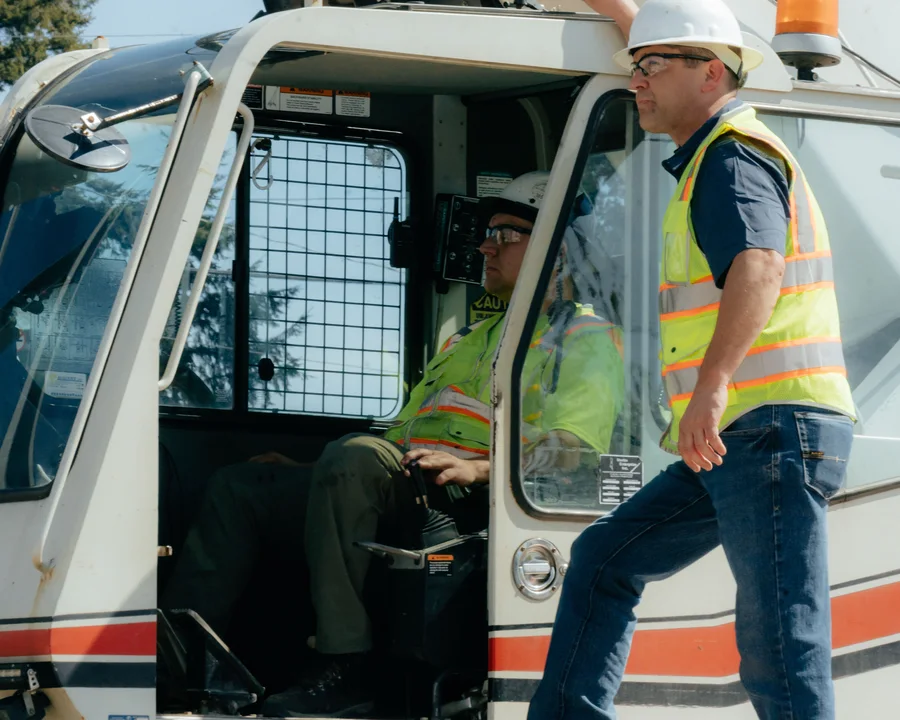
Project cargo, machinery and marine equipment placed when the shape of a load, not its weight, is the hard part.

Package equipment landed on large span industrial buildings, with boom height settled at bid time near the airport.
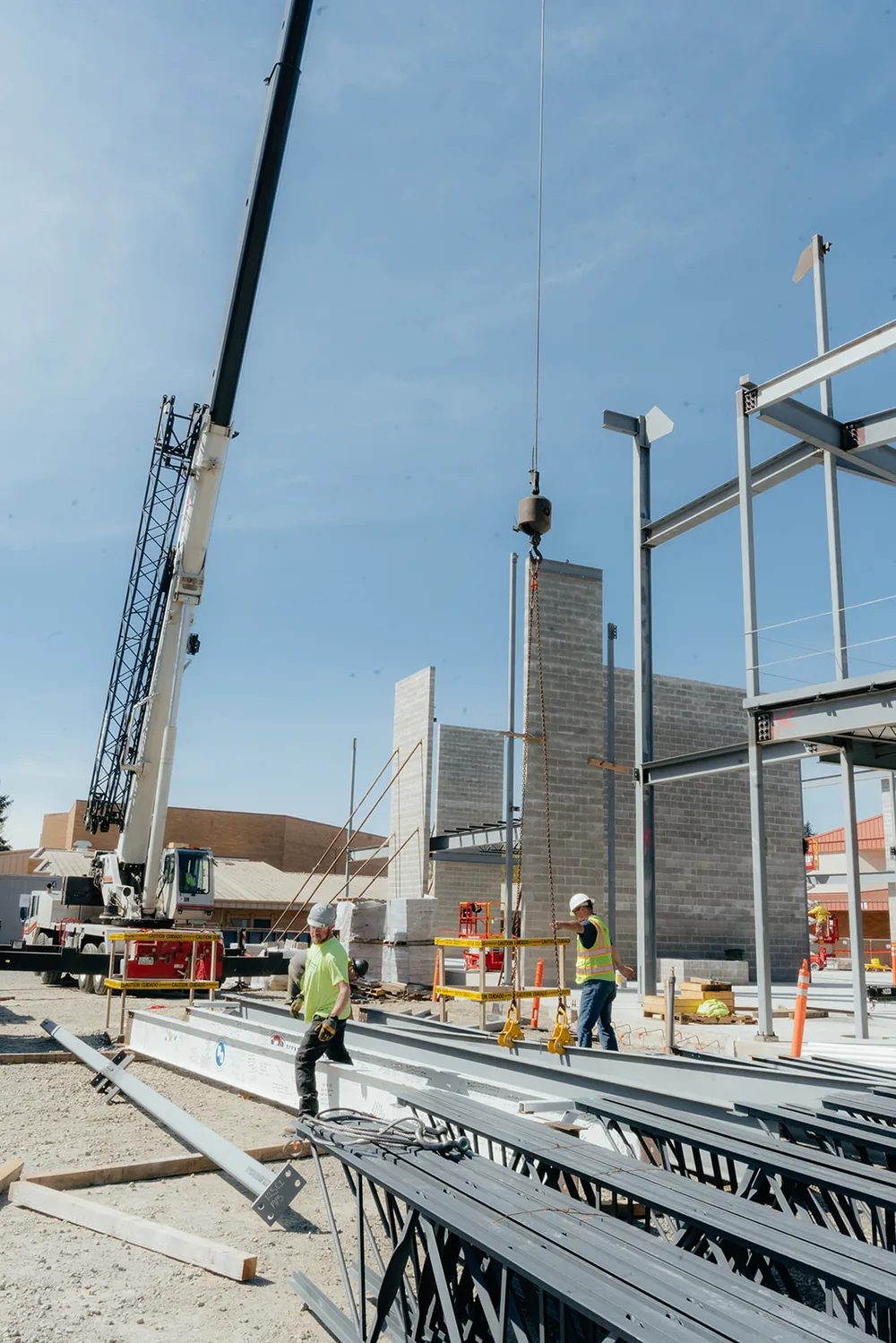
Ground with room to work makes a pre-engineered metal building straightforward: anchor bolts through exterior skin, one crew throughout.

This city sits outside the multi city permit portal the King County jurisdictions share. A partial closure of a street, parking lane or sidewalk for construction work is a Traffic Street Use permit, issued directly by Traffic Engineering through the portal the city operates, and any work inside public right of way or a utility easement needs a permit first.
One standing condition shapes the whole setup. On existing streets both directions of traffic must stay open at all times unless a detour plan has been approved in advance by the City Traffic Engineer, and an accessible pedestrian route must remain clear. That decides where outriggers can land and which side a boom ends up working from.
Ground and airspace finish the plan. The critical areas code here regulates erosion, landslide and seismic hazard areas, which drives cribbing under a machine on low ground and depth under a foundation. Near the airport a tall boom pulls FAA notification into the schedule, so height gets fixed at bid instead of on lift day.

Steel put up in sight of salt water needs a coating and fastener specification written for that exposure. On the bay a finish schedule is a design decision rather than a line copied off an inland shop building, and the difference shows up years later rather than on the day it goes up. Westmore erects steel buildings and carries the exterior finish in the same scope.
Inland the constraint flips over. Open industrial land north of the city is where a pre-engineered metal building actually has space to be erected, with room to lay steel out and set the machine where the sequence wants it rather than where a fence allows. Light rail station areas in the south end of the county are tighter mid rise and structured parking instead.
Both routes are open here. Westmore can run the whole build as commercial general contractor, or work beneath the builder purely as the erector. Construction permits come from City of Everett Permit Services. Either way, the exposure gets named before the steel is specified, because a bayfront frame and an inland one do not carry the same coating.
Boom height near the airport and reach across a large span roof both cut into what a machine can pick, so the class comes off a chart with those two numbers in it. The three classes available here are 55, 100 and 350 tons.
The right size for HVAC units, hot tubs and spas, beams, and tight residential or commercial sites where a bigger crane cannot set up.

The workhorse for steel erection, precast and tilt panels, transformers, vaults, and rooftop equipment on commercial jobs.

Heavy and long-reach picks: generators, large mechanical equipment, and lifts that have to clear a building from the street.
One call covers crane size, the permit, and the schedule. Or send the basics below and we call back within 24 hours.
"Think Seal Team 6 of Crane Work! Westmore was able to scramble, rearrange their schedule and drive a Crane 15 hours across the state to get us out of a jam on Generator set for Walmart, highly recommend these Professionals"
Google review
"Westmore is that perfect balance of cost vs what you get. They self perform their own work creating value there while delivering the project on time and on budget. These guys hustle, they have a great attitude, they're friendly, they never complain... they just get the job done. I would hire them again in a heart beat. This project scope was a building over 20,000 sq ft. They have the expertise to pull it off."
Google review
"The Westmore team is a tight-knit group of professionals who know their stuff. Their communications and teamwork is a joy to watch. They are fast and efficient without sacrificing quality or workmanship. Watching them work is "poetry in motion"!"
Google review
Yes, all four. They are separately incorporated cities rather than parts of Everett, so each keeps its own permit counter. The date normally turns on street involvement, because a Traffic Street Use permit needs approval before the machine takes any part of a roadway. Name the city along with the address, since the counter follows the city line.
Yes, whenever the setup partially closes a street, parking lane or sidewalk for construction work. Traffic Engineering issues it through the online permit portal. Traffic control drawings only count once they are approved as part of that permit or signed off by the City Traffic Engineer. A pick confined to private ground needs no such approval.
Yes, provided boom height is settled early. FAA Form 7460-1 notice applies above a defined height above ground level, and also near a public use airport where the boom breaks a surface off the runway, with temporary structures like cranes stating how long they stay up. Near that airport the notice belongs in the bid. Occasionally the answer is a shorter configuration rather than a larger machine.
Radius decides that as much as tonnage does. A package unit sitting on a large span roof puts the load a long way out from anywhere a truck may lawfully stop, and a parapet adds clearance on top of that. Three machine classes cover the work, and the smallest one carrying that load at the required radius is what gets used.
Awkward shape, restricted setup and street involvement, more than raw tonnage. Project cargo and marine equipment often need an engineered rigging arrangement instead of a hook and a strap, which adds planning before anybody arrives. Keeping both directions of traffic open narrows where outriggers may land. A site on low ground adds cribbing under the machine before anything comes off the deck.
It is both. The company contracts as commercial general contractor for steel building projects, and it also hires out purely as an erector, or as the crane on a project somebody else is running. Construction permits here come from City of Everett Permit Services rather than the multi city portal King County cities use. On the waterfront, coating and fastener specification is part of that scope.
Piece weight, the address, the landing point, and where a truck may legally set outriggers. Say whether the site is on the water, since salt exposure changes a steel specification and low ground changes what cribbing has to do. For an odd shaped or marine load, dimensions and lift points matter every bit as much as the weight.
Send the address with the city name on it, since each of these towns permits its own streets and issues its own construction permits.
Tell us the weight, the dimensions when the load is an odd shape, and the spot a machine can legally set up. Say whether the work is on the water, because that changes both the rigging plan and a steel specification.
Battle Ground, WA
Fields marked * are required.
We call back within 24 hours. Prefer to talk? (360) 772-1040