
Street use, oversize, and traffic control permits handled for your crane lift in Washington or Oregon.
A crane lift in Oregon or Washington needs a permit once it reaches past the property line, onto a public street or right of way, or when the crane moves as an oversize load. Vancouver issues street use permits through Public Works Traffic Engineering, Portland requires a Temporary Street Use Permit through PBOT, and unincorporated Clark County work goes through Clark County Public Works instead. Oregon separately requires an ODOT over-dimension permit through ORION.
The oversize side has hard numbers: Oregon requires an ODOT over-dimension permit through its ORION system for any load over 8 feet 6 inches wide, 14 feet tall, or 80,000 pounds, and the 350-ton Grove moves well inside that rule. Which permits apply to a given job depends on the address and the route, so Westmore checks both before the lift is quoted.

Moving the crane can trigger its own permit before it reaches the site. Oregon issues that permit through ODOT, and the crane's width, height, and weight decide the routing conditions attached to it. Washington adds a similar layer through WSDOT on state routes like SR-14 through Camas and Washougal.

A crane that plants its outriggers in a public street needs a different permit than the one that got it there. Vancouver requires the submission at least 24 hours ahead, and anything touching an intersection or three or more lanes needs direct coordination with the city's traffic engineers. Clark County runs a separate system for the same kind of work on county roads outside any city.

In Portland, a permit letting a crane occupy a lane or sidewalk comes with a traffic control plan filed before the crane sets up; in Vancouver, work that touches an intersection or three or more travel lanes is coordinated directly with the city's traffic engineers. Washington adds a separate requirement: the operator must meet the state's L&I certification rules, satisfied by every Westmore operator's NCCCO certification.
Send the jobsite address, the date, and what the crane needs to do there.
Westmore checks the jurisdiction, Vancouver, Portland, or unincorporated Clark County, and whether the route crosses a highway ODOT or WSDOT controls.
Applications go to the agency that governs the site with the required traffic control plan, and the lift date is set once approved.
The crane arrives with its NCCCO certified operator and an already approved traffic control plan, so the crew runs the lift without a delay.
Westmore identifies the city, county, or state agency governing your lift and files with each one directly.
A traffic control plan is prepared alongside the permit application when the lift needs one, not tacked on later.
Washington license WESTMCL836OJ and Oregon CCB license 234945 stay current with the agencies reviewing the application.
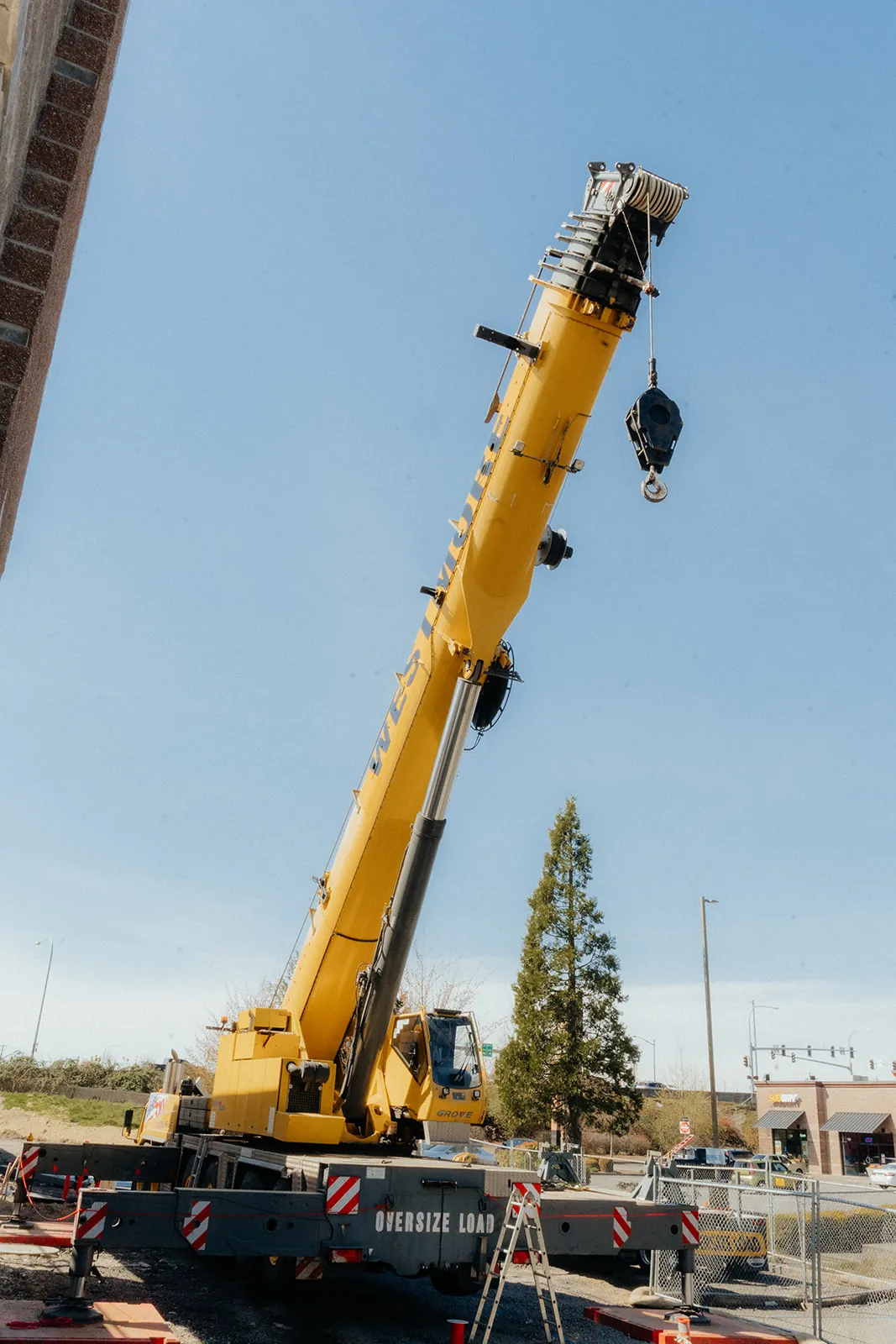
The 350-ton Grove with the boom raised beside a brick building.

Every truck carries the license number that keeps the company current with Oregon and Washington regulators.
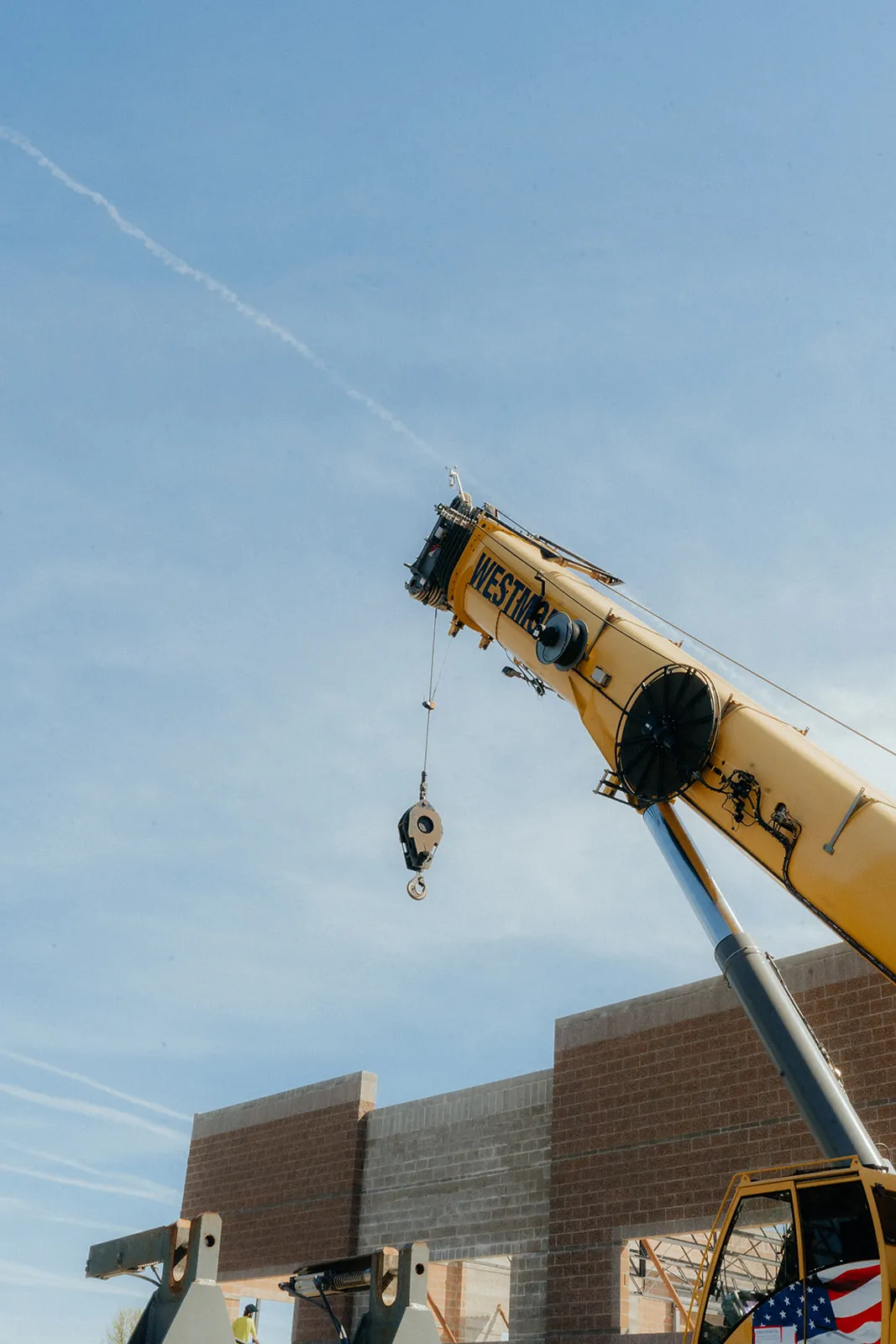
Permitted lifts run on the same fleet and crew as any other job on the schedule.
Call with the address and the setup spot you have in mind, or send the basics below and we call back within 24 hours.
"Fast to work with me when I had a short notice crane pick request for downtown Portland. Yikes. No problem for these guys. They nailed the permit, traffic, and planning submittals in no time... They were safe, they worked fast... From the big boy 350 Ton to little boy crane needs - they are our team now."
Google review
"They were quick to help us with our project. Showed up when scheduled and filed the required paperwork for the job."
Google review
"Westmore Construction is a very honest and trustworthy crew. That is why we selected them as our general contractor and our pre-engineered metal building installer for our commercial project. They worked well with all the permitting staff, inspectors, and subcontractors. They worked hard to keep our project moving through the entire process and they cared about our timeline for completion. Plus, their entire team communicated well and timely. What more could you really ask for in a GC? I would highly recommend Westmore Construction and I would hire them again if we have a chance to develop another property in the future."
Google review
No, not when the crane, its outriggers, and the load all stay inside the property line. That covers most private site work, from a backyard spa set to a lift inside a fenced industrial lot. The permit line is the public right of way: once any part of the setup occupies a street, alley, or sidewalk, the city or county that owns that road requires a street use permit first.
The crane company. Westmore submits the street use, right of way, and oversize transport applications under its own contractor license and stands as the responsible party on each one, which is why cities want a licensed contractor named as the applicant rather than the property owner. Owners and builders do not deal with the street use office on the crane setup.
A crane lift needs one whenever the setup takes space away from traffic: a travel lane, a sidewalk, a bike lane, or part of an intersection. The plan is a drawing plus a written description showing how drivers and people on foot get routed around the crane, and Portland requires it approved alongside the street use permit. Vancouver coordinates the larger closures directly with its traffic engineers.
Each agency sets its own minimum. Vancouver requires the submission at least 24 hours before the work, with the city named on the insurance certificate. The Salem Development Services Division requires at least three business days for a street, lane, or sidewalk closure. Portland reviews its Temporary Street Use Permit on its own schedule, and a route crossing a state highway adds ODOT or WSDOT on top of the city.
Yes. Washington cities like Vancouver issue their own street use permits, and Clark County Public Works covers unincorporated county roads under a separate system. Oregon adds a statewide over-dimension permit, filed through the ODOT ORION system, for oversize loads on state highways, on top of city permits like the one Portland requires.
Yes, in most cases. The 350-ton Grove and the trailers that haul the fleet run past Oregon's legal limits for width, height, or weight, so the move travels under a state over-dimension permit before it leaves, and Washington applies its own version on state routes. That permit sets the route and the hours, so the approved path can differ from the direct one. Westmore files it, not the customer.
Send the jobsite address and the date you need the lift, and Westmore identifies which permits apply before quoting the job.
Battle Ground, WA
Fields marked * are required.
We call back within 24 hours. Prefer to talk? (360) 772-1040