

Operated crane lifts and steel buildings in Battle Ground from the company based here, with one crew for both.
Crane service, steel buildings, and commercial general contracting all run out of the Battle Ground address at 30519 NE Harrison Road. The crane side handles operated lifts up to 350 tons, starting at 55: rooftop HVAC units, structural steel, and precast and equipment rigging for contractors working the city's industrial and commercial lots, plus hot tub, sauna, and swim spa sets for homeowners in the newer neighborhoods. The construction side works as a commercial general contractor and steel erector, covering preconstruction, steel buildings, and exterior finishing. Every crane goes out rigged, and the operator running it holds NCCCO certification, while the construction crew is Westmore's own rather than a subcontracted stand-in.
Battle Ground splits into two permitting worlds, and which one you fall in changes the lead time to plan for. Inside the city, a job touching a public street requires city right-of-way approval, submitted together with a traffic control plan the city signs off on, and that review happens before issue, so dates get set with it already counted in. Past the city line, out at Lewisville, Meadow Glade, Venersborg, and Dollar Corner, the same work is permitted by Clark County Public Works and the sites behave like rural acreage: gravel approaches, drain fields, soft shoulders. Which side of that line you are on decides which filing starts first, and Westmore starts it the day the job is described.
Six ways into the crane and construction teams here, from a single rooftop pick to a building put up end to end.
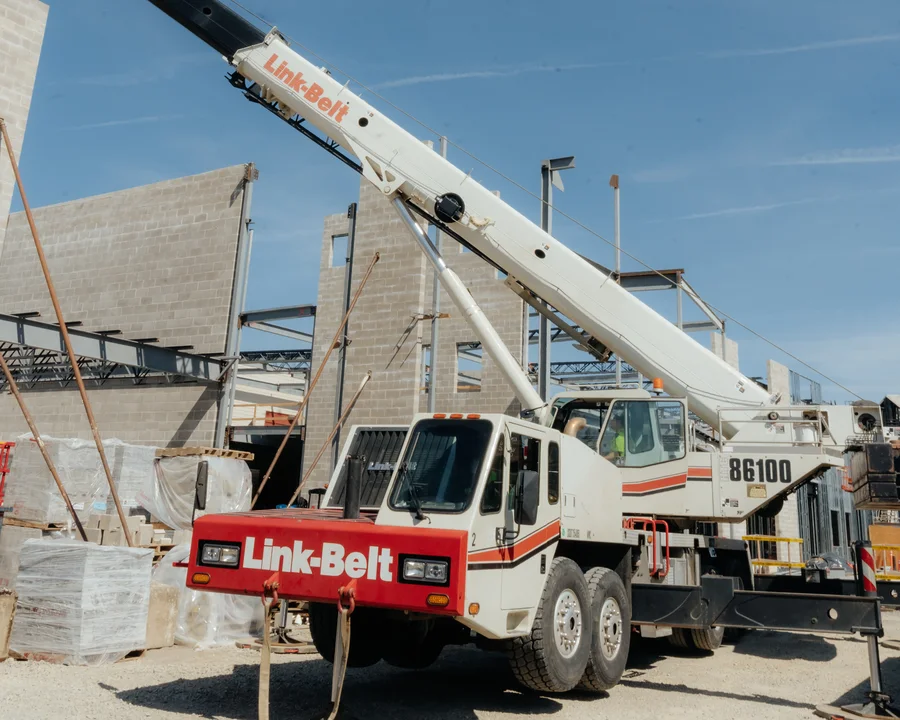
Rooftop units, structural steel, precast panels, and equipment picks, with the operator and rigging on the same quote.
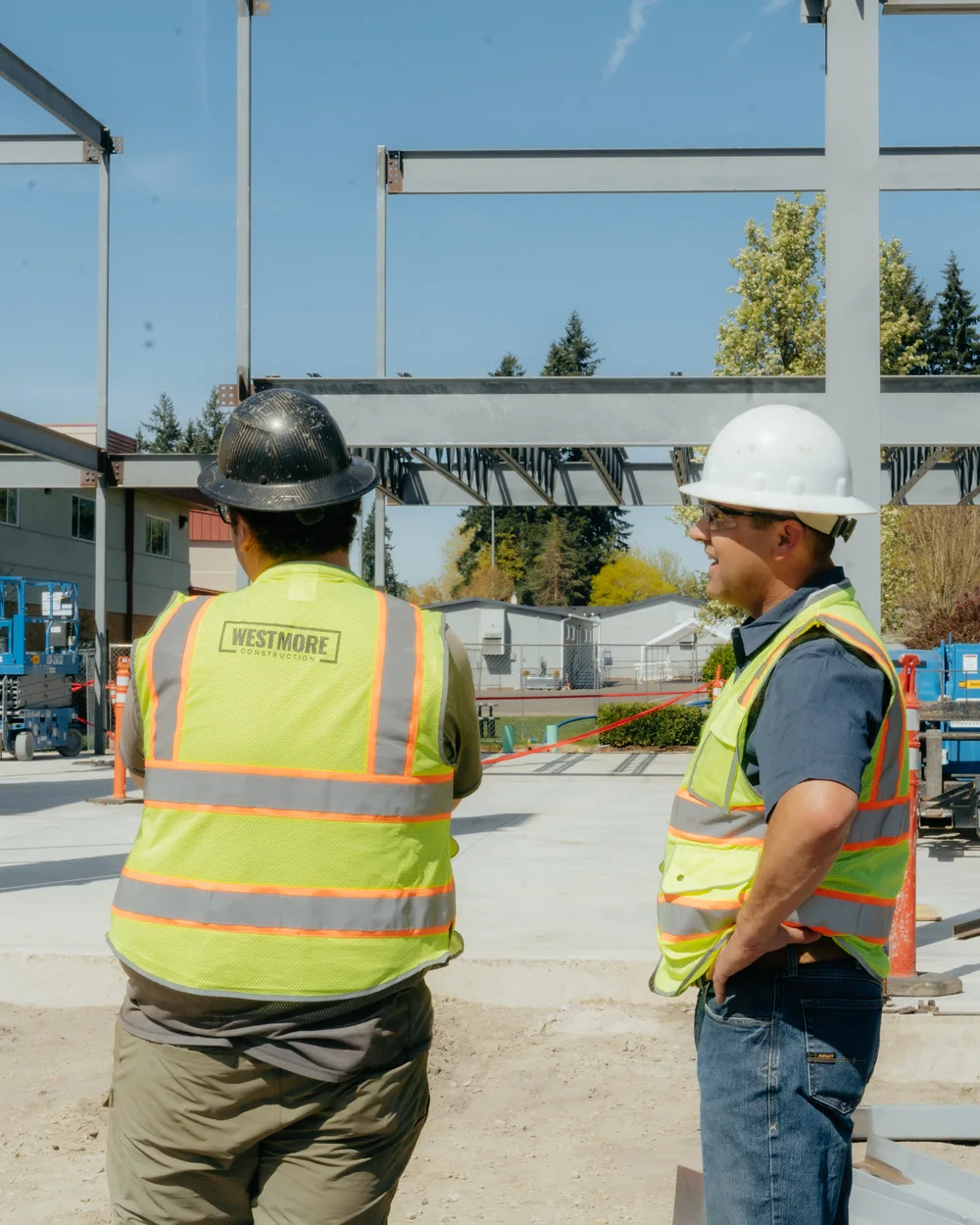
Commercial general contracting and construction management, with one team accountable from preconstruction through closeout.

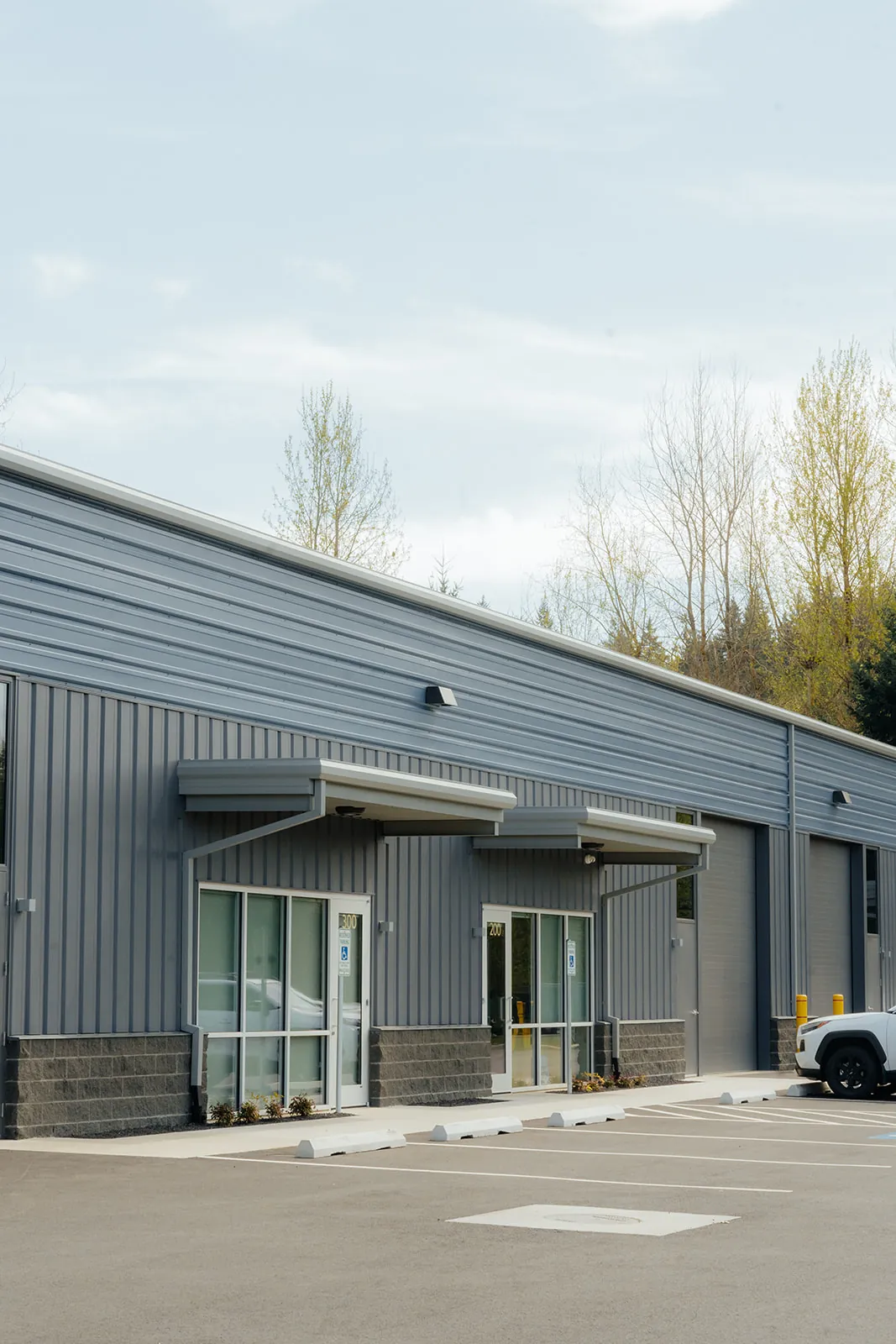
Pre-engineered metal buildings and structural steel erection for the light industrial parcels still filling in here.

Rooftop swaps for mechanical contractors, timed so the tenant underneath keeps the doors open.
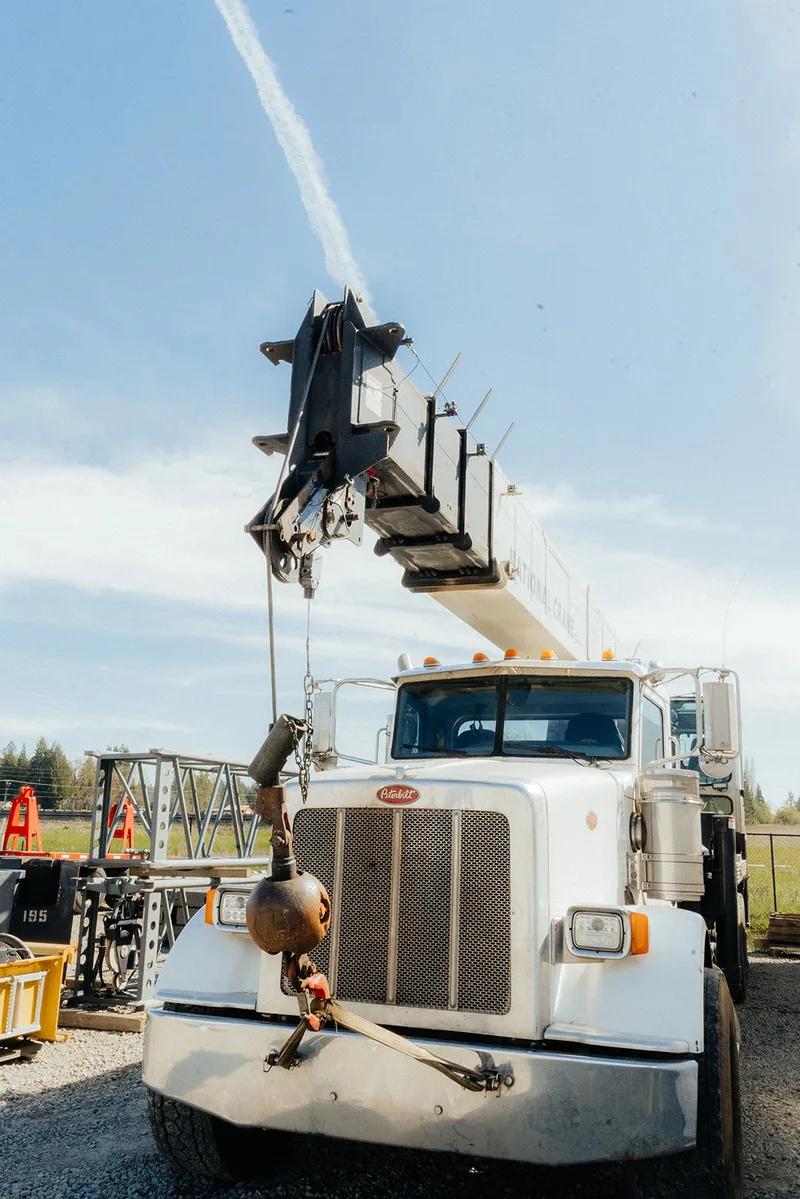
Tubs, swim spas, and saunas go over the fence and land square on the pad, no panels removed.
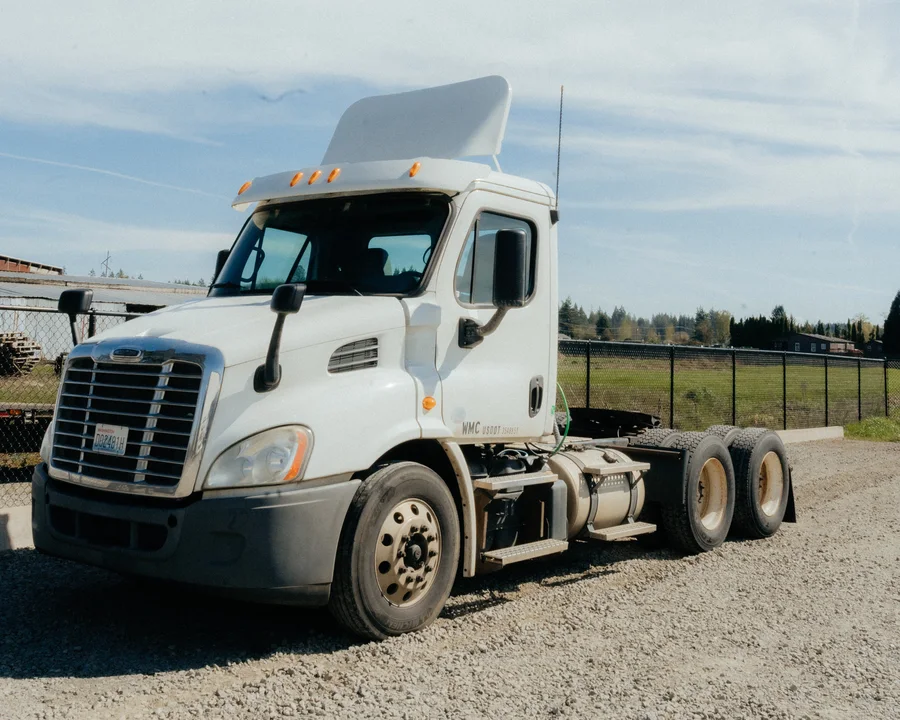
Material and equipment moved on Westmore trucks, so the haul and the pick answer to one company.

A steel building here lands on a foundation set to the engineered anchor bolt layout, goes up off the erection drawings that ship with the package, and gets closed in by the same hands that stood the frame up. Nothing sits waiting on an erector to arrive from out of the area, because the crew and the equipment are already based here. Bring the span and the clear height you need and Westmore will say what the parcel supports.
Most of the ground zoned for that work sits in two places, Commerce Industrial Park and the Grace Avenue corridor, where trucking yards, contractor yards, equipment storage, and manufacturing space sit side by side. Buildings on those parcels get framed around equipment bays, overhead doors, and a working yard, so tell Westmore how the trucks have to move before the drawings are fixed.
The scope runs to commercial steel buildings, structural steel erection, pre-engineered metal buildings, and the exterior finishing that takes a bare frame to a building you can lock up. Ask for it as one contract and the picks, the frame, and the skin share one schedule instead of three.
Commercial general contracting here means Westmore signs for the whole build rather than a slice of it, from preconstruction through closeout. Construction management covers the same oversight when an owner keeps the trade contracts and wants a single team tracking the phases. Either way there is one number to call the moment the job changes.
Owning the cranes changes how the schedule gets written. Lift dates for steel, mechanical units, and precast sit inside the build schedule instead of being negotiated around an outside vendor's calendar, so a slip on one side does not strand the other. If your project has a hard opening date, name it in the first conversation, because that is the constraint the sequence gets built around.
Delivery windows get written into the sequence rather than left to sort themselves out. Steel, panels, and mechanical equipment are called in against the erection dates they actually serve, and what the site cannot take yet stages on Westmore's own ground. When several trades stack into one week, that is what keeps the sequence from slipping.

Battle Ground still runs out into acreage and small farms past the last subdivision, so one week here can pair a commercial pick behind a business on a paved lot with a set at a property reached down a gravel drive. Both get the same certified operator and the same rigging. What changes between them is where a crane can safely stand and how much boom that costs.
Ground is the whole variable on the rural half. A soft shoulder, a drain field, or an unimproved approach settles the setup spot long before the load does, which is why those jobs get the approach and the pad read before a date is committed. If you are unsure what is under your driveway, say so and it gets checked rather than assumed.

Any job that occupies a public street inside the city limits needs the city to sign a right-of-way approval together with its traffic control plan, and that review lands ahead of issue. Westmore prepares both and quotes a date behind that review rather than in front of it, which is exactly why a booked street set holds instead of sliding a week.
Beyond the city limits, in Dollar Corner, Venersborg, Meadow Glade, and Lewisville, Clark County Public Works takes it on instead, and those properties behave like rural acreage rather than city lots. Say which side of that line you are on when you call and the right filing can start the same day rather than after a site visit.
Subdivisions keep filling in on both sides of it, which is why steel and metal building work sits right beside hot tub, sauna, and swim spa sets here. A homeowner books a spa set the way a contractor books a steel pick: weight, the landing spot, and how a truck gets to it.
Three cranes, one yard: 55 to 350 tons, staged and ready in Battle Ground.
The right size for HVAC units, hot tubs and spas, beams, and tight residential or commercial sites where a bigger crane cannot set up.

The workhorse for steel erection, precast and tilt panels, transformers, vaults, and rooftop equipment on commercial jobs.

Heavy and long-reach picks: generators, large mechanical equipment, and lifts that have to clear a building from the street.
Call with what you know so far, or send the basics below and we call back within 24 hours.
"I have used Westmore construction for several years now. As an Arborist, we utilize Troy, and Warren to help us with tree removals. I could not ask for a better group of guys. They are friendly, on time, honest, and hard working. They always make safety #1, and my climbers love working with them."
Google review
"Westmore Construction offers a white glove customer service process with their crane operators and crane lifting services!! Warren, Troy, Matt and the rest of the crew do an amazing job!!"
Google review
"Westmore construction built my all steel carport to spec, and in a very short period of time. The whole process was easy to begin, required no intermediate interventions and the final result was top quality. I later had them make a modification and they did that with great expediency. I will always use them for my steel outdoor projects and highly recommend them."
Google review
Yes. Westmore Crane & Rigging is the working name for the crane division, and Westmore Construction, LLC is the licensed entity behind that division and the construction side alike. One company, one set of licenses, one crew list. There is no second business to contract with, so a project needing a crane and a builder is written on a single agreement.
Yes. Hot tub, spa, and sauna sets, along with equipment picks on residential property, are ordinary crane division work in Battle Ground, and the machine shows up with a certified operator and whatever rigging that lift calls for. The construction side is different: commercial general contracting, steel buildings, and industrial work rather than home remodeling.
Clark County Public Works. Ground outside the city line is unincorporated, so road use approvals, over-legal transport filings, and building permits for those sites go to the county, while a site inside the city goes to the City Engineer. Fleet and crew do not change either way. The address is what decides which desk the filing goes to.
Yes. Transport and storage sit inside the crane division, so material and equipment ride on company Freightliner trucks and specialized trailers instead of an outside carrier. Gear can be stored before a Battle Ground job and brought out on lift day. Over-legal loads need a transport permit filed with the route.
Yes. Rooftop condensers and packaged units on commercial and light-industrial roofs go up and come down on the hook, and the booking covers the operator and the gear. How heavy the unit is and how high the roof sits set the machine, and the setup point comes from wherever the lot will carry outriggers. The mechanical crew lands and secures the unit.
Yes. Commercial general contracting, construction management, and preconstruction all belong to the construction division, alongside steel erection and pre-engineered metal buildings. That work is commercial and industrial rather than home remodeling. Washington license WESTMCL836OJ covers it, and machines and operators come from the crane side of the same company.
These unincorporated communities sit just outside the city limits, and a job at any of them is scheduled exactly like one in town.
Tell us the pick or the project scope, the parcel address, and the deadline you are working to. Crane and construction both come back on one quote.
Battle Ground, WA
Fields marked * are required.
We call back within 24 hours. Prefer to talk? (360) 772-1040