
Hot tub sets, equipment lifts, and steel shop buildings raised on Amboy acreage, crane and rigging on one call.
Crane service in Amboy is acreage work, and the steel shops and equipment barns out here go up under a Westmore contract. Hot tubs and spas go in behind pasture fencing, and generators, tanks, and machinery are rigged onto pads no delivery truck can back up to. Homeowners plus small farm and timber owners make up most of what comes in. A crane never turns up on its own out here: an NCCCO certified operator comes with it, and so does the rigging, inside one number. Sizes go 55 ton, 100 ton, 350 ton, so the unit that arrives is the one the load and the driveway can both live with rather than whatever happened to be idle.
Amboy is unincorporated, so a street use or over-legal transport permit for the county roads out here is issued by the county, through Clark County Public Works, not by a city counter, and Westmore prepares that filing before the crew is scheduled. Plenty of picks never need one, because the work happens on private ground behind a gate. The approach is what changes the plan. Gravel drives soften in the wet months, farm gates were built for livestock rather than a crane truck, and the small crossings on the back roads carry posted limits. Send the load weight, the gate width, and a photo looking down the driveway, and sizing starts there.
These are the calls acreage owners make: a tub over the fence, a unit onto a shop roof, machinery onto a pad, and a steel building put up on working farm or timber ground.
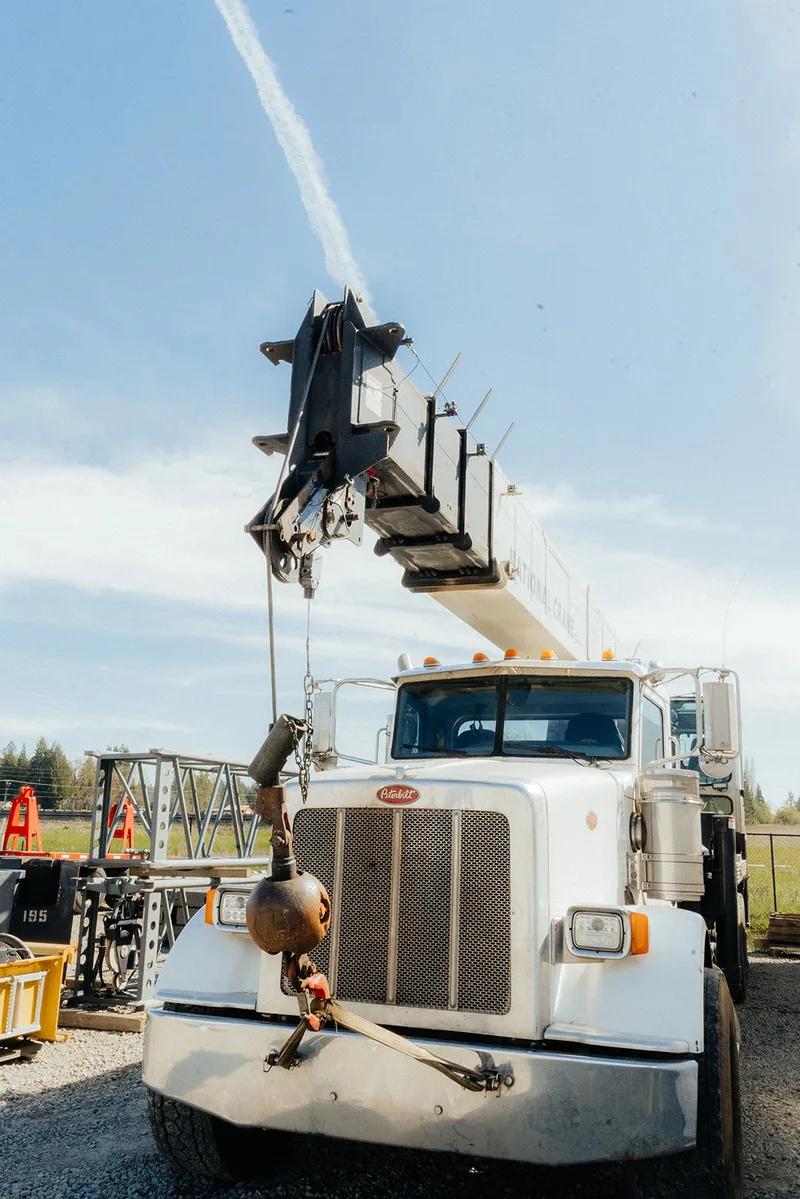
The boom lifts the tub over pasture fencing and lands it on the pad, so no fence panel or gate post has to come out first.

Shops, barns, and the few commercial roofs out here take a new condenser or package unit up by crane.
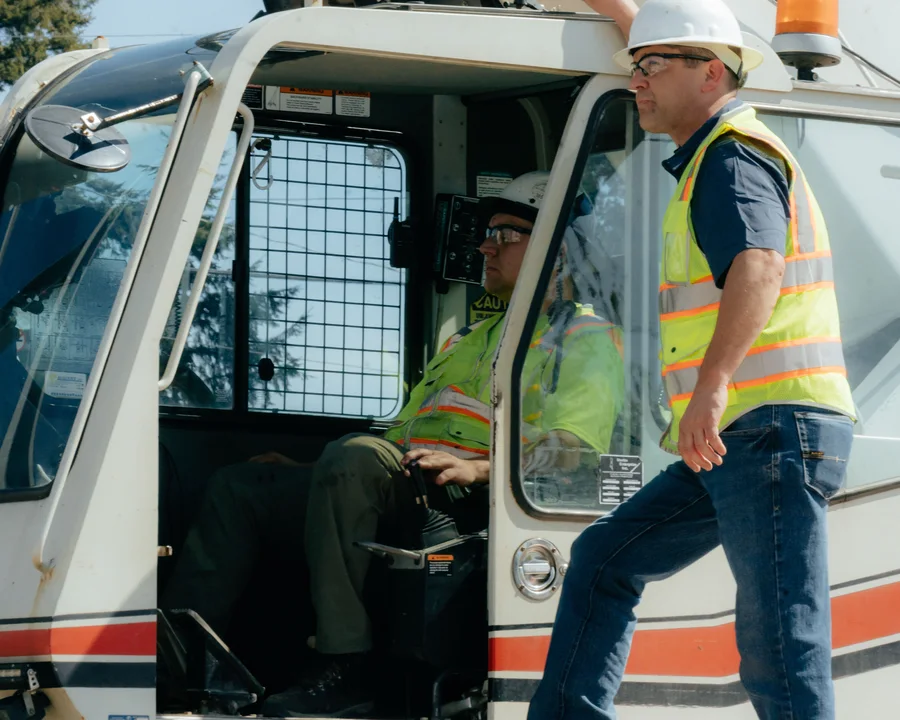
Generators, tanks, and machinery get rigged and placed where a flatbed on a soft gravel drive would sink or run out of room.
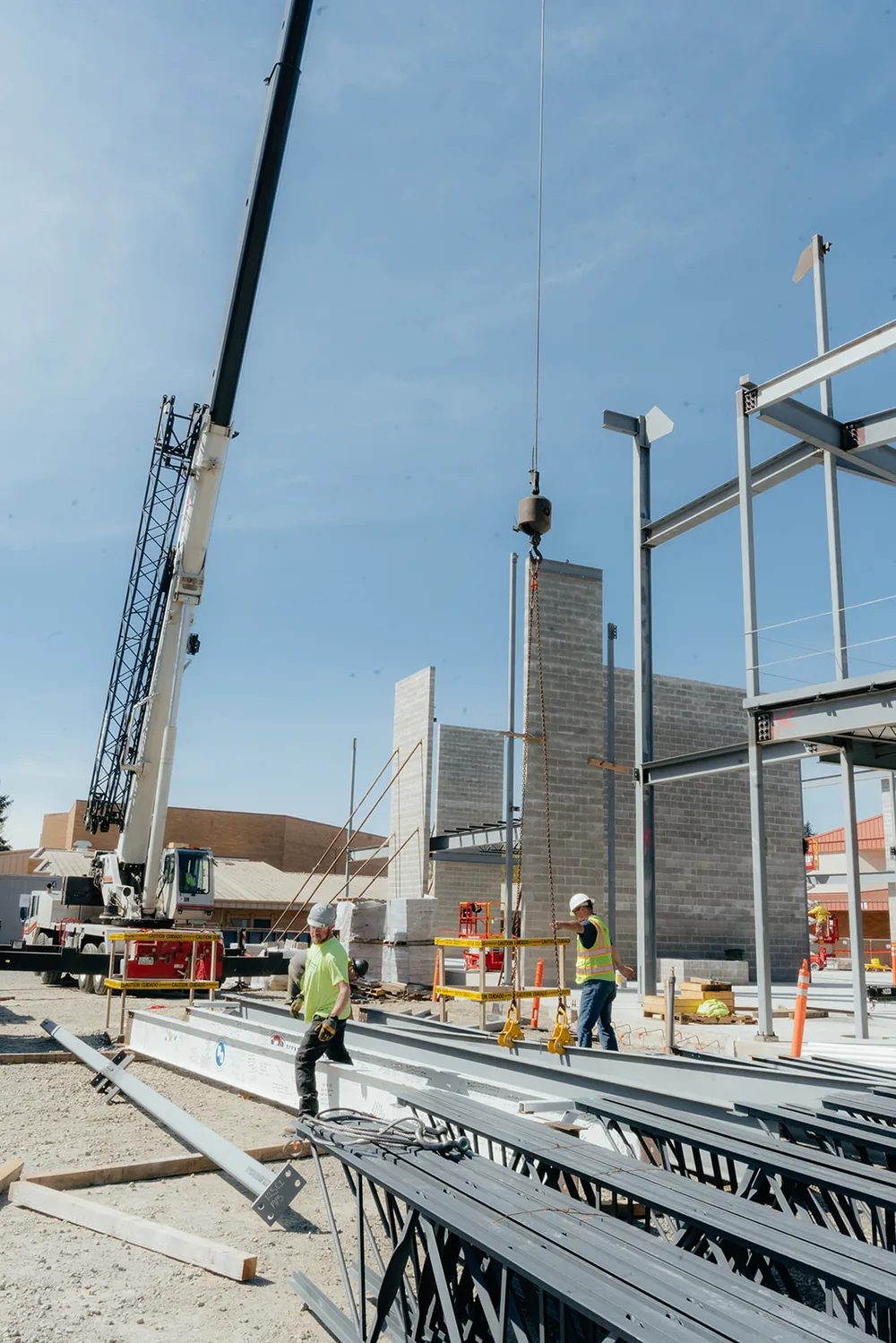
Westmore raises the shop or equipment barn and closes it in with its own crane on site, so one crew owns the whole schedule.

Parcels around Amboy run to fenced pasture, orchard, and standing timber, which usually means a long private drive and a locked gate at the road instead of a curb cut. That is a sizing question rather than a scenery note. Gate width and the turning room at the top of the driveway decide which tonnage class can set up, so give Westmore both numbers on the first call.
The county roads serving those parcels cross water on small structures that carry posted limits. Westmore confirms the route and the crossings before committing a heavier unit, which is why the day of the lift is never the day someone discovers a crossing will not take the weight. Ask for that route check when the date is set and it happens quietly in the background.
Backyard sets work the same way. The truck parks at the top of the driveway, the boom reaches over the pasture fence, and the tub lands on the pad with nothing dismantled to get it there. What Westmore wants first is the dry weight, the pad location relative to the house, and one photo taken standing at the gate looking in.

Amboy is farm and forest ground, so the buildings that go up are shops, equipment barns, and covered storage for working land rather than retail shells. Westmore erects the steel and holds the commercial general contracting contract on the same project, so the pad, the frame, the cladding, and the crane all answer to a single schedule.
On a parcel where the building is the entire project, that removes the handoffs that usually cost the most time. Nobody waits for an erector to free up a crane, and the county filing for road use is handled by the people already on site. Bring the footprint, the headroom your equipment needs, and a sense of what has to live inside, and the reply covers what the ground and the approach will actually support.
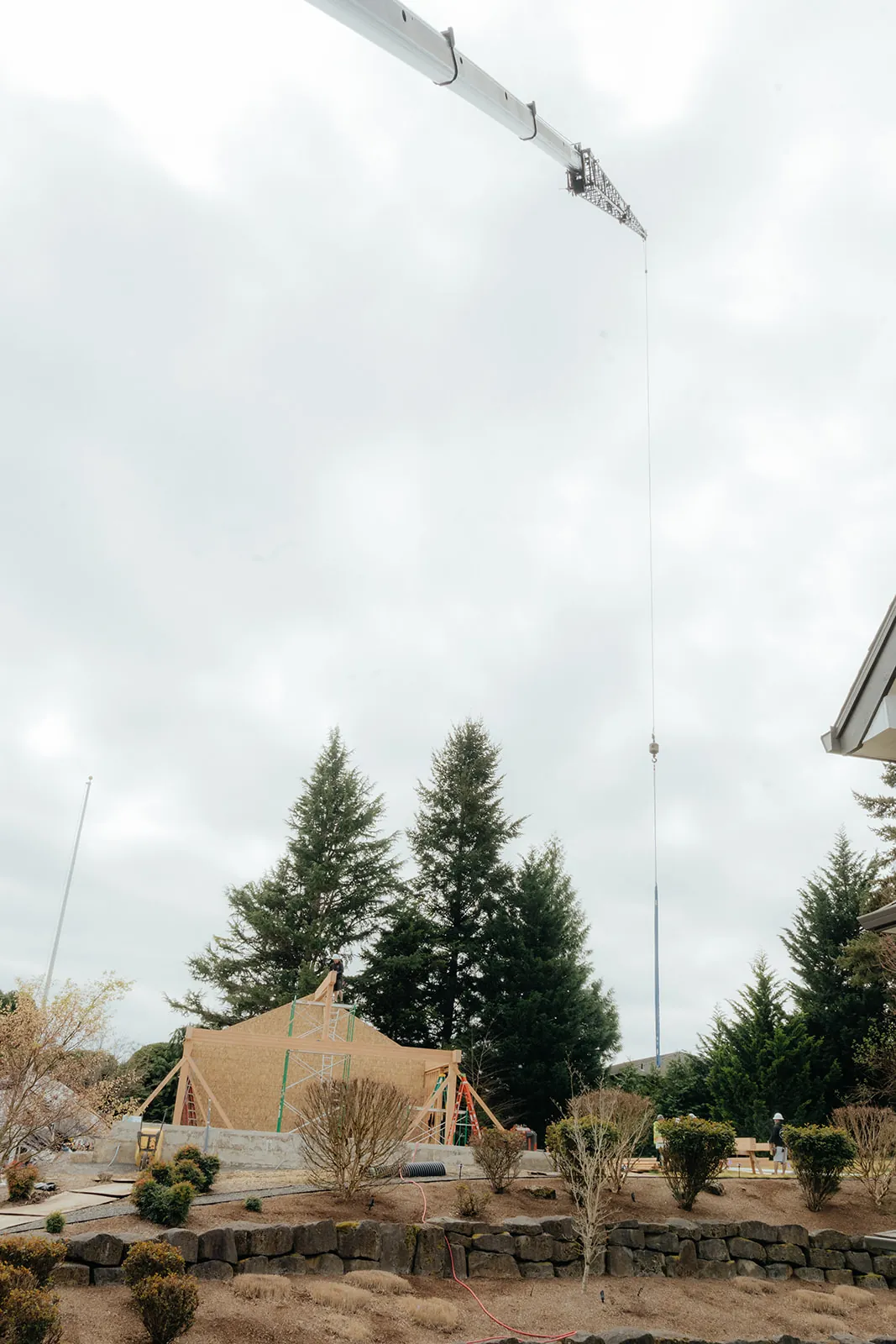
A crane line sets timber-frame roof members on a residential lot.

A three-person rigging crew on a residential timber-frame job.
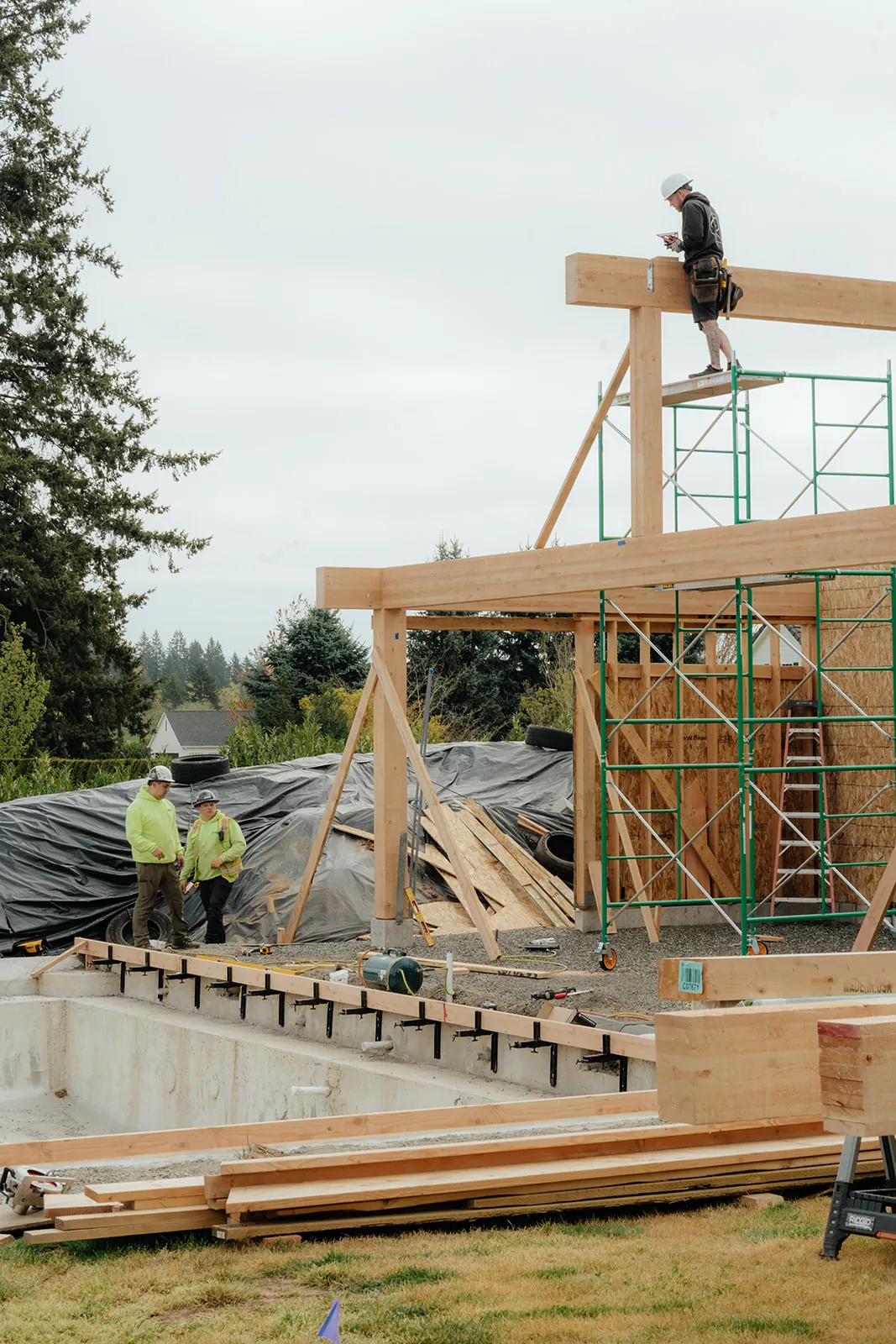
Scaffold and crew on a timber pavilion frame under construction.
Call with the load weight, the address, and the date you have in mind, or send the basics below and we call back within 24 hours.
"We hired Westmore Construction to build a slant-roof metal building on our property. From the beginning, Warren and his team followed-thru on everything they promised, were always professional and friendly and always reachable on the telephone. Each day, his crew would clean up the job site before heading home and were always respectful of our property. We would highly recommend hiring them."
Google review
"These guys are very professional, safe and on time. We pulled my well pump and replaced it in less than an hour with everything going very smooth. Thanks Westmore!"
Google review
"No matter the size of the project, they pay attention to the small details."
Google review
Yes. Both sit inside the regular Clark County service area, and any of the three machines can be assigned to a job here. Farm and timber acreage work is routine: a shop beam set in place, a spa landed behind a house, equipment rigged onto a pad no delivery truck can serve. Give the weight of the pick and the address where it lands.
Clark County Public Works. Amboy is unincorporated, so an over-legal load filing, or approval to occupy a county road, goes to the county desk instead of a city engineering office. Westmore prepares that paperwork as part of the job and works the county review into the schedule rather than bolting it on at the end.
Usually yes, once the approach has been checked. Farm and timber parcels here sit behind locked gates and long gravel drives, so the gate width, the surface, and any creek crossing on the way in all get confirmed first. Bridge and culvert weight limits matter for a heavier machine, because the crane has to arrive before it can pick anything up.
Firm ground for the crane to stand on and a clear lane above it for the load. In practice that means the gate unlocked, vehicles and equipment moved away from the setup area, low branches cut back along the swing arc, and the pad poured and cured. The setup spot is agreed in advance so nothing has to be shifted while the machine waits.
Weight, reach, height, what the ground beneath the outriggers can hold, and the tonnage class those add up to. Rural parcels add scouting time, since a locked gate, a gravel drive, and a creek crossing all have to be verified before a machine is committed. Photograph the approach and note where the pad sits.
The gate and the load settle it together. A narrow farm entry can rule out a bigger machine even when the weight alone would justify one. Lifting charts also drop off with distance and height, so a light pick made from far back can call for more machine than a heavy one made close to the pad. Capacity on hand tops out at 350 tons, with 100 and 55 ton classes under that.
Westmore does, working as the commercial general contractor and putting the frame up with its own crews. Pre-engineered metal buildings go up with Westmore crews, exterior finishing is part of the same contract, and the lifting is done with company equipment. The county reviews the road side of a rural build, and Westmore files that paperwork rather than leaving it with the owner.
Chelatchie addresses go on the schedule exactly the way an Amboy job does.
Start with three answers: what the pick weighs, where it has to land, and how wide the gate at the road is. An acreage job gets sized from those before any number goes on paper.
Battle Ground, WA
Fields marked * are required.
We call back within 24 hours. Prefer to talk? (360) 772-1040