

Operated crane lifts for Battle Ground contractors and homeowners, priced with the operator and the rigging already on the crane.
Crane service in Battle Ground is operated work, so a single booking delivers the machine, all the rigging, and the operator who runs both, on classes between 55 and 350 tons. Every Westmore operator is NCCCO certified. Westmore is based here at 30519 NE Harrison Road, which is why the calls run the whole range. Rooftop HVAC changeouts and equipment sets for the trucking, contractor, and light manufacturing yards along the Grace Avenue corridor. Structural beams, tanks, and machinery placed inside the Commerce Industrial Park. Hot tubs, spas, and saunas dropped into backyards in town and onto acreage past the city line. Same crew and the same number, whichever of those describes your job.
When you call, the address tells us more than the load does. It sets which office handles a right-of-way permit when the crane has to take a street, and it tells the crew what the approach looks like: a paved commercial lot off Grace Avenue, or a gate onto acreage where the ground gets read before outriggers go down. Either way the answer you want back is the same one, which machine fits and where it stands, and that comes out of three things you already know. Send the address, the weight and footprint of whatever is being lifted, and a photo taken from the road looking toward where it has to land.
Most Battle Ground crane calls come from one of three places: an industrial yard, a commercial roof, or somebody's backyard.
Acreage properties past the city line, where a tub or swim spa clears the fence line and lands on the pad without a gate coming off its hinges.

Unit changeouts for the trucking yards, contractor yards, and light manufacturing sitting along Grace Avenue and around Eaton Boulevard.
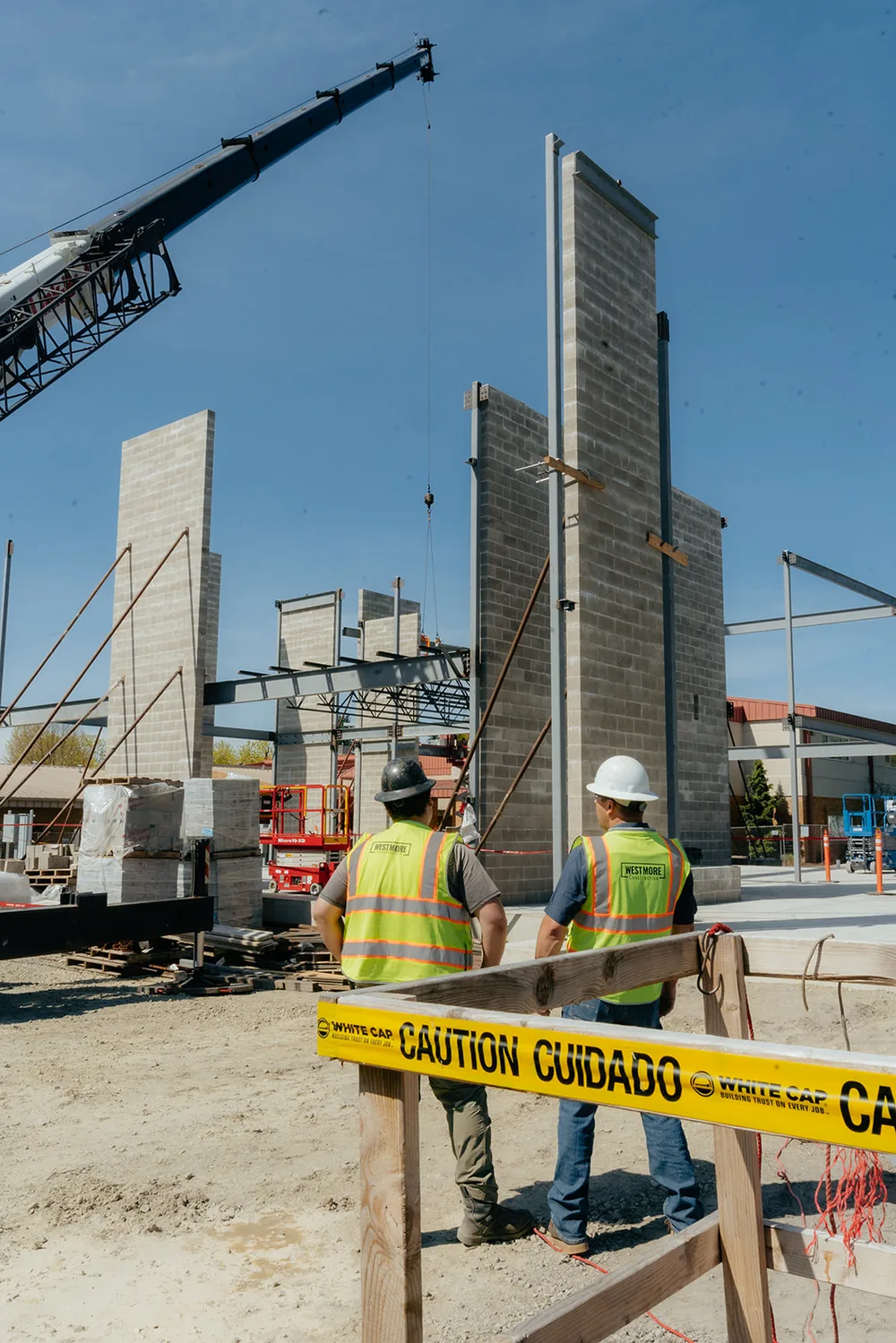
Controlled picks setting heavy equipment, storage tanks, and structural beams, matched to the load and the setup distance before a truck rolls.
The address changes the paperwork, the approach, and sometimes the crane.

A lift that stands in a public street runs on a right-of-way permit with an approved traffic control plan attached, and that plan has to show the real footprint: where the outriggers land, how wide the machine sits with them out, and which lanes the boom swings across. All of that depends on which crane comes, so the machine is chosen first and the plan is drawn around it. Pick the crane afterward and the plan gets drawn twice.
So the first call is about the load, not the paperwork. Weight, the reach the pick needs, and how much street frontage sits in front of the set point are what let the crew size the machine and lay out that footprint. City review then keeps its own clock, so the date you are given already has the review counted inside it. Send the weight and a single picture of the street frontage, taken from the opposite curb.

Before the boom moves, the crew wants to know what sits in the air between the truck and the landing spot. A service drop running to a house or a shop, a limb hanging over the fence line, a roofline taller than the pad beside it: each one sets a clearance the load has to keep, and clearance is what pushes a setup around to the far side of a building. None of it stops a lift. All of it decides where the machine stands.
Power drops are the one people forget to mention. The crew raises them on the first call because a line strung across the approach can rule out the obvious parking spot entirely, and discovering that on delivery morning costs the day. Photograph the approach with the wires in frame, say what else is strung across the yard, and the setup side gets settled on paper long before a truck is booked.
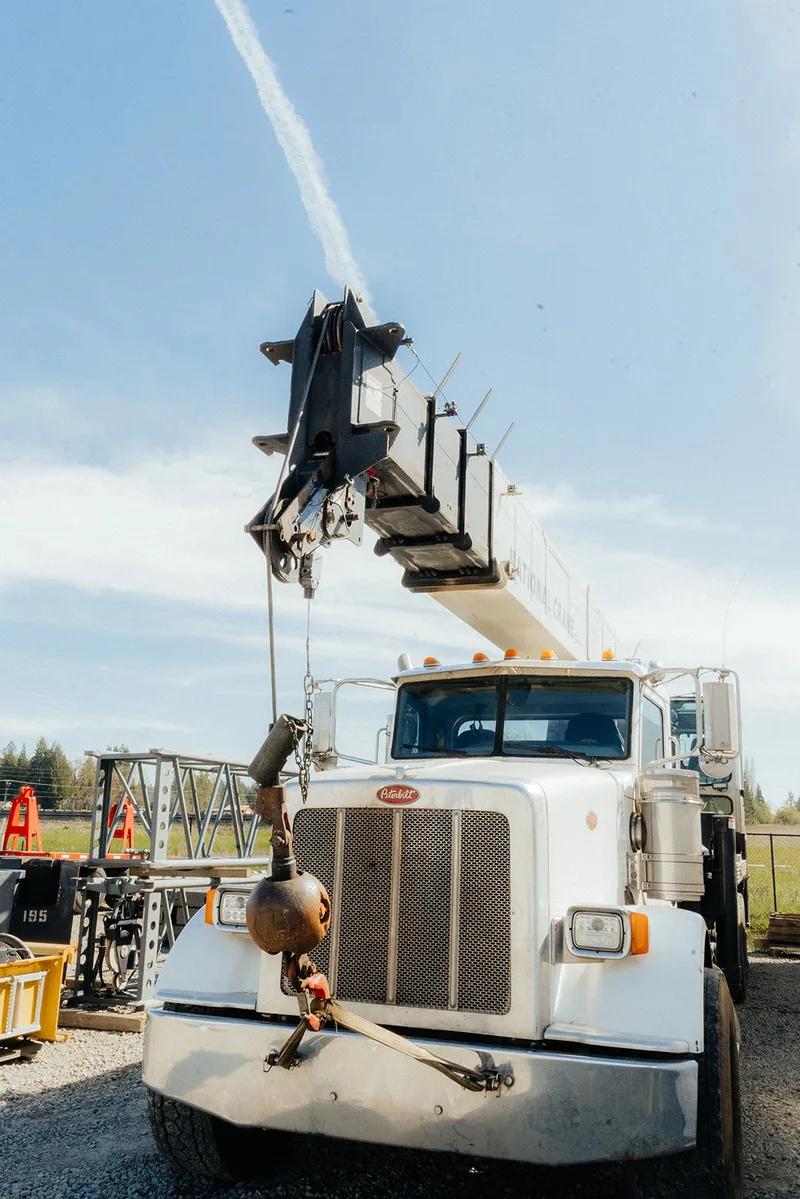
A load light enough for the 55 ton class up close needs the 100 ton Link-Belt the moment the machine has to stand back behind a fence line, a landscaped strip, or a neighbor's parking stalls. Capacity falls off as the boom extends, so the question that actually settles the machine is not what the piece weighs. It is where the outriggers can safely and legally come down.
That is what the 350 ton Grove is in the fleet for: the picks that clear a whole building rather than setting up alongside it. Hand the crew the weight, the set point, and the nearest place a truck can level up, and the class gets named in the quote instead of after it.
One fleet covers a backyard spa set and a heavier industrial pick alike.
The right size for HVAC units, hot tubs and spas, beams, and tight residential or commercial sites where a bigger crane cannot set up.

The workhorse for steel erection, precast and tilt panels, transformers, vaults, and rooftop equipment on commercial jobs.

Heavy and long-reach picks: generators, large mechanical equipment, and lifts that have to clear a building from the street.
Call with the load weight, the address, and the date you have in mind, or send the basics below and we call back within 24 hours.
"I have used Westmore construction for several years now. As an Arborist, we utilize Troy, and Warren to help us with tree removals. I could not ask for a better group of guys. They are friendly, on time, honest, and hard working. They always make safety #1, and my climbers love working with them."
Google review
"Westmore Construction offers a white glove customer service process with their crane operators and crane lifting services!! Warren, Troy, Matt and the rest of the crew do an amazing job!!"
Google review
"Westmore Construction crane division is the best I have ever had the pleasure to work with very safety conscious and professional. Troy, Warren and Travis are the best!!!"
Google review
The permit path decides it. A lift confined to private ground has nothing waiting on the city, so the date answers to the load, the class it calls for, and the site itself. A setup standing in a Battle Ground street has to clear the City Engineer first, on both a right-of-way approval and its traffic control plan. Send the weight, the set point, and the address.
Westmore files them. A crane set that occupies a Battle Ground street or sidewalk requires a right-of-way permit from the City Engineer, which will not issue without a traffic control plan the city has approved and an insurance certificate that adds the city as an additional insured. Westmore carries that insurance and makes the filing as part of the job, so the property owner is not handling city paperwork.
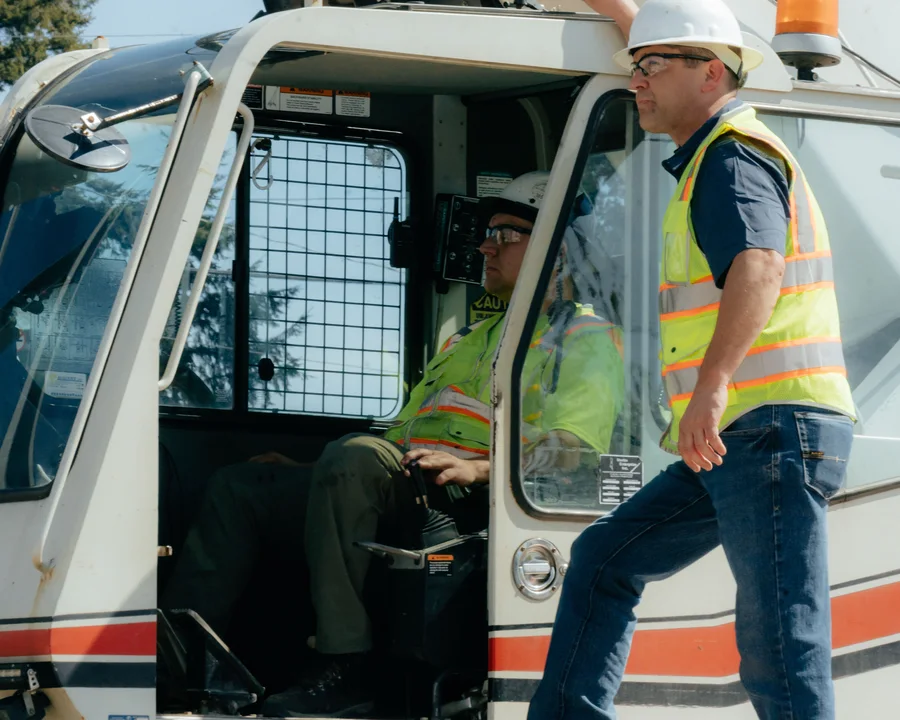
Yes. An operator is not optional. Every Battle Ground lift is quoted as an operated crane service, so the machine arrives with its NCCCO certified operator and with the rigging the pick calls for. Bare equipment for a customer to run is not something Westmore rents, and the person on the controls is the one reading the load chart and setting the outriggers.
The reach usually decides it before the weight does. Distance costs capacity on the load chart, so the farther back the crane stands from the pad, the less it can hold, and a deep lot or a wide house can put a light tub in a heavier class. Three machines are available to assign, rated 55, 100, and 350 tons.
Because the crane class, the time on site, the rigging, and the permits all move independently of tonnage. Which machine the pick requires is the largest single input, and it changes with the working radius, so identical loads can land in different classes when one crane sets up twice as far away. Setup and teardown, the rigging the load needs, and street occupancy with traffic control account for the rest.
Level, compacted ground where the outriggers will land, a clear route from the truck to the set point, plus any overhead power line or tree limb in the boom path flagged ahead of time. What the ground can hold matters as much as reach, since outrigger pads press the whole machine into four small footprints. Gate width and driveway turning room matter too.
Usually yes. The unincorporated Clark County acreage around the city, Meadow Glade, Lewisville, Dollar Corner, and Venersborg included, gets the same cranes and crews as a paved commercial lot in town. What changes is the surface: gravel drives and soft pasture get checked for outrigger bearing, and cribbing goes on the truck when the ground will not carry the machine.
Send the weight, the set point, and the Battle Ground address, and the machine is matched to the job before it is priced.
Battle Ground, WA
Fields marked * are required.
We call back within 24 hours. Prefer to talk? (360) 772-1040