

Operated crane lifts in Camas, sized to your lot and scheduled around Gorge wind, with rigging included.
Crane service in Camas arrives as an operated lift, which means one order covers the crane, the rigging, and a certified operator, with NCCCO certification standard across a fleet running from 55 to 350 tons. What the crew needs from you changes with the job. A rooftop changeout turns on where the curb sits and how tall the parapet is, because those two fix the radius long before tonnage enters the conversation. An industrial pick turns on who controls the lane the outriggers come down in, and for how long. A backyard set turns on the roof or fence the load has to cross and where a truck can legally stop. Answer the one that matches your job and the machine follows from it.
Camas adds one scheduling variable most of the county never deals with. Sitting where the Gorge opens out to the west, it catches sustained wind the National Weather Service issues high wind warnings for, and boom and load limits can be reached here while the sky a few towns west still looks ordinary. So a pick in Camas is booked with a wind window, and a marginal forecast moves it instead of testing it. The other variable is the roadway: a setup that occupies the street works under a City of Camas encroachment permit through Public Works, and that application carries a traffic control plan plus an insurance certificate. Send the weight, the address, and which of your dates can flex.
The three kinds of Camas lift, and what each needs from the site.
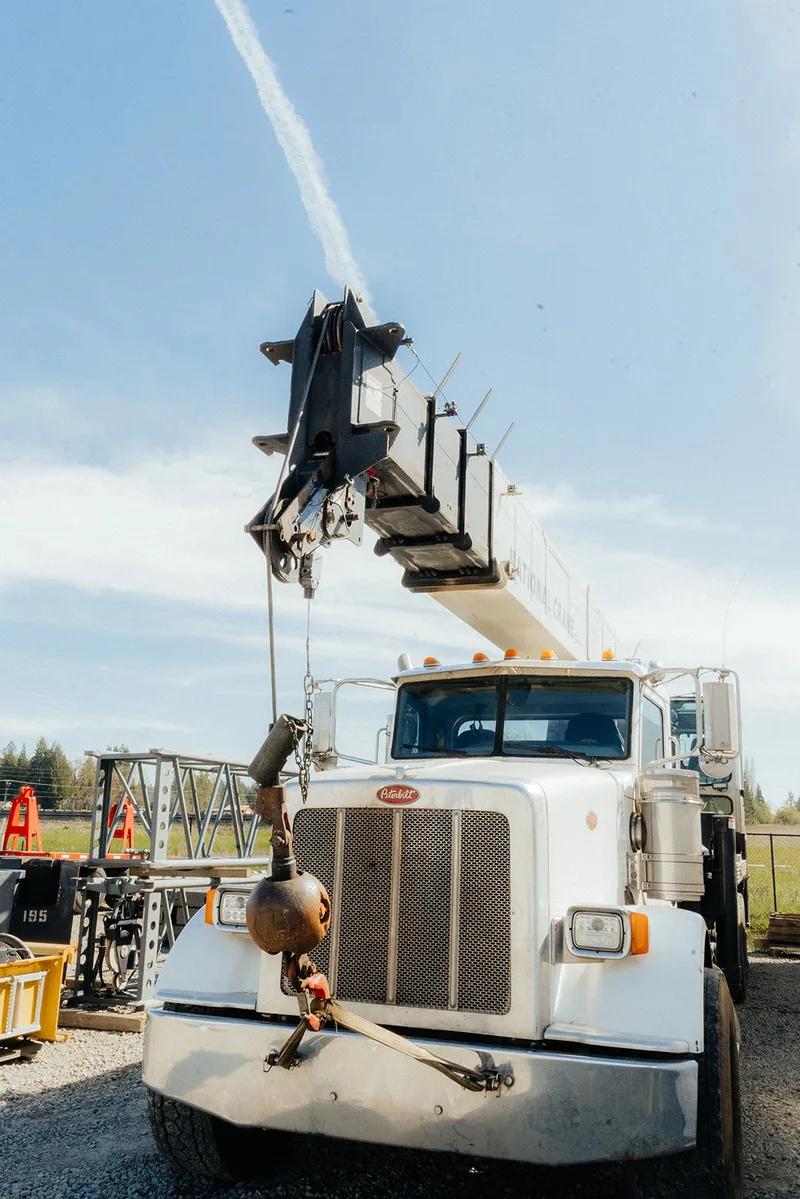
Picked up from the street and lowered onto the pad, with the fence, the gate, and the landscaping left exactly where they are.

Unit changeouts for the tenant improvement contractors working the commercial and manufacturing campuses on this side of the county.
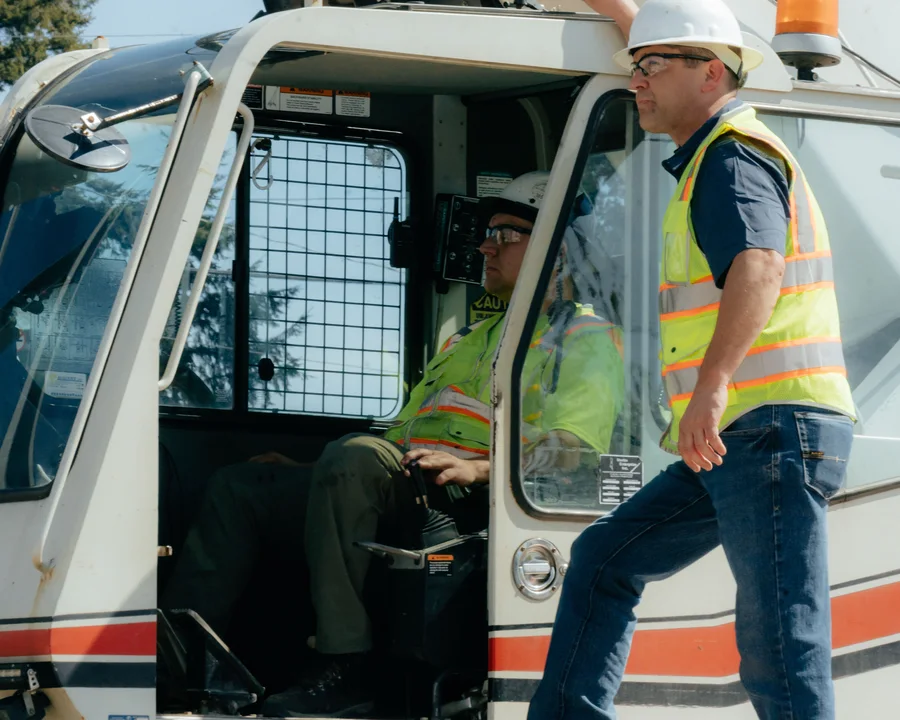
Beams, machinery, and whole structures rigged at the port industrial park, worked around the tenants who still need their lanes open.

The Gorge works as a wind tunnel, driven by pressure differences building either side of the Cascades, and the events it produces are strong enough to shut a boom down. That is why a Camas pick is scheduled with a window rather than an hour, and why the crew would rather move a date than lift into a gusting forecast and hope the numbers hold.
Those same events make travel rough for high-profile vehicles along SR-14, which is the corridor most heavy equipment uses on this side of the county. SR-14 answers to the Washington State Department of Transportation, so an oversize move or a lane closure on it needs state coordination on top of whatever site permit the job itself carries. Tell us if your load is oversize on the first call and both approvals start together.

Three answers decide a residential pick here: how high the roof or fence line runs, how far the pad stands from the closest spot a truck can legally park, and what is strung overhead between those two points. Power and service lines catch people out, because clearance is not negotiable and it can push the whole setup around to the other side of the house.
So the clearance question gets settled first, on paper, before anything is booked. Give the crew the height of the roofline or fence the load has to cross, whatever is strung above the yard and the driveway, and how far the pad stands from the nearest legal parking spot. If a service line rules the street side out, the setup shifts to the far side of the house, and it costs a phone call rather than a lost morning.
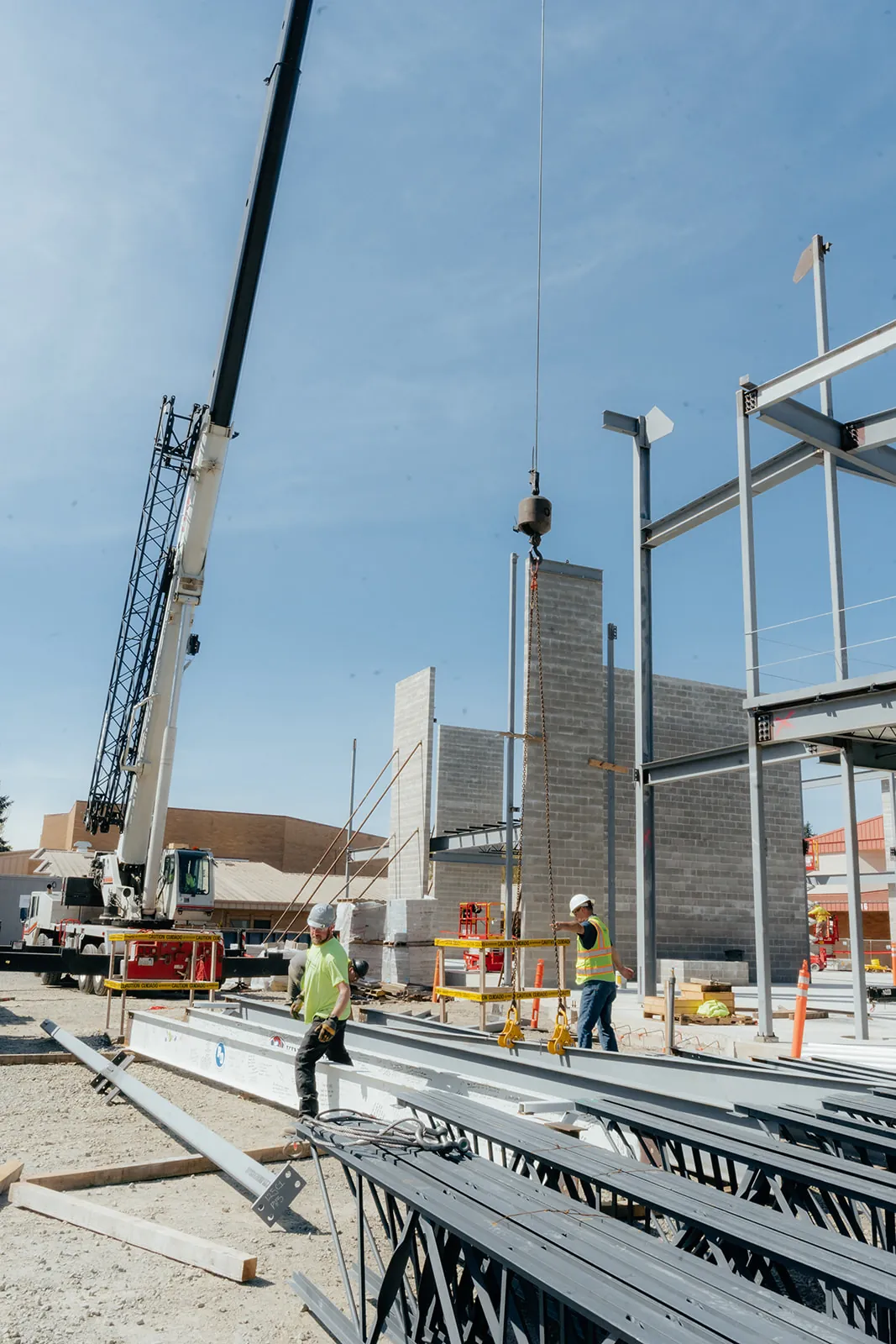
Heavy members and equipment bound for a Camas jobsite ride on company trucks and trailers instead of a hired hauler, the same fleet behind storage and transport. That matters most when material has to reach the site well ahead of the pick: it has somewhere to sit, and the outfit that brought it in is the outfit that puts it up. Nobody waits on a hauler to confirm a window that the crane already holds.
So send the load list along with the crane request. The pieces, what each one weighs, and the day it has to be on the ground are what let the delivery and the pick come back on a single quoted schedule. If part of the order needs storing before it moves to the site, put that in the same message and it gets priced with the rest.
Wind windows and hillside terrain both factor into which crane and setup fit a Camas job.
The right size for HVAC units, hot tubs and spas, beams, and tight residential or commercial sites where a bigger crane cannot set up.

The workhorse for steel erection, precast and tilt panels, transformers, vaults, and rooftop equipment on commercial jobs.

Heavy and long-reach picks: generators, large mechanical equipment, and lifts that have to clear a building from the street.
Call with the load weight, the address, and the date you have in mind, or send the basics below and we call back within 24 hours.
"We have used Westmore many times for crane needs lifting sauna's into place as well as large beams for decks. Great service everytime!"
Google review
"In our HVAC company, we use Westmore whenever we need a crane on a job. They are the first ones we call and they are always happy to fit us in the schedule. They show up on time, with a good attitude, and safe work practices every time. Great company to work with!"
Google review
"Working with Westmore was a great experience from the first call pricing the project to when the guys finished up on site. The crane operator Travis and his helper were a pleasure to work with and very knowledgeable. Highly recommend the Westmore team for any craning needs!"
Google review
A crane that occupies a Camas street needs a Commercial or General Encroachment Permit from City of Camas Public Works, filed through the city's Civic Access portal with a traffic control plan and proof of liability insurance. The city publishes no crane-specific permit, so scope gets confirmed with its Engineering division before filing. A pick kept entirely behind the property line usually needs no city permit.
Weight, radius, time on site, and permits. The load and the radius the crane must work at decide which machine comes out, and the machine spends more of the day setting up and tearing down than picking. An encroachment permit with traffic control is added only when the roadway is occupied. A wind hold in the Gorge corridor can add a second date to the plan.
A clear route from where the truck can park to the set point, ground solid enough to take the outrigger pads, and any overhead line or tree limb along the boom path noted in advance. Gate and driveway width get checked, since the machine rides in on a trailer that needs turning room. On a commercial site, whoever is receiving the load should be there when it lands.
Reach depends on the crane class and how much of the boom is out, since the chart gives less capacity the wider the radius. A single-story roof worked from the street is a short radius. A taller house, a deep backyard, or a commercial roof pushes the radius out and the class up. A 350 ton Grove covers the longest reaches, and the two smaller classes take the rest.
Rigging comes with the crane. Slings, shackles, spreader bars, and the other gear the pick needs travel with the machine and the NCCCO certified operator as one operated crane service. There is no separate rigging supplier to book and no bare machine to hire. Give the load weight and the lifting points.
Yes, with the lines located and cleared first. The crew identifies every overhead line near the boom path before the date is set, and the plan keeps the boom and the load outside the minimum approach distance the utility and Washington L&I require. When the geometry does not allow that, the utility is asked to de-energize or cover the line, which adds lead time to the schedule.
Send the Camas address, the load weight, and a photo shot from the curb, and the crane class and the wind window come back together.
Battle Ground, WA
Fields marked * are required.
We call back within 24 hours. Prefer to talk? (360) 772-1040