

Operated crane lifts for Kent Valley roofs and hill neighborhoods, plus commercial steel buildings erected and finished by the same company.
Kent splits into two markets that barely overlap, and Westmore works both with cranes and with steel. Down in the valley the buildings are large-format distribution and manufacturing space, so the calls come from contractors: rooftop mechanical units, structural picks, machinery placed inside plants, and pre-engineered frames erected on open industrial pads. Up on East Hill, West Hill, and around Panther Lake the customer is usually a homeowner, and the job is a spa, a sauna, or equipment lifted over a house on a lot with no other way in. One package covers the crane, the NCCCO certified operator who runs it, and the rigging, sized between the 55-ton and the 350-ton all-terrain machine.
Before a Kent date holds, settle the permit and the pad. City code says it is unlawful to use a public place for private purposes without a street use permit from the public works director, and the code counts the space above the surface as part of that public place, which is exactly the volume a boom occupies. Closures carry their own permit and their own conditions. The pad is the second half: this valley floor is young river deposit that federal geologists rank high for liquefaction, which is why outrigger bearing is checked and matted here rather than assumed. Send the parcel address, what the unit weighs, the radius it has to swing, and a photo of the ground where the truck would set up.
Two customer types, four services. The industrial corridor calls for the first three; the neighborhoods above it call for the fourth.

Packaged units and condensers set on warehouse and plant roofs, with the boom working over a dock apron or a truck court.
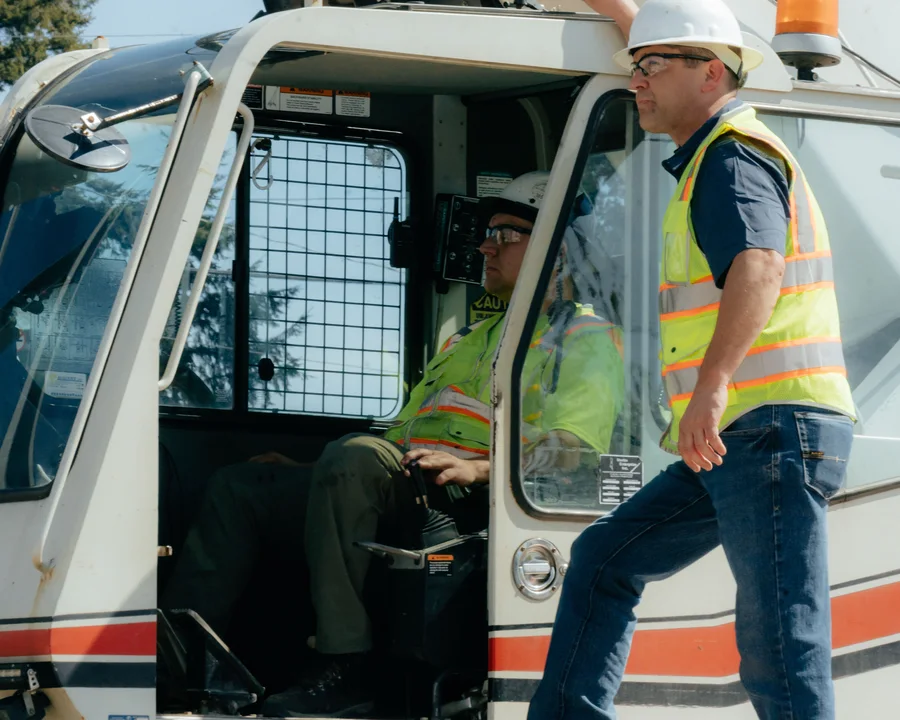
Production machinery, tanks, transformers, and precast pieces rigged and placed on parcels where a forklift cannot reach.
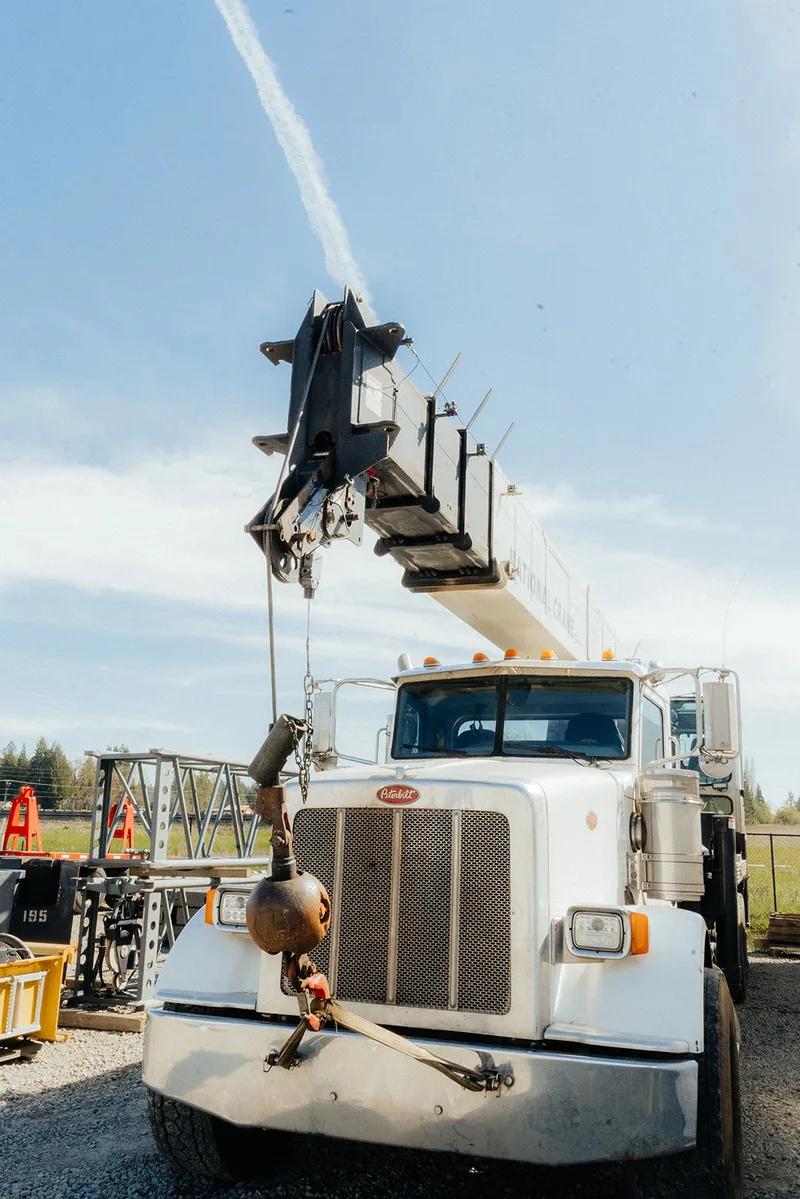
A hot tub or sauna flown over the house and landed on its pad at homes above the valley, fences and decking left alone.
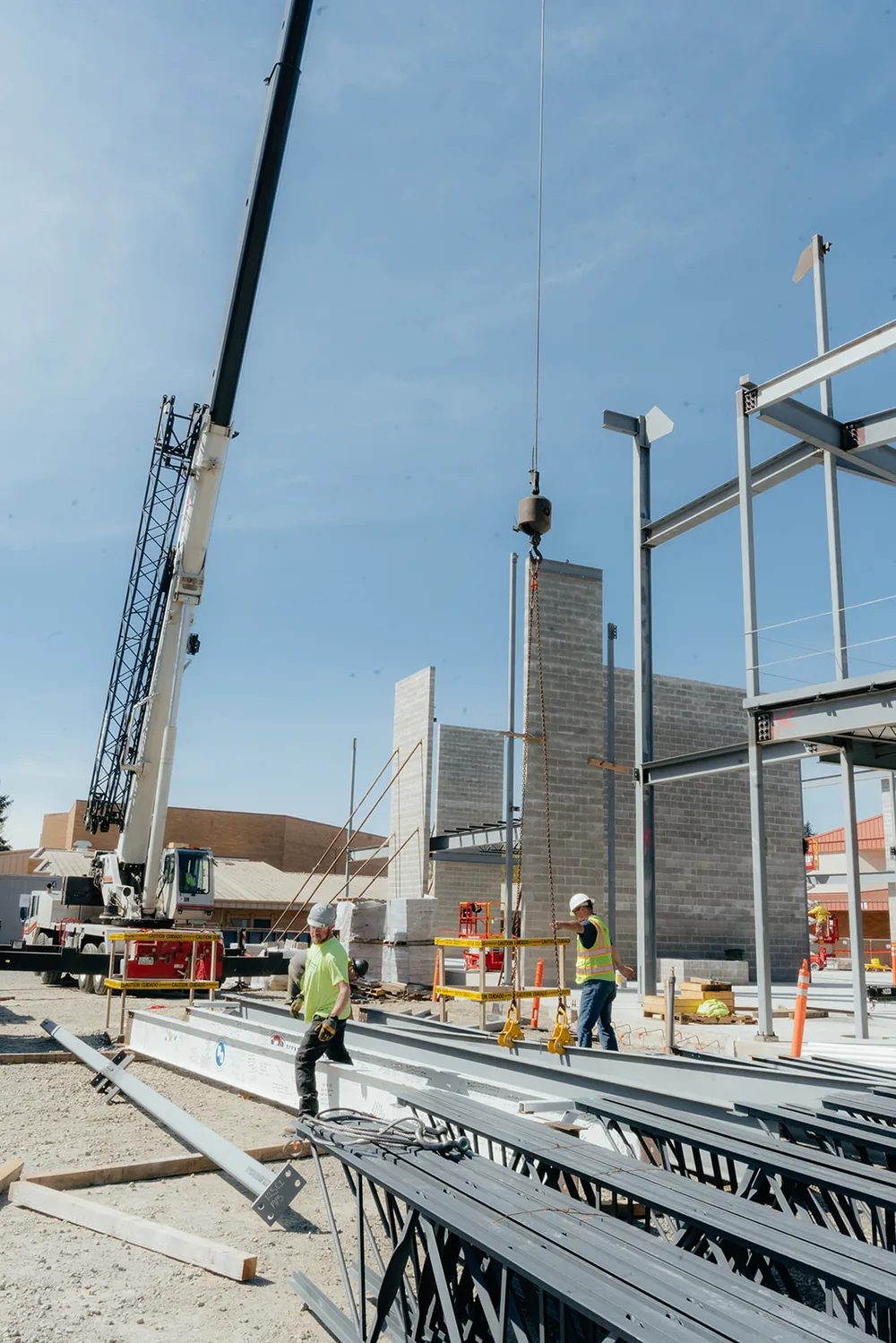
Clear-span frames, dock walls, and mezzanines bolted up for warehouse and manufacturing space, crane included in the scope.
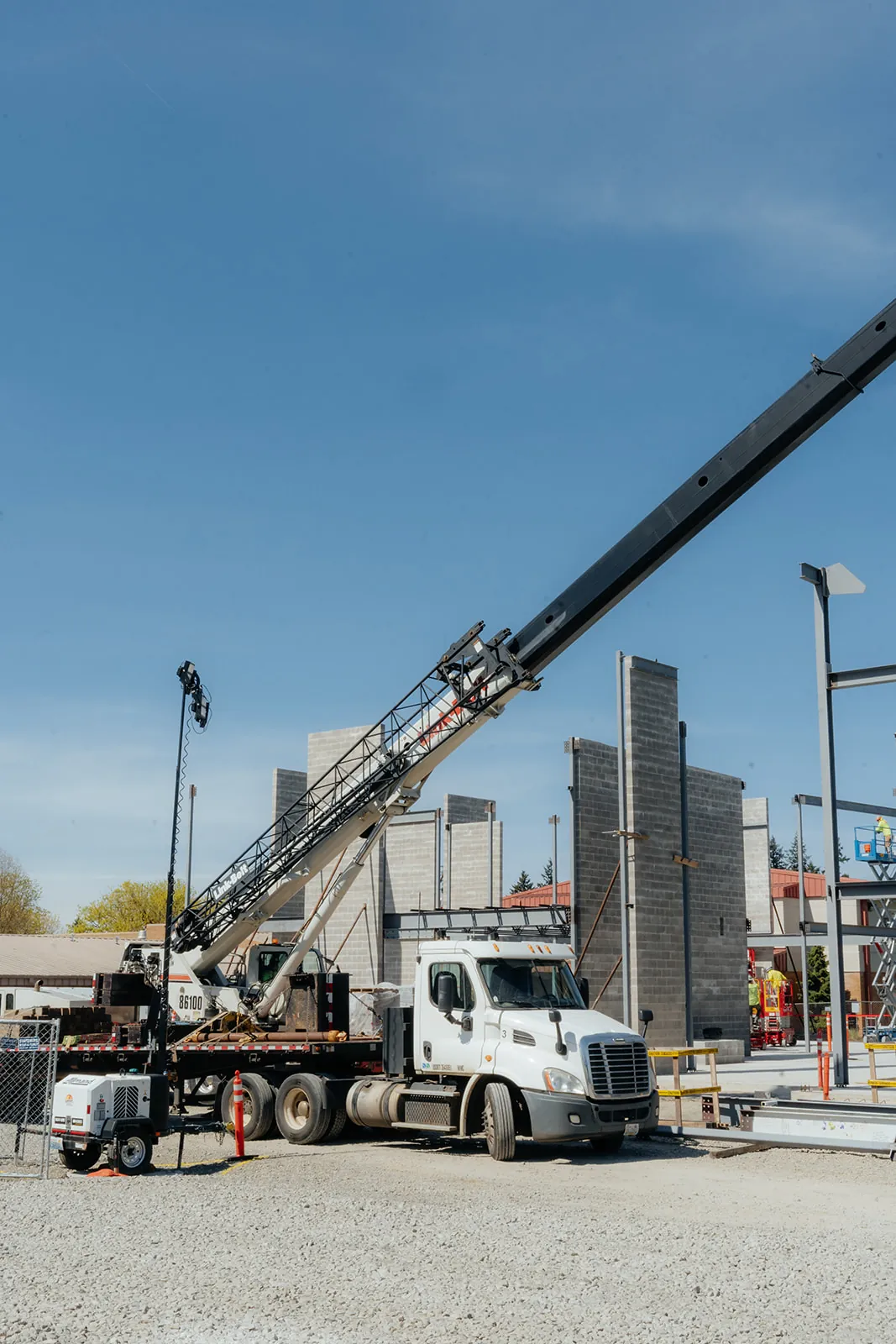
SR 167 runs this valley as a freight corridor, crossing two railroads on its way through town, and about eight percent of the traffic on it is freight serving these industrial areas. A large machine or an oversize component reaches the site on that road, so the route and the arrival window belong in the plan long before lift day.
Inside the fence line, rail is often the real constraint. Industrial property here commonly has live spurs crossing it with switching moves during the shift, which narrows where a machine can set down and how long that setup can stay in place. Say on the first call whether a spur runs through the property and where the trucks turn.
Winter has its own answer. The lower Green River stays buildable because of Howard Hanson Dam and the levees below it, and low parcels still take on water through the wet months. Say early which weeks are workable for the site, because saturated ground under the outriggers changes what a machine can do from that spot.

Buildings here run to large-format distribution and manufacturing space, and at that size they are pre-engineered steel: long clear spans, dock walls, and heavy rooftop equipment designed into the frame from the beginning. Westmore erects that steel, and the operators running the machines that stand it up work for the same company.
On a full project, Westmore carries the commercial general contracting scope, brings the trades, and keeps steel erection and the crane hours in house. An owner who has already hired a builder can buy the erection scope or the crane on its own.
Foundations here are engineering work, not a catalog detail. The corridor sits on young Duwamish valley deposits that federal studies rate high for liquefaction in a large earthquake, so footings on these parcels carry geotechnical requirements an upland site never sees. That is the same soil question the outrigger mats answer on lift day.
Rooftop equipment on a valley distribution building and a spa lifted over a hill house get sized the same way: weight, reach, and the only place the truck can legally park.
The right size for HVAC units, hot tubs and spas, beams, and tight residential or commercial sites where a bigger crane cannot set up.

The workhorse for steel erection, precast and tilt panels, transformers, vaults, and rooftop equipment on commercial jobs.

Heavy and long-reach picks: generators, large mechanical equipment, and lifts that have to clear a building from the street.
Call with the load weight, the address, and the date you have in mind, or send the basics below and we call back within 24 hours.
"Think Seal Team 6 of Crane Work! Westmore was able to scramble, rearrange their schedule and drive a Crane 15 hours across the state to get us out of a jam on Generator set for Walmart, highly recommend these Professionals"
Google review
"Westmore is that perfect balance of cost vs what you get. They self perform their own work creating value there while delivering the project on time and on budget. These guys hustle, they have a great attitude, they're friendly, they never complain... they just get the job done. I would hire them again in a heart beat. This project scope was a building over 20,000 sq ft. They have the expertise to pull it off."
Google review
"The Westmore team is a tight-knit group of professionals who know their stuff. Their communications and teamwork is a joy to watch. They are fast and efficient without sacrificing quality or workmanship. Watching them work is "poetry in motion"!"
Google review
Yes, the valley industrial corridor and the hills on either side of it. Two things set the schedule: which class the pick calls for, and whether the machine occupies a public place, because street use runs through the city and the public works director attaches the conditions. A job held behind the property line skips that step entirely. Start with the parcel address, then what the load weighs and where it has to land.
Yes. City code makes it unlawful to use a public place for private purposes without a permit from the public works director, and it defines that public place to include the space above the surface, which is precisely where a boom swings. Closing a street of any duration carries its own permit. The application asks for the routes to and from the property, the contractor, a state contractor number, and a city business license.
It involves three numbers and a pad: what the unit weighs, how tall the building is, and how much room there is to park beside it, plus ground that will carry the outriggers. Distribution roofs at this scale push the setup back behind truck courts and dock aprons, and a boom working farther out rates lower. Live rail spurs cross some of these parcels, which is why the setup point gets picked before the class does.
Radius first, weight second. A spa is light for any of the three classes, so the number that governs is how far the boom must work from the only legal spot for a truck, plus whatever roof or fence sits in the flight path. Hill lots here are narrow between houses, so one photo looking from the curb toward the pad usually answers it.
Class, radius, and hours committed to the site, in that order. Street use adds conditions the director may set, insurance and a deposit or bond among them, and those move the calendar as well as the total. Ground adds a line when valley soil calls for engineered matting under the outriggers. An open pad behind a warehouse and a lift over a hillside house price differently on all three.
Yes. Westmore signs the commercial general contracting agreement, erects the pre-engineered frame with in-house crews, and supplies the cranes from the same company, so a distribution shell and the lifts that stand it up run on one schedule. Kent runs building permits through its own permit center in Economic and Community Development, filed electronically rather than over a counter.
Three of these names are residential ground above the valley, the fourth is the industrial floor between them, and all four sit inside the area this page covers.
Three things size a Kent job: what the unit weighs, the reach out to where it lands, and whether the truck sets up inside the fence line or in the street.
Battle Ground, WA
Fields marked * are required.
We call back within 24 hours. Prefer to talk? (360) 772-1040