

Crane lifts for Federal Way rooftops, commercial lots, and spa sets, and the steel building work comes from the same company.
Crane work in Federal Way splits three ways, and the company running those picks also erects steel buildings on the same commercial ground. On retail, office, medical, and hospitality property it is rooftop mechanical sets and equipment changeouts. On commercial and light-industrial lots it is hoisting and rigging: structural members, vaults, transformers, and machinery landed where the boom gets one clean pass at the target. On residential property it is spa, sauna, and equipment sets flown over a fence line. Every pick here is an operated lift. An NCCCO certified crane operator comes with the machine, rigging gear included, and the load chart decides the class, anywhere between 55 and 350 tons.
Settle one question before choosing a date: can the machine stay behind the property line? A setup that takes a Federal Way street, sidewalk, or traffic lane needs the city right-of-way use permit, issued by the Public Works Street Systems Division, and the application asks for a site plan, a vicinity map, a traffic control plan, and an insurance certificate that names the city. Incomplete applications come back. Public Works also wants notice before the crew starts, and a call-in each morning the job is active in town. The southwest corner of the city runs into Tacoma and Pierce County, so name the parcel rather than the city, and say which side of that property line the outriggers land on.
Four services carry the calls out of this city, on commercial roofs, on light-industrial lots, and behind houses.

Mechanical units set on retail, office, and medical roofs, sequenced to finish inside the lane window the city permit allows.
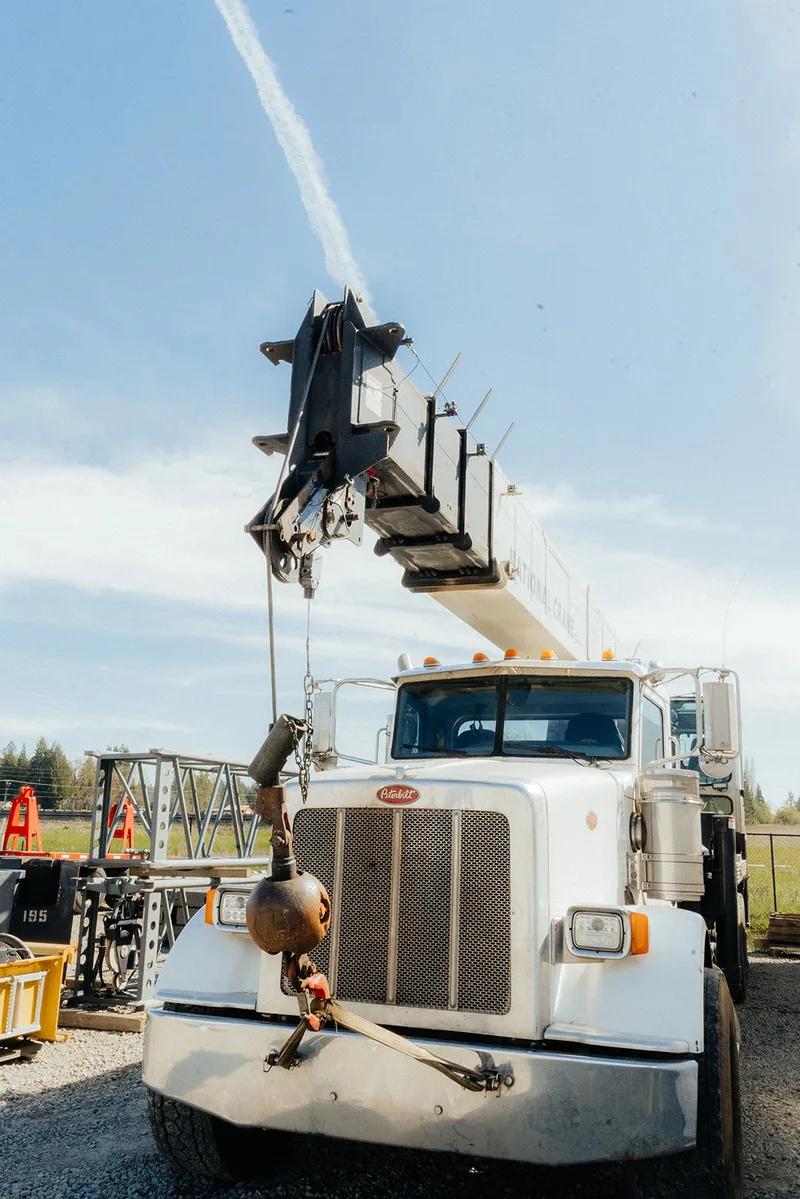
Spas and saunas carried over a fence line onto a prepared pad, on plateau lots and properties above the water.

Shop buildings and commercial shells put up, closed in, and finished, with Westmore supplying the ironworkers and the machine that lifts for them, on one schedule.
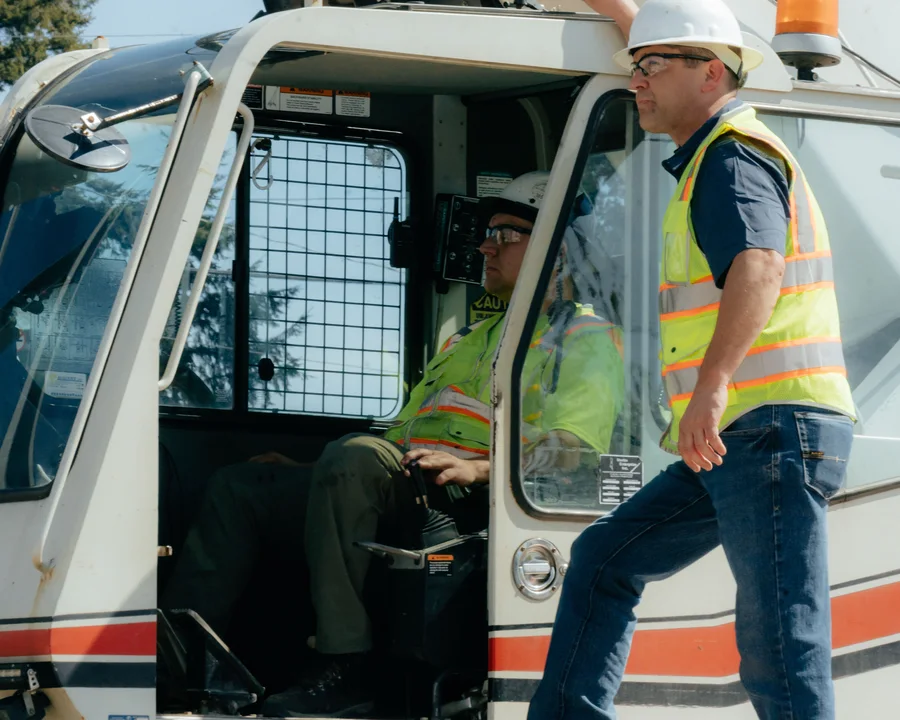
Vaults, transformers, and beams rigged, flown, and landed on lots that give a boom one setup and nothing more.

The city right-of-way terms shape every street set here. Work and lane closures are allowed 8:30 a.m. to 3:00 p.m. on weekdays, nothing on weekends or observed holidays, and no lane closure after noon on the day before a holiday weekend. A crane holding a lane gets about six and a half legal hours, and equipment cannot stay in the right of way overnight without written approval, so the machine comes off the street at the end of the window.
The traffic control plan is the part of that application people underestimate. It has to follow WSDOT and MUTCD standards and show the limits of the work area, the construction signs and their spacing, the flagger position, lane width, taper length, and the posted speed, and a closure on any multi-lane road takes a sequential arrow board. That is a drawing, not a line in an email, which is why it gets made before a tenant is promised a date.
The city asks for a bond, insurance that names it as additional insured, a Federal Way business license, and a contractor license number on the application. None of that gets assembled the week of a lift, and the bond documents themselves are prepared by city staff. Westmore prepares and submits the right-of-way application for the crane scope.
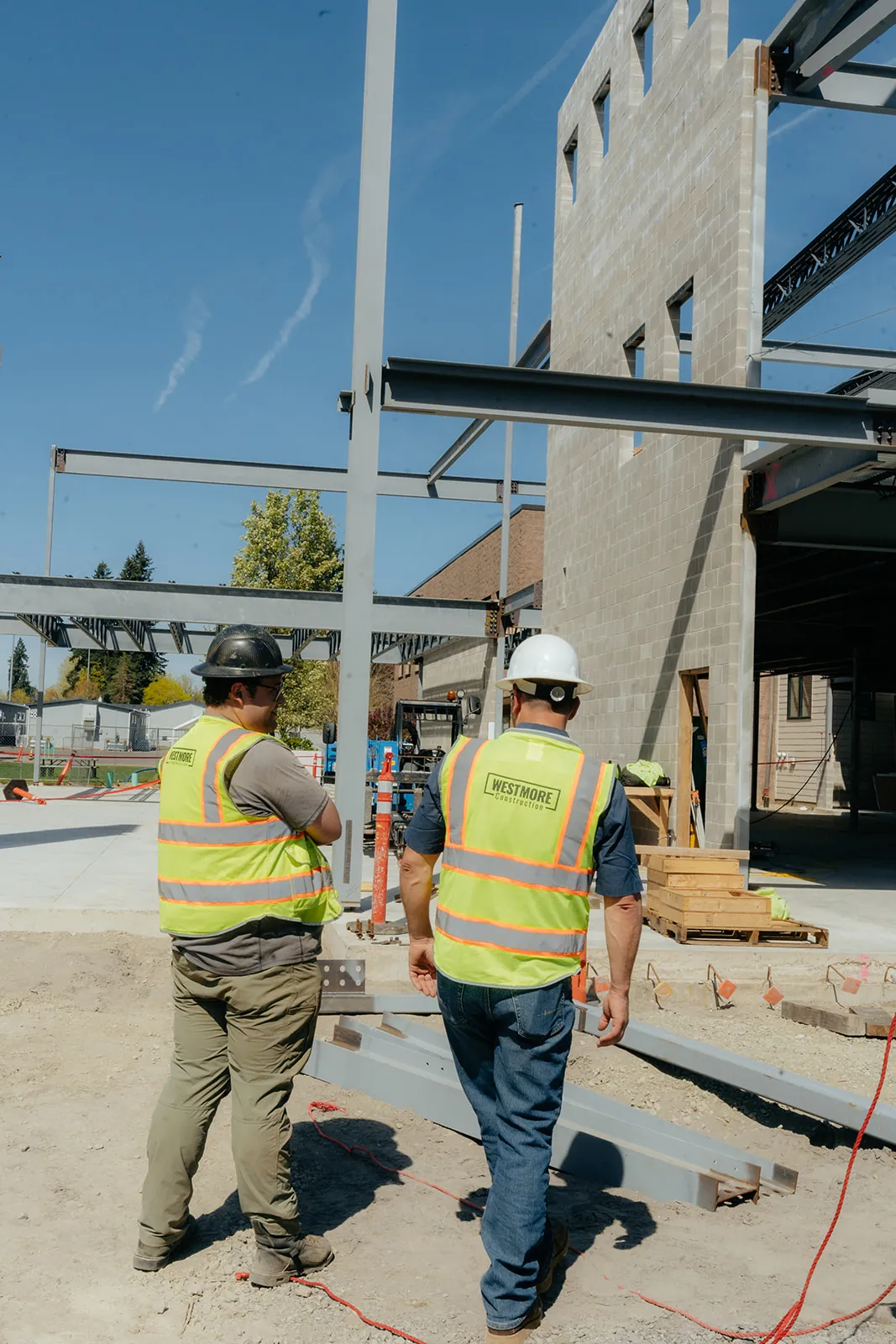
Steel work here is commercial and light-industrial rather than distribution scale: shop buildings, shells for office, retail, medical, and hospitality property, and additions on lots that already carry a building. Westmore stands the frame, closes the shell with roof and wall sheeting, then finishes the exterior, signing as commercial general contractor or working as the erector for whoever holds the prime contract.
The west edge of the city is saltwater shoreline, and salt air is a coating and finish decision on exposed steel rather than something dealt with at closeout. Say early if the building sits on the Sound side. Finish specification and site access, often a narrow shoreline road instead of open frontage, both change what the erection plan has to account for.
Buying steel buildings and crane service from one company also buys one calendar. Frames go up on machines that company owns, so the erection scope and the picks get planned together rather than argued out between two vendors watching each other. On a shell that has to be weathertight before interior trades start, that single schedule is the part protecting the date.
A spa on a residential plateau lot, a rooftop unit on a medical building, and a structural pick on a light-industrial site each want a different machine, and weight alone never decides which one.
The right size for HVAC units, hot tubs and spas, beams, and tight residential or commercial sites where a bigger crane cannot set up.

The workhorse for steel erection, precast and tilt panels, transformers, vaults, and rooftop equipment on commercial jobs.

Heavy and long-reach picks: generators, large mechanical equipment, and lifts that have to clear a building from the street.
Call with the load weight, the address, and the date you have in mind, or send the basics below and we call back within 24 hours.
"Think Seal Team 6 of Crane Work! Westmore was able to scramble, rearrange their schedule and drive a Crane 15 hours across the state to get us out of a jam on Generator set for Walmart, highly recommend these Professionals"
Google review
"Westmore is that perfect balance of cost vs what you get. They self perform their own work creating value there while delivering the project on time and on budget. These guys hustle, they have a great attitude, they're friendly, they never complain... they just get the job done. I would hire them again in a heart beat. This project scope was a building over 20,000 sq ft. They have the expertise to pull it off."
Google review
"The Westmore team is a tight-knit group of professionals who know their stuff. Their communications and teamwork is a joy to watch. They are fast and efficient without sacrificing quality or workmanship. Watching them work is "poetry in motion"!"
Google review
Yes, from the Twin Lakes side across the plateau commercial corridors to the Dash Point edge. One question controls the calendar: whether the crane ends up standing in a traffic lane or on a sidewalk. On private ground no street permit applies, so the schedule and the machine set the date. In the street, the city permit governs, and Federal Way asks for that application well ahead of the intended start.
A City of Federal Way right-of-way use permit, handled by the Public Works Street Systems Division. It applies any time work, equipment, or a closure takes public street space. The submittal is a site plan, a vicinity map, a traffic control plan built to WSDOT and MUTCD standards, and an insurance certificate listing the city; the form warns that incomplete packages are returned. Westmore files that application for its crane scope.
Yes, when the sequence is built for the city work window rather than discovered inside it. A permitted lane closure here runs a single weekday session, so the order of the picks, the staging of each piece, and the truck arrivals all have to land inside it. Pieces that show up late in the day are the ones that get pushed to another date. Say how many pieces there are and when each is delivered.
A spa set is sized off radius before weight. The distance from the only legal truck spot to the pad, plus the height the load has to clear over fencing, a roofline, or mature trees, is what moves a job from one class to the next; the fleet runs 55, 100, and 350 tons. Send the spa weight and a photo taken along that flight path from where the truck would park.
Four inputs: machine class, the radius the boom works at, the surface holding the outriggers, and the number of hours the crew is booked on site. Street setups add permit work and traffic control on top, so a pick made from a private lot and a pick made from a lane do not price the same. Plateau ground here is upland rather than valley alluvium, which usually keeps bearing simple.
Yes. Commercial and light-industrial shells, shop buildings, and additions are all in scope, from anchor bolts through to a finished, closed-in exterior. The building permit itself comes from the City of Federal Way Permit Center, a different desk from the street permit the crane work needs. Westmore can carry the whole project as commercial general contractor, or come in as the steel erector only.
Twin Lakes, Dumas Bay, and Dash Point all sit inside the area we cover, and on the southwest edge, where the city meets Tacoma and Pierce County, a parcel number settles which counter a street set answers to.
Start with the parcel address and the load weight, add the reach the boom must make, and say whether the outriggers land on private ground or in a Federal Way street. That last answer is what puts a permit on the calendar.
Battle Ground, WA
Fields marked * are required.
We call back within 24 hours. Prefer to talk? (360) 772-1040