
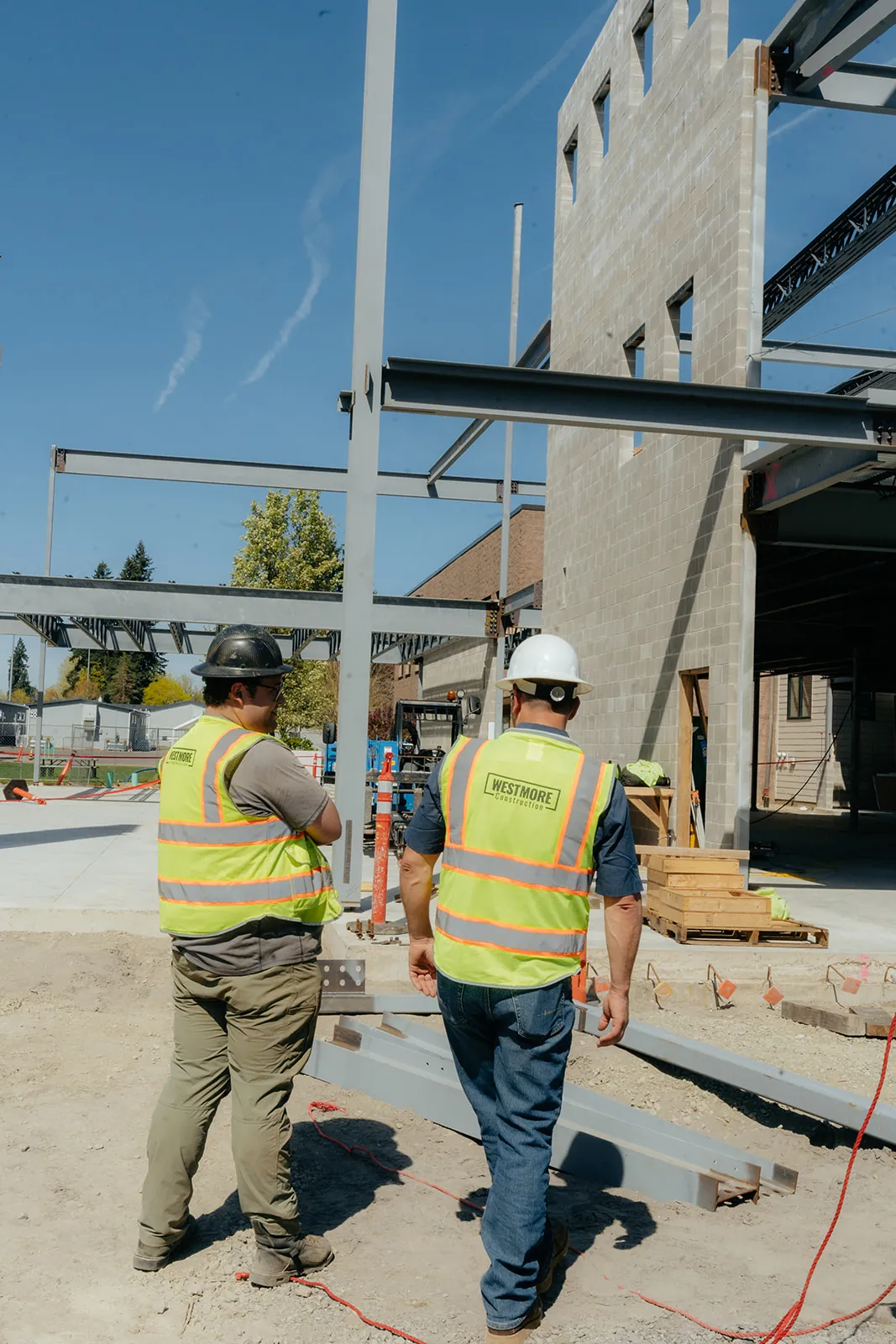
Steel erection in Tacoma self-performed by Westmore's own erectors and crane operators, frame through closed-in shell.
A Tacoma steel building job covers the frame, the erection, and the exterior close-in as a single contracted scope. Westmore erects with its own crew and its own cranes, then stays on the building for wall panels, roofing, doors, and glazing rather than passing a bare frame to whoever comes next. The work suits what Pierce County actually builds: logistics and warehouse shells with tall dock doors, manufacturing and fabrication space, shops and equipment bays for trades and fleets, and additions bolted onto a building already in use. Washington license WESTMCL836OJ covers all of it, and the crane hours sit inside the same schedule instead of arriving as a separate order.
Two site questions come before a date gets held. The first is the permit clock. Westmore files the building submittal and tracks the review against the date the manufacturer plans to ship, so a finished frame does not sit at the plant waiting for a stamp. Ask for that timeline in writing when the scope is quoted, and ask who is filing it. The second is what the ground and the neighbors allow. A pad in the Frederickson corridor usually has room to lay an entire steel package out beside the frame, while a lot near the tideflats has its deliveries sequenced around rail spurs and container traffic. Send the address, the footprint, the clear height, and any engineered drawings already in hand.
The four scopes behind a Pierce County steel building, from first column to a door that locks.

Frames engineered to the clear span your floor plate needs and the dock door heights your trucks actually use.

The frame goes up on Westmore machines run by Westmore operators, so erection week answers to this crew's calendar.
Shops, equipment bays, and light-industrial space sized to the door heights and turning room a working fleet needs.
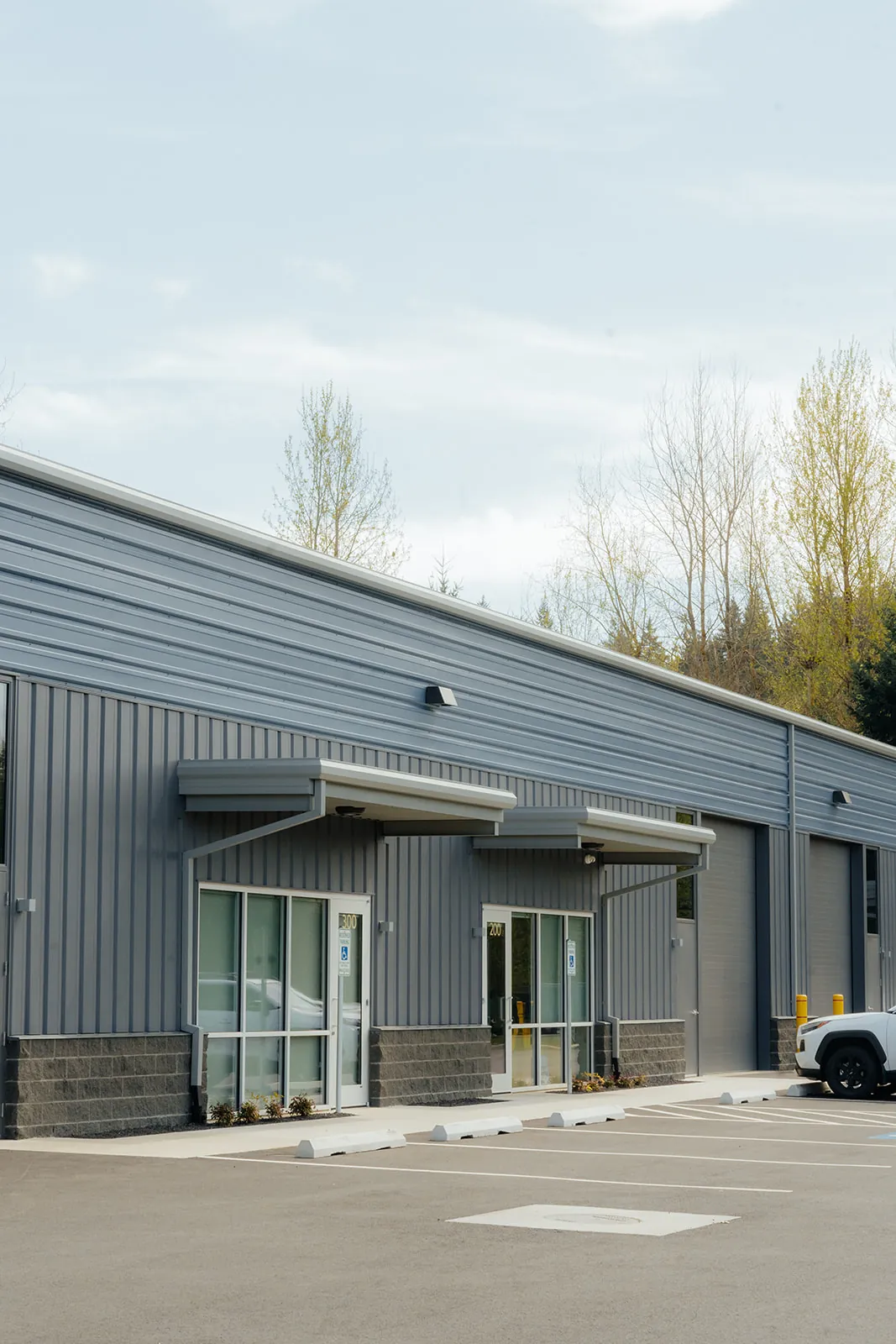
Siding, trim, and door systems that close the shell in so a tenant can move into finished space.

A building beside the tideflats goes up on land bordering the container terminals, not on port property, and that neighbor sets the rhythm of the job. Steel deliveries get sequenced around live rail spurs and container traffic, laydown is tight, and the crane cannot occupy a working terminal lane, so the setup position gets picked off the site plan before a date is offered. Expect a delivery schedule written in windows rather than in whole days.
Frederickson is the opposite case. Open ground means a whole steel package can be laid out beside the frame in pick order, the crane sets up once and stays put, and a footprint can run large without fighting a lot line. If a choice between two parcels is still open, that difference is worth pricing before either one is signed.

Puyallup, Lakewood, University Place, and Fife each stand as their own city inside Pierce County, and each keeps a separate permit and right-of-way process. Westmore wants the parcel address before it will put a review timeline into a schedule, because that one line decides how long the approval takes. Give it early and the paperwork starts in the right building.
Inside Tacoma itself, private work touching the public right of way, a crane setup or a delivery blocking a street, falls under Title 9 of the municipal code and needs a City of Tacoma Public Works permit on top of whatever covers the building. If the crane can stay on private property throughout, that second approval never enters the critical path at all.
Westmore walks the lot, confirms the footprint the building needs, and checks how a crane and delivery trucks reach the site before drawing up a scope.
The foundation plan and the frame package are settled, and the submittal goes to whichever city or county actually covers that address, not the one on the mailing label.
Westmore's own machine and Westmore's own riggers stand the frame, working the piece order the fabricator marked so the building takes shape the way the drawings assume.
Wall and roof panels go on, then doors and trim close the shell in, and the crew hauls its own laydown clear before the site is turned over.
Call with the site and what you want standing, or send the basics below and we call back within 24 hours.
"Dan Tapani Excavating has had the pleasure of working with Westmore as a subcontractor on their commecial projects for a few years now. They are highly skilled, quality focused, and treat everyone fair. We hope to continue working with them for years to come!"
Google review
"Westmore Construction is a very honest and trustworthy crew. That is why we selected them as our general contractor and our pre-engineered metal building installer for our commercial project. They worked well with all the permitting staff, inspectors, and subcontractors. They worked hard to keep our project moving through the entire process and they cared about our timeline for completion. Plus, their entire team communicated well and timely. What more could you really ask for in a GC? I would highly recommend Westmore Construction and I would hire them again if we have a chance to develop another property in the future."
Google review
"We use Westmore Construction for all our crane needs. They are always responsive, on-time & professional. They're fast and efficient when they show up with no down time. They have multiple sized cranes and can pretty much do anything you need. We have also worked with them on the general contracting side and have no complaints. We will continue to work together."
Google review
Span, ground, and finish, in that order. A building that has to stay column-free across its width takes heavier framing than one with interior supports. Ground that needs excavation or fill before a slab adds work no drawing shows. Exterior finish, doors, and glazing then move the number again. That is why an open Frederickson pad and a tight lot in Fife rarely price alike.
No. Westmore owns the cranes used on its own erection work and hauls them on company trucks and trailers, so the erection date does not wait on a rental yard or an outside hauler. The outfit that erects the frame is the outfit that owns the crane, working to one schedule. One company answers for the frame going up, which matters most on the day a piece does not fit and somebody has to decide.
The frame does not land, which is why the bolts get checked before the steel ships. Any steel job needs the poured pattern checked against the fabricator's approved drawings while the package is still on the shop floor. Caught on paper, it is a correction and a phone call. Caught with a loaded trailer at the gate, it stops a crane, a crew, and a delivery schedule at once.
No. Fife, Puyallup, Lakewood, and University Place are each their own city, each with its own permit process, separate from Tacoma's and from each other's. Westmore builds in all of them, but the submittal follows the parcel, not the metro area. Confirm which city the address sits in before anyone quotes a permit timeline.
Yes, mostly in access and staging. A tideflats site sits beside working container terminals and rail spurs, so steel deliveries get sequenced into windows somebody else controls and there is less room to lay the package out. A Frederickson pad is open industrial land with room to stage the whole frame beside the slab, which takes staging pressure off the erection sequence.
Both, on one contract. The same crew that sets the columns stays for roof and wall panels, siding, doors, and glazing, so the building gets closed in without a handoff to another company partway through. A customer who only needs the frame raised can buy erection alone, but the exterior work is self-performed rather than brokered out.
Give us the parcel, the footprint, and the work the building has to hold, and the scope gets written against the engineered plans first.
Battle Ground, WA
Fields marked * are required.
We call back within 24 hours. Prefer to talk? (360) 772-1040