
Operated crane lifts and commercial steel erection for Newport, Oregon, with one crew running both the pick and the building.
Newport work divides across the two sides of Yaquina Bay. South of the water it is industrial and marine lifting: process equipment, refrigeration and conveyor sets, cold storage additions, and structural picks around yard and wharf buildings. North of it the calls come off the Bayfront, Nye Beach, and the commercial blocks behind them, where rooftop mechanical changeouts and spa sets happen on streets with no spare space to lend. Westmore handles both as operated lifts, the machine plus an NCCCO certified operator plus rigging chosen for that load, with capacity available from 55 to 350 tons.
Before a date is offered, two questions get answers. Permitting divides by what the job touches: the building permit for a commercial steel structure comes from the City of Newport Community Development Department through Oregon e-permitting, while anything obstructing the public right of way is permitted by Public Works and its Streets and Stormwater Division. Routing is the second question. The US 101 span over the bay is posted with axle and gross weight limits, so a heavy machine bound for the south side gets checked against that posting first, and it can change which crane comes. Send the load weight, setup photos, and the side of the bay.
A working port town generates four kinds of pick: plant equipment, roof units, structural steel, and spa sets at oceanfront addresses.
Process equipment, tanks, and machinery rigged and landed inside working plants and yards where the working window is narrow.

Refrigeration packages, condensers, and exhaust units swapped on plant and commercial roofs, with the boom worked from the tightest legal position available.

Joists, beams, and columns set on additions and new shells, with the same company fielding the erection crew and running the crane.
Tubs and spas flown across the roof and landed on the deck at oceanfront and hillside addresses where there is no path to roll one in.
The city is split by Yaquina Bay and the US 101 span is the only local link between the two halves. It carries posted axle and gross weight limits, which means the machine best suited to a load is not automatically the machine allowed to get to it. Checking the posting against the assigned class is part of scoping the job, not something to find out on lift day.
Setup space is the second constraint, and on the north side it is the harder one. The Bayfront and Nye Beach are terrain constrained with no room for off-street parking, so the pad for a crane is a row of metered spaces on a street that has no overflow. That combination calls for the right-of-way permit Public Works issues, traffic control, and a window outside the visitor season or early enough in the day to keep the block usable.
Airspace enters the picture on the south side. The city airport sits in South Beach, and a boom raised near the airport can require FAA notice, so the street address matters at the first call. That notice carries its own federal lead time, so a South Beach job wants its site named while the scope is still being written.
Wind settles quickly here. Lincoln County belongs to the coastal special wind region in the Oregon code, so framing, anchorage, and cladding fastener schedules for a Newport building are read off the table covering that site rather than the standard map, and a package drawn to an inland specification does not clear plan review. Corrosion is the longer conversation, and on this waterfront it is the one that decides the scope.
Corrosion drives the rest of the specification. Structures near open water sit inside the highest atmospheric corrosivity band, and a seafood or cold storage building adds interior washdown on top of salt air, so the finish becomes zinc rich primer, epoxy intermediate, and polyurethane topcoat rather than shop primer. In a washdown room the coating is a wear surface, and that is the reason it is written into the erection package rather than left to a maintenance budget three winters out.
One company carries the whole job. The commercial general contracting role sits with Westmore, which erects the steel with its own machines, so a plant addition, a cold storage shell, or a shop building keeps the frame, the sheeting, the finish, and the pick on one schedule. Send the drawings and the address, and the reply covers all four.

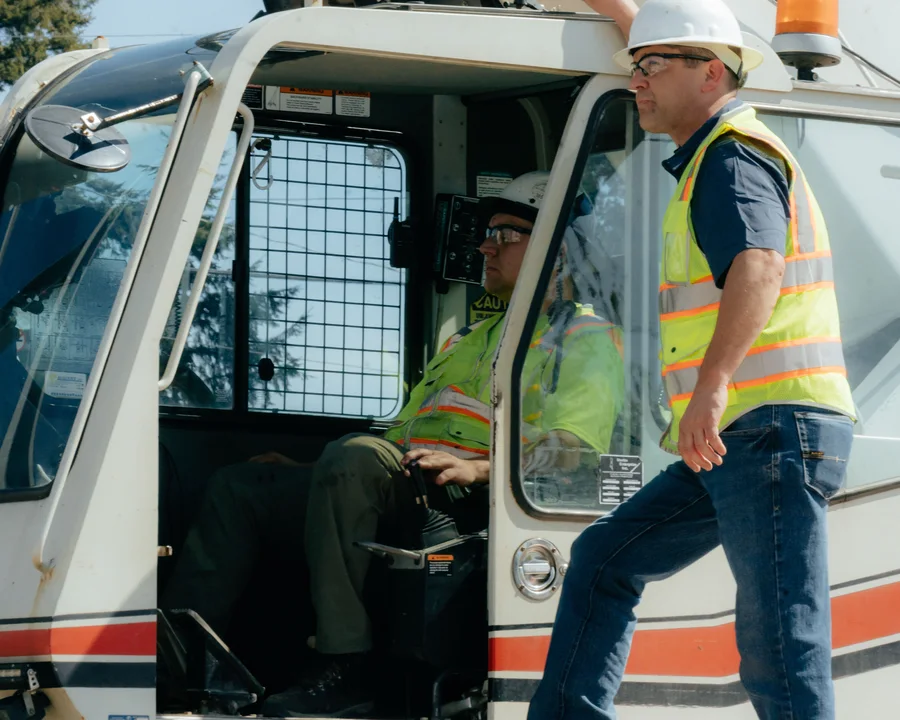
A rigger working from the crane deck during setup.

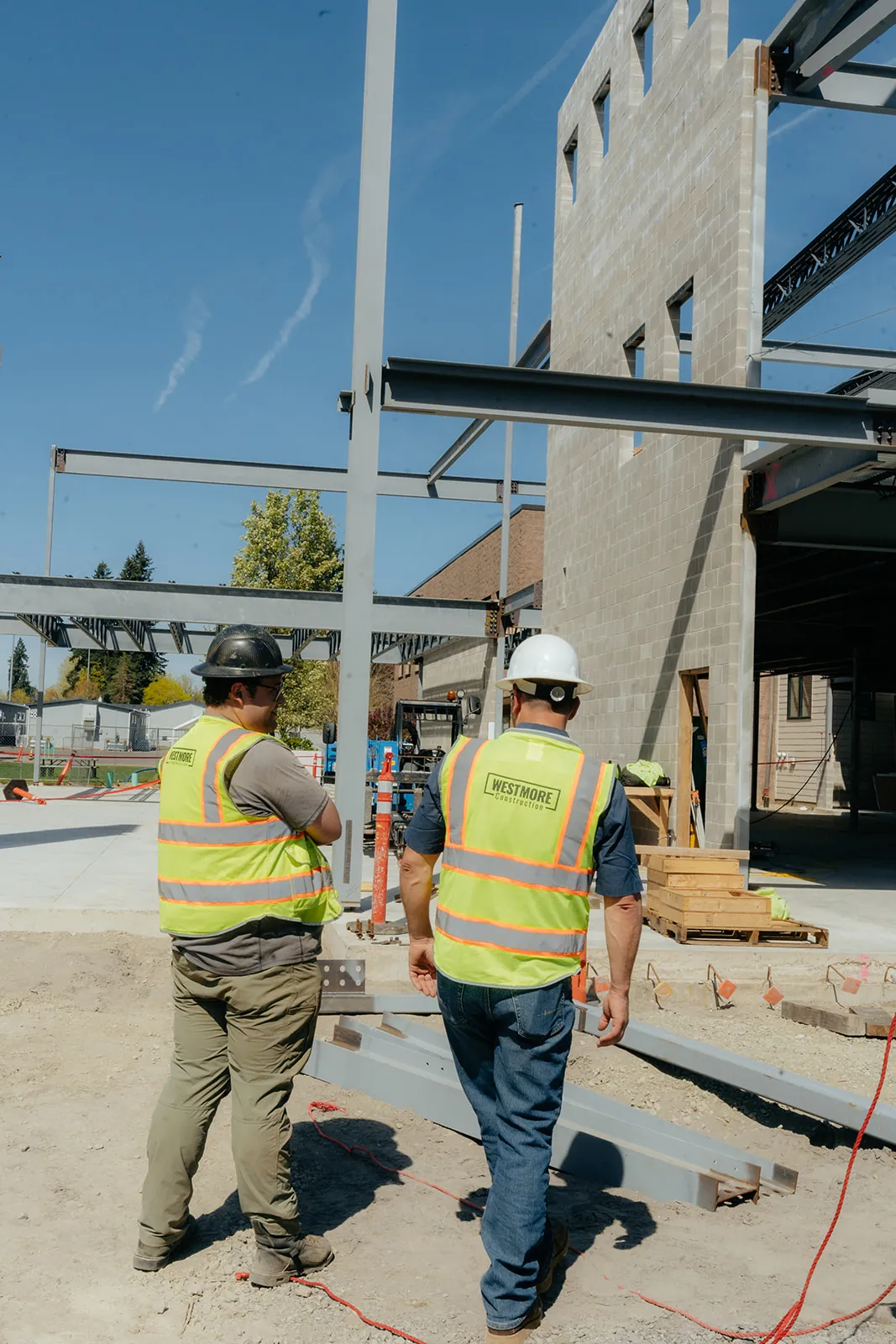
A steel beam swung onto columns during erection.
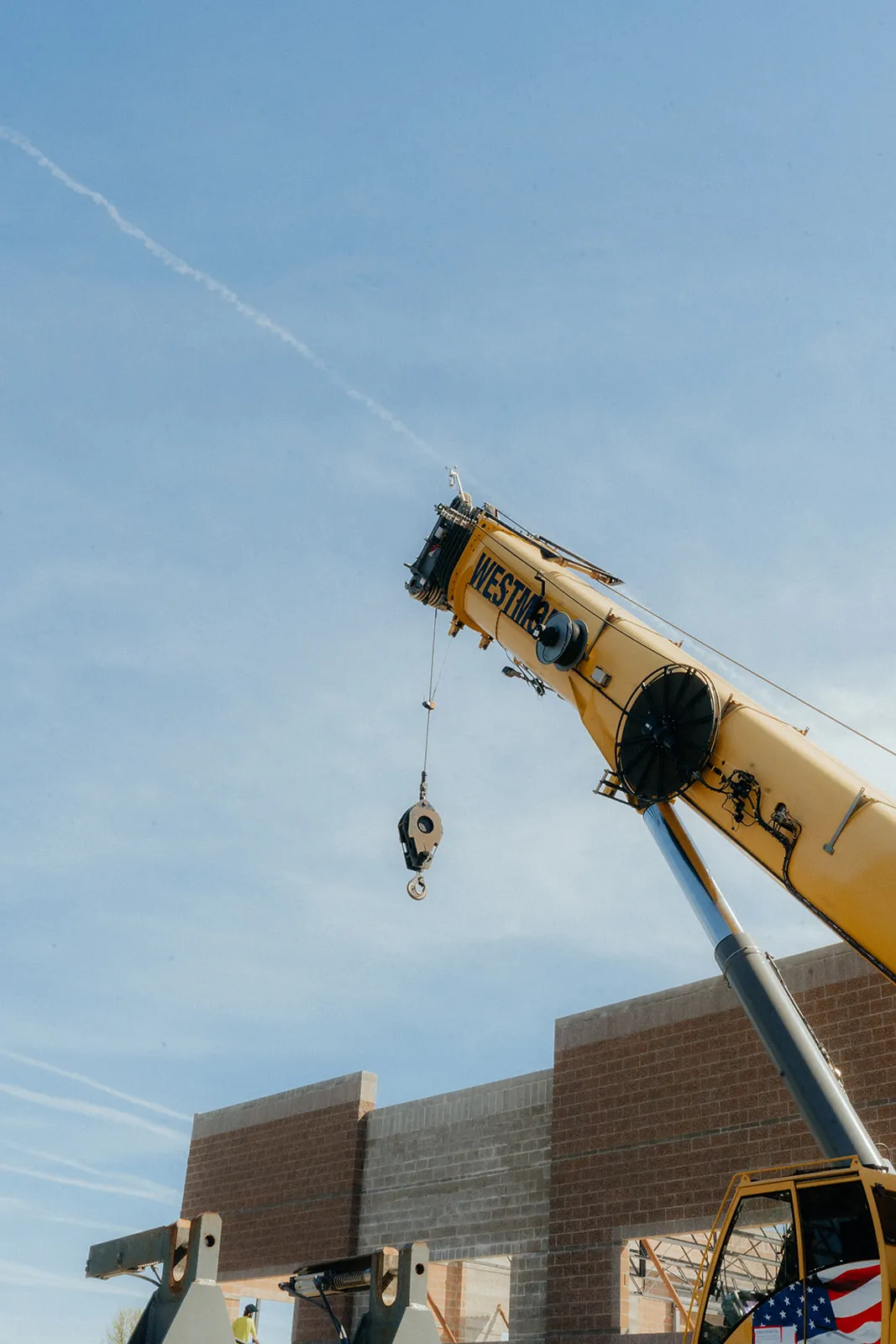
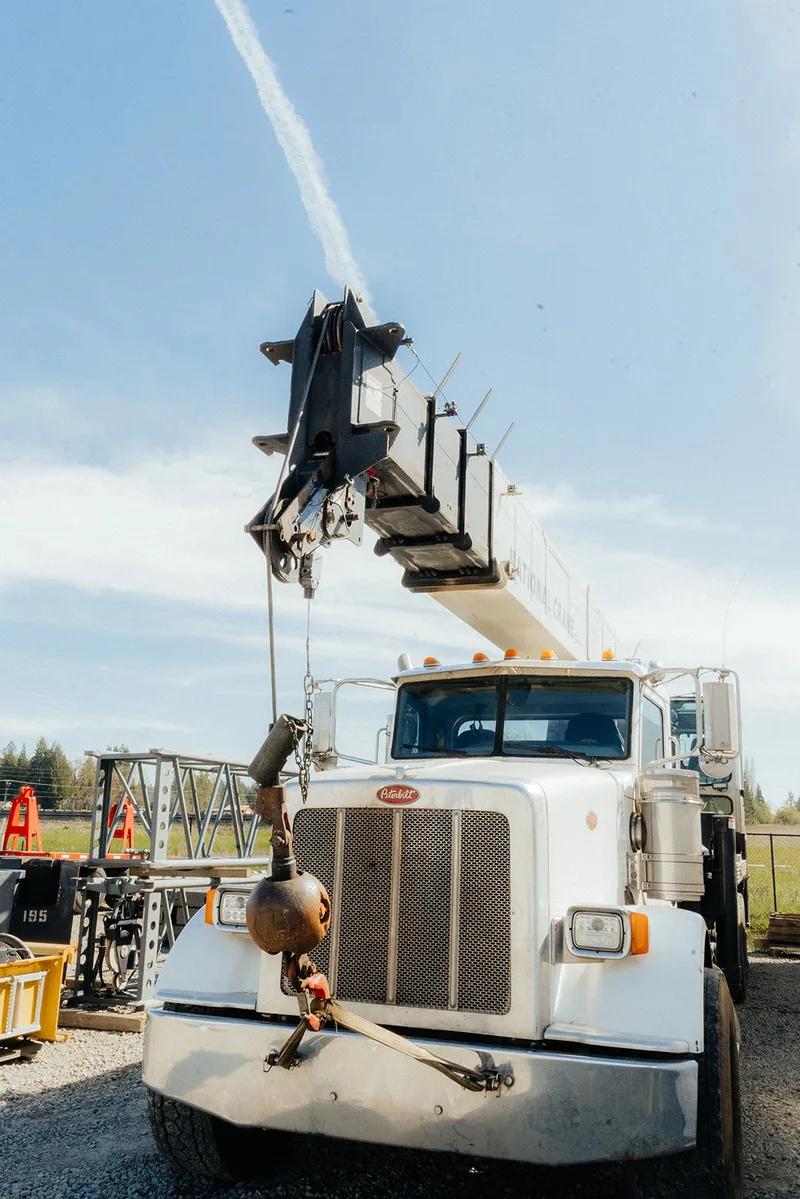
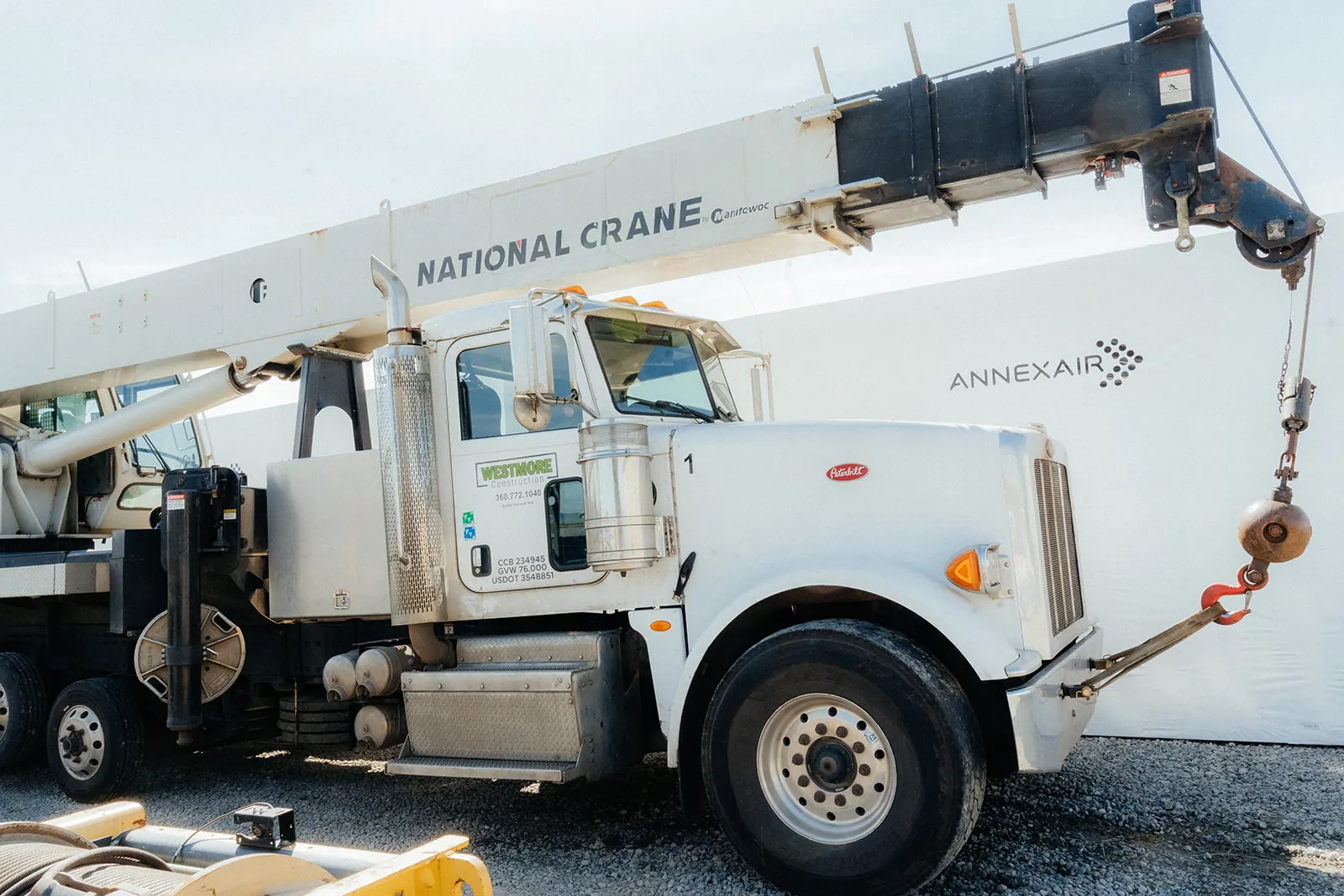
The Grove boom and hook block staged beside a brick building.
Call with the load weight, the address, and the date you have in mind, or send the basics below and we call back within 24 hours.
"Great people to work with. We have worked with both sides, the construction team and the crane services and have been absolutely amazed with the professionalism and their communication skills. We get to hire their crane fairly often for picking larger concrete vaults and they are always quick to respond with timing and pricing for each project. We wouldn't want to use anyone else!"
Google review
"Fast to work with me when I had a short notice crane pick request for downtown Portland. Yikes. No problem for these guys. They nailed the permit, traffic, and planning submittals in no time... They were safe, they worked fast... From the big boy 350 Ton to little boy crane needs - they are our team now."
Google review
"Professional, responsive, and easy to work with. Highly recommend Westmore crane services."
Google review
Yes, Newport is inside the service area on both sides of Yaquina Bay, South Beach included. Three things set the schedule: which tonnage class the load requires, whether the crane has to hold public street space, and which side of the water the site is on, since the crossing is posted. Include the site address, what the load weighs, and a photo showing the approach and the pad.
It can, and that is worth settling early. The span carrying US 101 over the bay is posted with axle and gross weight limits, so a machine that suits the load may not be legal on that route, and the alternative is an inland detour. The machine assigned has to be legal on the route in, so the posting settles the class before the date does.
Yes, obstructing a public street or sidewalk requires a City of Newport permit. The right-of-way application is handled by Public Works through the Streets and Stormwater Division, and on the Bayfront the setup pad is metered street with no overflow, so traffic control belongs in the same submittal. Westmore prepares both alongside the lift plan.
The City of Newport Community Development Department issues them, with applications available at the City Hall counter or online, and the city takes part in the statewide Oregon e-permitting program for submittal, status, and inspection scheduling. Westmore submits it as the contractor.
The unit weight and the working radius decide it. Three classes are available, topping out at 350 tons, and lifting capacity drops the farther the boom goes out, so the closest position a truck can legally hold settles the machine. A yard with room for a close setup keeps the class down. Include the unit weight, the landing point, and a picture of the approach.
Yes. Open water frontage puts a building in the harshest marine corrosivity class, which moves the coating up from standard shop primer to a marine grade system. Add interior washdown in a processing or cold storage building and the environment is asking the finish to survive rather than simply look right, which is what the specification has to answer for.
The same crews and machines work both sides of the bay, with routing checked before a class is assigned.
Tell us the weight, the landing point, and which side of Yaquina Bay the site is on, and the crane class gets checked against the posted crossing before it is assigned.
Battle Ground, WA
Fields marked * are required.
We call back within 24 hours. Prefer to talk? (360) 772-1040