
Steel buildings and crane lifts for Lincoln City, Oregon, with a certified operator and rigging included on every lift.
Westmore lifts and builds along the Lincoln City strip. Crane work here means spas and hot tubs set onto oceanfront decks and lakeside yards, rooftop mechanical units flown onto lodging and commercial buildings, generators and kitchen equipment rigged into position on hospitality property, and structural picks for commercial steel. Every one of those is an operated lift: the machine, rigging picked for the load, and an operator carrying NCCCO certification come together. Capacity spans 55 to 350 tons in three classes. On the construction side the same company erects the steel, closes the shell in, and finishes the exterior, which keeps one crew answerable for the whole building.
A date here waits on two approvals, one public and one private. Work inside the right of way goes through the Lincoln City Public Works Department, which asks for a plan of the site with the application and expects utility locates before anything breaks ground. Where a setup takes a lane of US 101, that highway is state right of way and ODOT approves the occupancy instead. The second approval is private. On a condominium complex or a resort, an association or a property manager controls the parking area the crane needs, and releasing that space usually takes longer than the permit does. Send photos of where the machine would set up along with the load weight.
Oceanfront lodging, condominium decks, and commercial buildings on one narrow strip produce four kinds of pick.
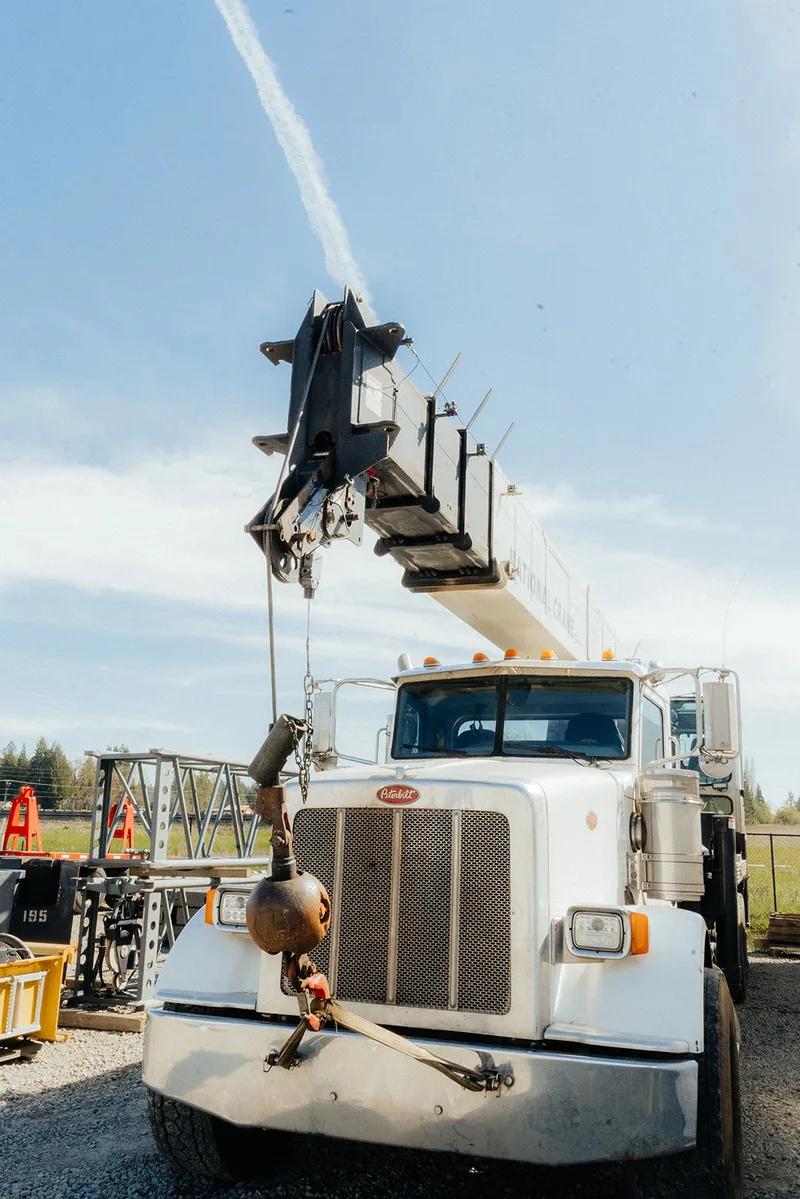
A deck or a bluff-side pad worked from street level, over the fences, stairs, and parked cars that make a roll-in impossible.

Rooftop units, kitchen exhaust, and generators swapped on lodging and commercial buildings where the lot has no spare space.
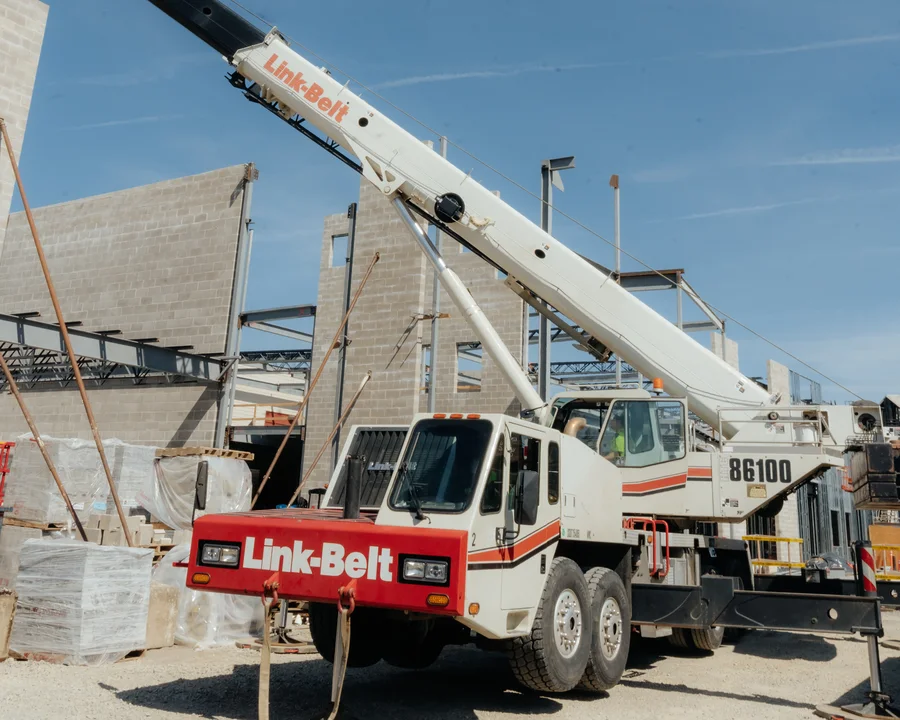
Mechanical equipment, tanks, and transformers rigged and landed where the only working position is a shoulder or a shared lot.
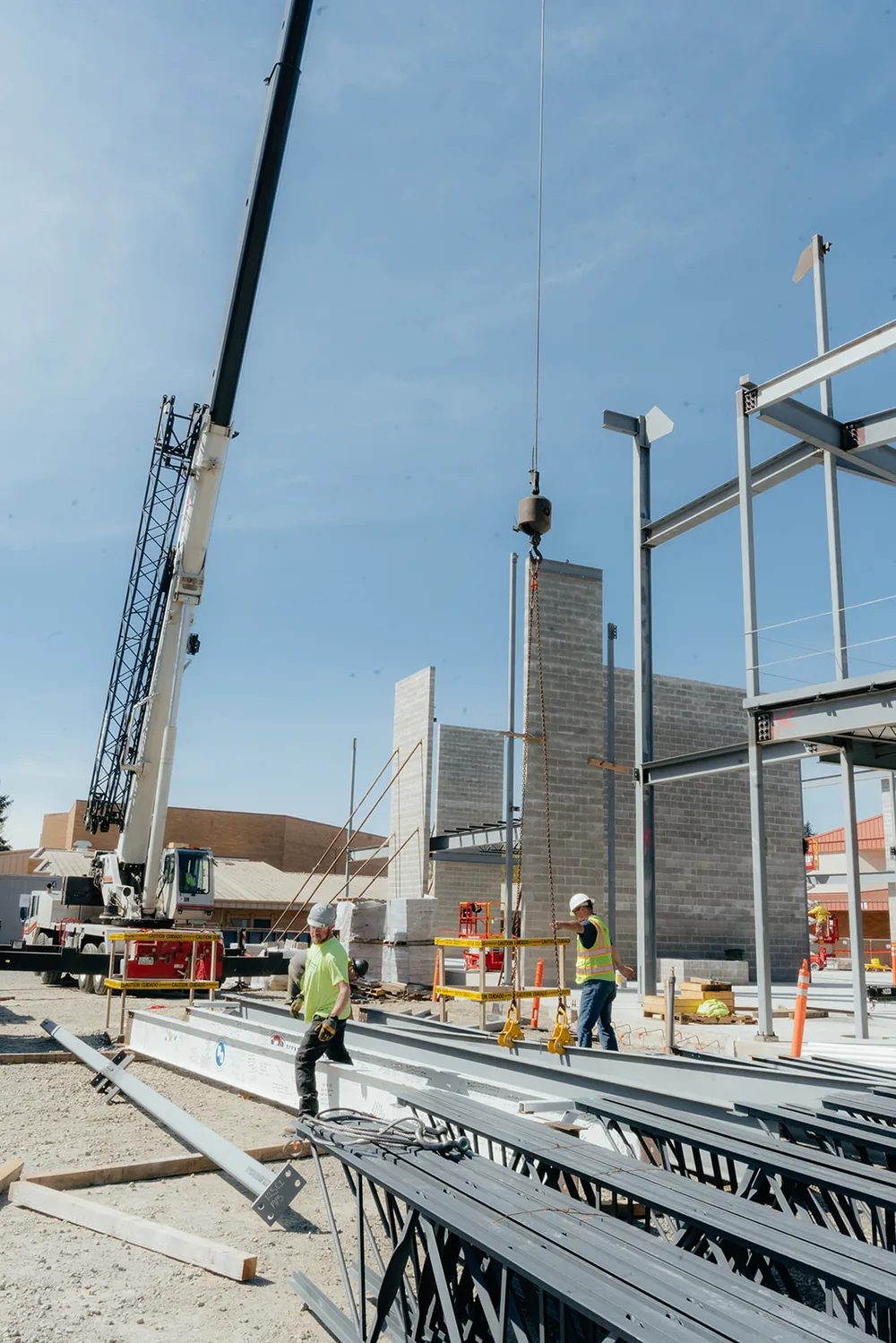
Commercial shells, shop space, and additions raised in coastal wind country by the crew running the crane that sets the steel.

The city is laid out as one long strip on a single state highway with no parallel route to push traffic onto, and tourism fills that highway in summer and over holidays. A pick that needs a lane is therefore an ODOT question and a timing question at once. Booking it outside the busy season, or early in the morning, is usually what turns a hard lift into an ordinary one.
Work inside a city street or a utility connection goes to Lincoln City Public Works instead, which handles those permits and expects a site plan showing what the work involves. Locates are called before the ground is opened. Westmore prepares those filings next to the lift plan, so the approval and the machine arrive on the same date instead of chasing each other.
South of town the room disappears entirely. At Depoe Bay the highway, the harbor, and the town center stack on top of each other across a historic arch bridge, leaving almost nowhere to stage equipment and no way around a lane closure. A pick down there gets planned around the hour of the day it happens, and that plan starts with a photograph of the setup area.

Most commercial and lodging property along this strip is held in common, so a shell addition, a deck rebuild, or a mechanical retrofit needs an association or a property manager to sign off on the work area before anything is scheduled. That sign off decides how far ahead the job has to be set, which is why it gets raised at the start of a job instead of near the end.
Siting comes before design on a bluff parcel. Wave action has been undermining the highway along this county coastline, so setback, setup position, and foundation all get drawn against an edge that moves. And because one strip of highway serves the whole city, such a parcel usually has a single frontage, which fixes where material can be laid down and which face a steel building can open onto.
Exposure decides the remaining two questions together: Lincoln County lies inside an Oregon coastal special wind region and property this close to open water falls into the top marine corrosivity band, so the frame comes off the code table for that address and the zinc rich coating stack is scope rather than an upgrade. Westmore is the commercial general contractor and erects the steel with cranes it owns, so concrete, frame, cladding, and lift all sit on one schedule.

A boom raised over evergreens on a residential lot.

The National Crane rigged and raised ahead of a pick.

Two crew members reading the boom before the load comes up.
One call covers crane size, the permit, and the schedule. Or send the basics below and we call back within 24 hours.
"Great people to work with. We have worked with both sides, the construction team and the crane services and have been absolutely amazed with the professionalism and their communication skills. We get to hire their crane fairly often for picking larger concrete vaults and they are always quick to respond with timing and pricing for each project. We wouldn't want to use anyone else!"
Google review
"Fast to work with me when I had a short notice crane pick request for downtown Portland. Yikes. No problem for these guys. They nailed the permit, traffic, and planning submittals in no time... They were safe, they worked fast... From the big boy 350 Ton to little boy crane needs - they are our team now."
Google review
"Professional, responsive, and easy to work with. Highly recommend Westmore crane services."
Google review
Yes, Lincoln City on the Oregon coast is inside the service area, along with the communities south toward Depoe Bay. The date turns on two things: the machine this load needs, and whether the crane wants public street space, which adds a Public Works filing. Send a street address, the dry weight, and a picture of where a truck could park.
Only when the crane works from the right of way. Lincoln City Public Works reviews those permits and wants a plan showing where the work sits, with utility locates called before anything breaks ground. On a condominium or resort property the association also has to release the parking area the machine will occupy.
The association or the property manager does, because the deck or lot a crane has to occupy is shared property rather than a single private driveway. A city permit only covers public street space, so on a shared coastal building the private release is what actually fixes the date. Starting that conversation when the pick is first discussed keeps the rest of the scheduling simple.
The flight path decides that, not spa weight on its own. The three tonnage classes are 55, 100, and 350, and boom capacity drops as the load moves out, so the gap between the parking spot and the landing spot narrows the choice immediately. Send the dry weight, where it lands, and a picture of the building taken from the street.
Yes, and siting is the first piece of the work. The ocean has been taking ground from the highway along this county coastline, so setback and foundation get drawn against an edge that moves rather than a line on a plat. Lincoln County also sits in a coastal special wind region, which pulls the frame and the anchorage off the code table for that address instead of the general map.
Four things move the number: the weight, how much boom has to go out, what the outriggers stand on, and the crew hours the job takes. A lift that takes a lane of highway adds traffic control and an off-peak window to that list. Send a weight and a site address to get the lift priced.
Depoe Bay and Gleneden Beach get the same crews, cranes, and permit filings as an address on the strip.
A weight, a landing spot, and one photo of the street outside the building are usually enough to size the machine. If the setup area belongs to an association, say so at the same time.
Battle Ground, WA
Fields marked * are required.
We call back within 24 hours. Prefer to talk? (360) 772-1040