
Crane lifts and steel buildings across Tillamook shops, dairies, and industrial sites, with rigging and a certified operator on every pick.
Westmore works both halves of a Tillamook job: crane lifts run by its own operators, and commercial steel put up by its own crews. The lifting covers equipment sets and structural picks on the industrial ground south of town, rooftop mechanical changeouts on commercial and processing buildings, machinery landed on farm and plant sites where a forklift will not reach or hold the weight, and spa sets into fenced yards. Each pick comes as one package: the crane itself, an NCCCO certified operator on the controls, and rigging matched to what is going up. On the building side, the same crew raises the frame, hangs the roof and wall panels, and carries the exterior finish through, so the owner deals with one company from the pad to the last panel.
Permitting splits between two desks in this city: the Planning Department administers the permit for occupying a street or a sidewalk with a crane, while the building permit for a steel structure inside the city limits is issued by Tillamook County Community Development, with city planning reviewed first. Where a setup sits in state highway right of way instead, ODOT grants that occupancy. Ground is the other question, since the town lies on the merged floodplain of three river valleys, and soft valley bottom calls for mats and cribbing under the outriggers. Send the weight, the swing radius, and the street address of the site.
Four kinds of pick come up on Tillamook jobs: machinery onto a plant pad, a unit onto a commercial roof, a spa over fencing, and a steel frame going up on working ground.
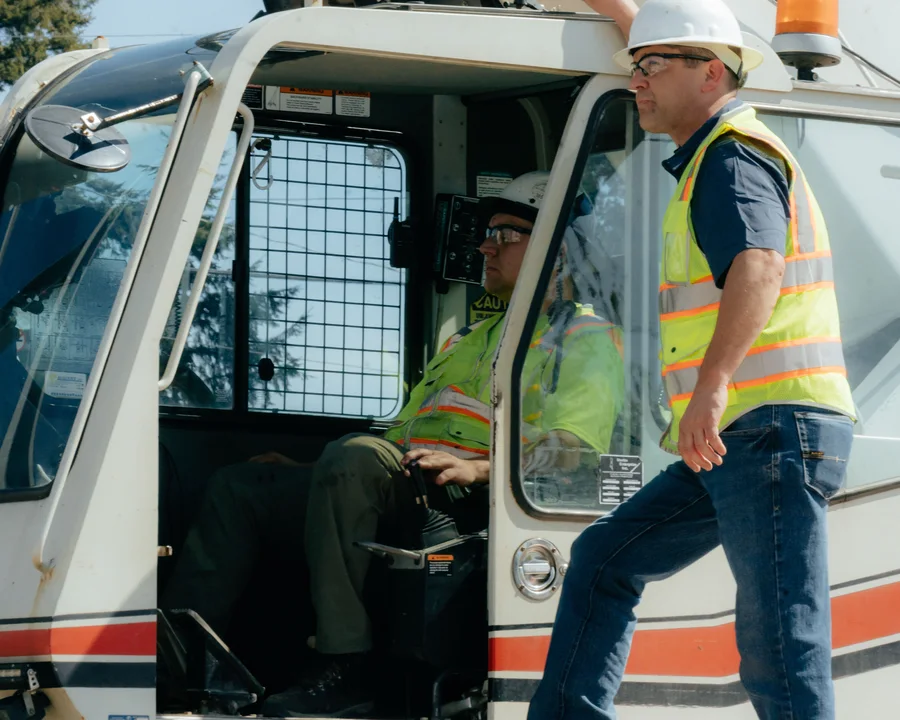
Tanks, transformers, and processing machinery rigged and landed on plant and farm ground where the truck gets one working position.

Condensers, exhaust fans, and package units flown onto commercial and processing buildings, including the very large legacy structures south of town.
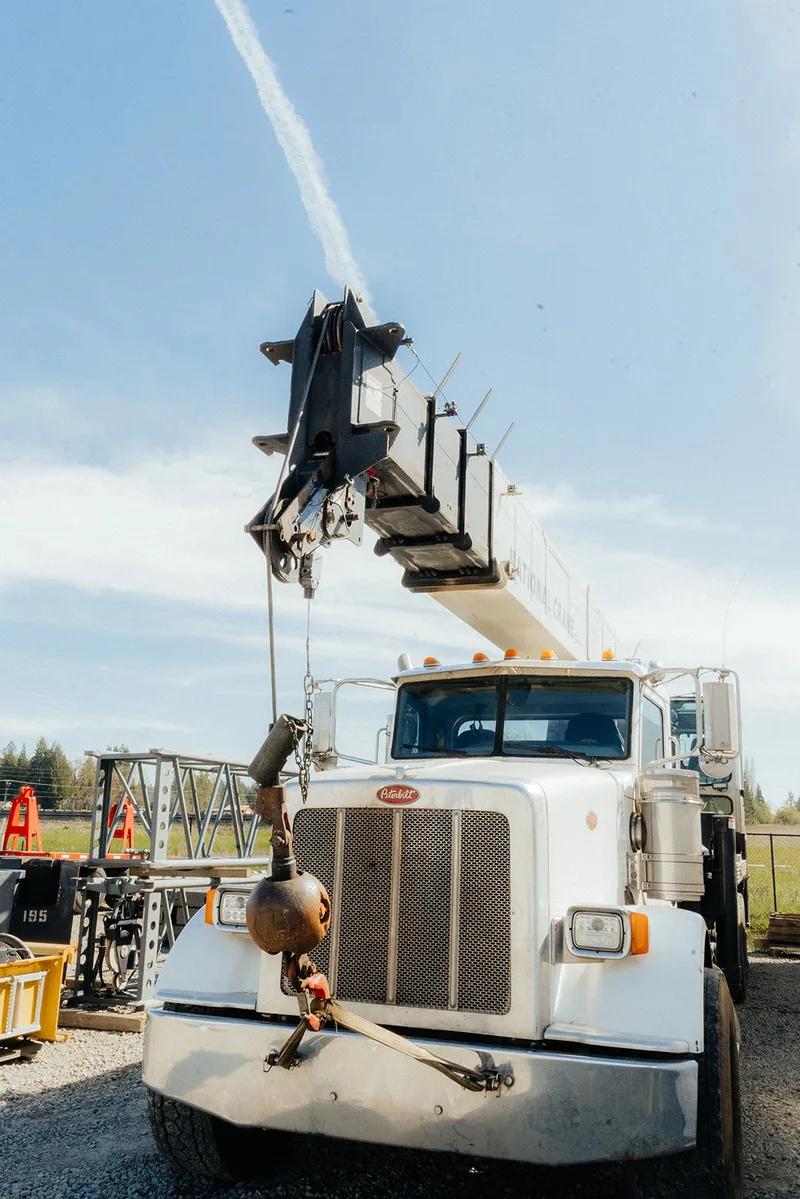
Tubs go over the fencing and onto the pad in a single pick, with the gate, the deck boards, and the plantings untouched.
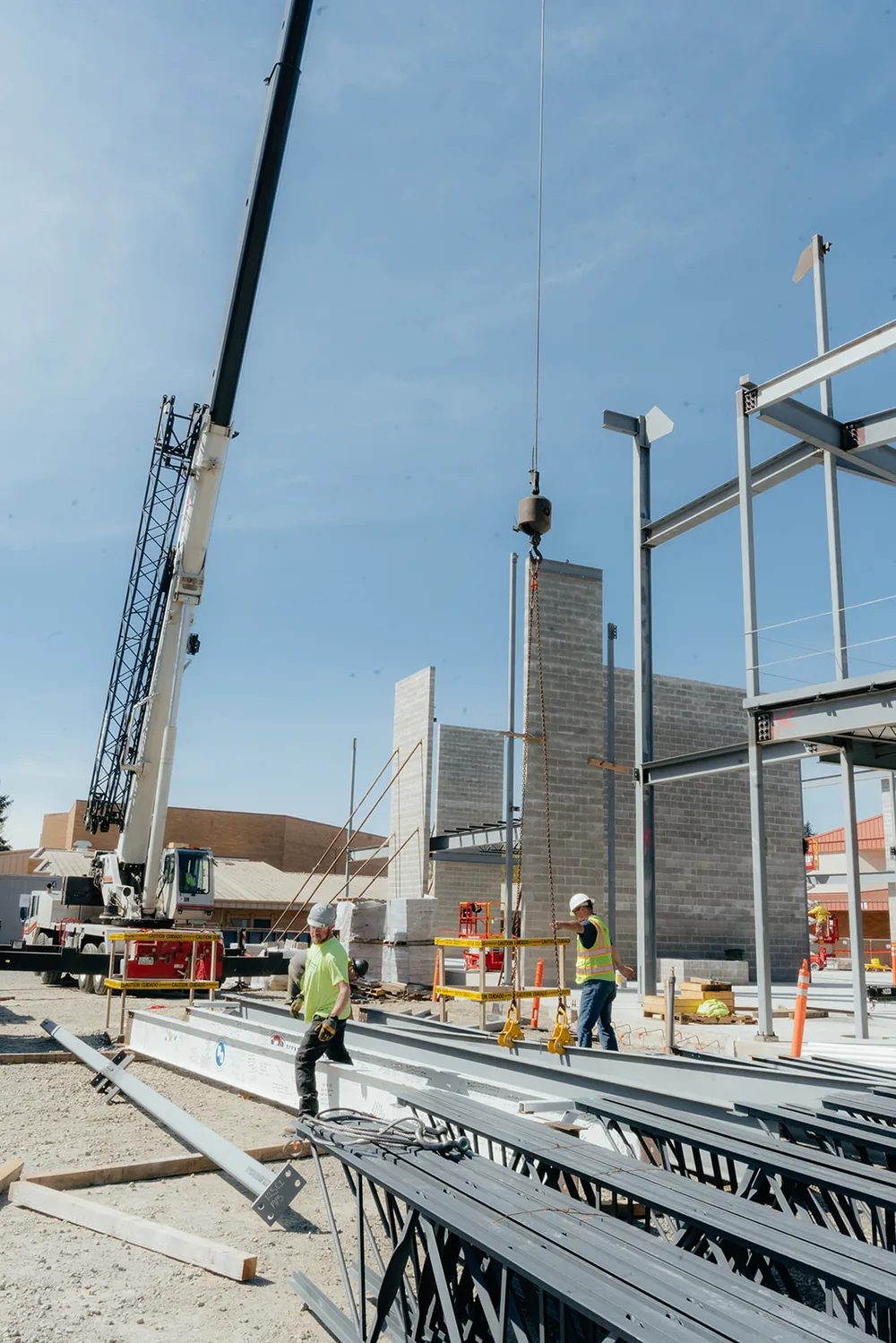
Equipment barns, cold storage, and clear-span shop space raised and sheeted by the same company whose crane sets the frame.

The city occupies the merged floodplain where three river valleys open onto the head of the bay, and much of the ground under it is soft valley bottom that has gone under water in past storms. Ground like that changes where a crane can stand. Outrigger pads spread onto mats and cribbing, and the position gets chosen for bearing before convenience, so say whether the surface is pasture, gravel, or pavement on the first call.
Permitting runs through two desks, which catches people who assume one counter covers everything. A crane parked in a lane or over a sidewalk needs the street permit the Planning Department administers, and its published conditions include leaving a five-foot walkway open past the obstruction. Occupy US 101 instead and ODOT is the authority. Westmore prepares both filings with the lift plan attached.
The wet season belongs in the schedule too. Water has closed streets in this town and stretches of the highway leading out of it during past storms, so a winter date is worth setting with the forecast in view and a backup date held against it. Say early which week matters most on your end, and the sequence gets built around it.

The buildings that go up around here are working structures: equipment barns, cold storage, plant additions, and shop space on the industrial ground south of town. Westmore signs the job as its commercial general contractor, then puts the steel up with cranes it owns, so the frame, the sheeting, and the crane come from one company on a single schedule.
Permitting and flood height shape a new steel building here before the frame does. The building permit inside the city limits is issued by Tillamook County Community Development after city planning review, and the floodplain requirement drives the foundation and the finished floor. The county is also inside the code's coastal special wind region, and out at the bayfront end around Bay City and Garibaldi the marine corrosivity band pushes the coating specification up.
Plenty of the steel work here happens on structures already standing. Re-roofing, re-skinning, structural repair, and rooftop equipment on very large legacy buildings is a different job than a new frame on a bare pad, and it gets scoped that way. Send the plan set, or photos and a footprint where no drawings exist yet, and the reply covers erection and finish work together.

A crew member passes the outriggers on the way to a steel frame.

The Grove hook block working above a CMU wall.

A crane line over a timber frame job with material staged alongside.
Call with what you know so far, or send the basics below and we call back within 24 hours.
"Great people to work with. We have worked with both sides, the construction team and the crane services and have been absolutely amazed with the professionalism and their communication skills. We get to hire their crane fairly often for picking larger concrete vaults and they are always quick to respond with timing and pricing for each project. We wouldn't want to use anyone else!"
Google review
"Fast to work with me when I had a short notice crane pick request for downtown Portland. Yikes. No problem for these guys. They nailed the permit, traffic, and planning submittals in no time... They were safe, they worked fast... From the big boy 350 Ton to little boy crane needs - they are our team now."
Google review
"Professional, responsive, and easy to work with. Highly recommend Westmore crane services."
Google review
Yes, Tillamook and the bay communities north of it sit inside the service area, covered by the same cranes and crews. Two things set the date: which class of machine the load takes, and whether the crane has to stand in public right of way, which adds a City filing. Give us the street address, how much the piece weighs, and the swing the boom must make.
Tillamook County Community Development does, even though the address is inside the city. The published sequence starts at city planning and then moves to the county, which is worth knowing before anyone builds a schedule around plan review. Westmore files it as the contractor, and knowing the sequence up front is what keeps a schedule honest.
Yes, once the machine stands in public right of way. That permit comes from the City of Tillamook Planning Department, whose published conditions include keeping a five-foot walkway open past the work and clearing obstructions off streets and sidewalks overnight. Where the crane occupies US 101 instead, the approval belongs to ODOT. Both filings get prepared alongside the lift plan.
Unit weight and setup distance decide that, not roof height on its own. Three classes are on the fleet, 55, 100, and 350 tons; capacity falls away as the boom goes out, so where a truck can legally stand narrows the choice first. Room to set up close on the industrial ground south of town keeps the class down. Send the weight, a picture of where the truck would sit, and the point it lands on.
Yes, a spa can be flown over fencing and landed on its pad in one pick. Fence height, the limbs above it, the roof edge the load must clear, and the nearest legal parking spot for a truck decide the class. Send one photo from the curb along that path, with the fence height.
Yes. The Oregon registration is CCB 234945, held for commercial general contracting, and the liability limit is one million dollars in both states. Every crane operator running these machines holds NCCCO certification. That covers both halves of a Tillamook job, the lifting and the steel building work, inside one company rather than a builder plus a separate crane outfit.
Jobs up the bay and out on the coast are run by the crews, cranes, and permit filings that cover addresses in town.
Name the piece weight, the landing point, and the Tillamook address, and the crane class gets sized to it.
Battle Ground, WA
Fields marked * are required.
We call back within 24 hours. Prefer to talk? (360) 772-1040