

Steel buildings, commercial construction, and crane lifts in Oregon City from one licensed contractor that owns the cranes it sends.
Oregon City work divides between the two levels the city is built on. Down on the bench beside the Willamette, the jobs are commercial shells, equipment placement and rooftop unit sets where a machine can be parked close to the building. Up on the basalt bluff, the same load takes a different approach road, different setup ground and often a different machine. Westmore holds an Oregon commercial general contractor registration, erects steel buildings, and self-performs the picks those buildings need, so a warehouse shell, a metal building package the owner already bought, or a one-off equipment set all run through one company that erects the steel and owns the machine lifting it. Operators are NCCCO certified, rigging travels with the machine, and three tonnage classes cover 55 through 350.
Two permit questions land before a schedule does. If the setup occupies a public street, the Oregon City Public Works Department, Engineering Group is the desk for Rights-of-Way Street Permits, and the City's published triggers include temporary obstructions in the right-of-way, which is what a set of outriggers in a lane amounts to. What goes in is a drawing of the proposed work, plus a traffic control plan where one applies. Where a main street is a state highway, a lane closure is ODOT's permit, not the City's. On the build side, a parcel inside the mapped Geologic Hazards Overlay runs under Municipal Code Chapter 17.44. Send an address, a weight, and a working radius.
Work here runs from a building raised on a hillside parcel to a spa set down behind a house on the bluff, across these four services.

Frames raised and equipment landed on commercial parcels, where one company supplies the crew that erects it and the crane that lifts it, on a single schedule.

Rooftop units set or swapped on commercial roofs, planned around the parking stalls and the swing path a property can actually give up that day.
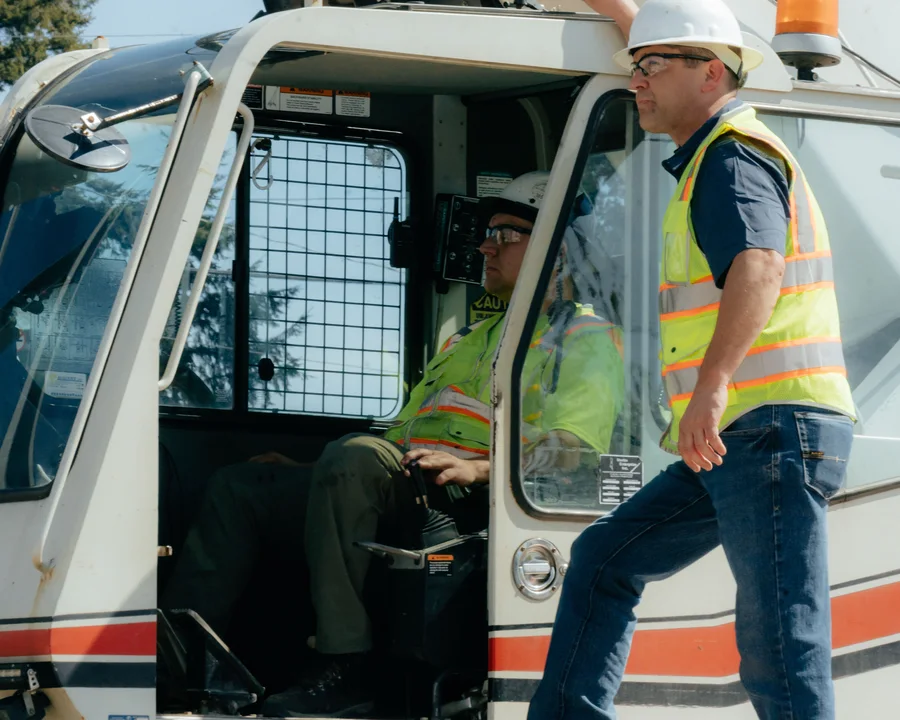
Vaults, transformers, tanks and heavy steel members picked up and set down once, on sites where a machine has nowhere to reposition.
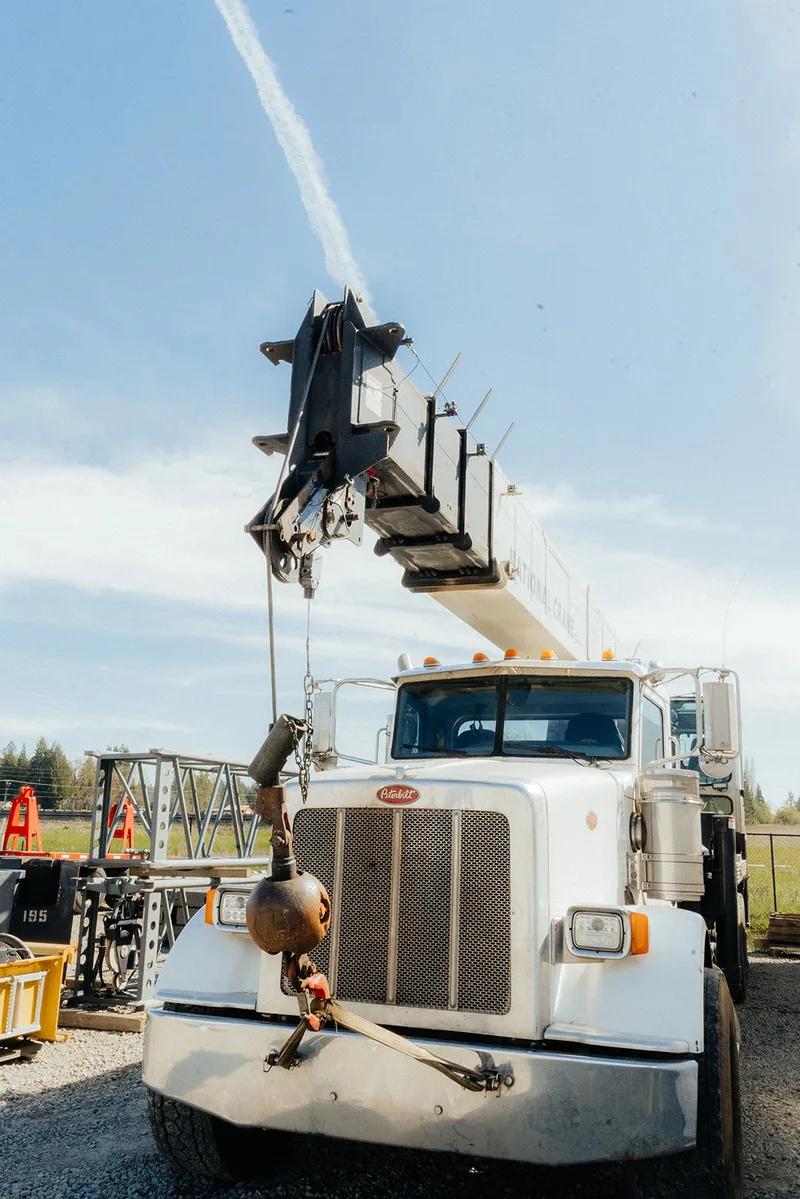
A sauna, spa or hot tub lifted across the roof and settled onto its pad, with fencing, gates and landscaping untouched.

Oregon City stands on two levels, a bench beside the Willamette and a basalt bluff above it, and that split is the first thing worth asking about. A load landing on the bench and the same load landing on the bluff take different approach roads and different setup ground, and a job on one level is often worked from the other. The address tells an estimator more than the weight alone can.
The older commercial blocks are a tight grid with narrow frontages and masonry walls close to the curb, so room to set up, rather than lifting capacity, usually picks the machine. Where one of those main streets is a state highway, holding a lane runs through the ODOT maintenance district covering that highway, and neither desk moves before drawings show what is being closed.
The rest is ground. Outriggers on a sloped street, a gravel shoulder, or fresh fill get matting, and the swing path is walked before a machine leaves. Photographs looking down the line the load has to travel, plus the weight and the radius, are what turn an address into a machine class.

Plenty of owners in Oregon City have already priced a metal building and then found nobody licensed to stand it up. Westmore is an Oregon registered commercial general contractor, so footings, anchor bolts, frame steel and exterior finish work are all carried by one company, with one crew answering for the sequence. A package already bought from a manufacturer is a normal place to start.
Steel erection is self-performed here, and the machine standing the frame up is owned by the outfit doing the erecting. That shows up on the schedule: the sequence follows the erection drawings instead of somebody else's equipment availability. Three owned classes, 55 through 350 tons, mean the heaviest piece on the plan chooses the machine, instead of the schedule bending to whatever happens to be free.
Slope ground changes the calendar before it changes the design. A parcel inside the mapped Geologic Hazards Overlay is governed by Municipal Code Chapter 17.44, which calls for a Geologic Hazards Checklist and a recorded Declaration of Covenant of Release and Indemnity, and those projects typically run a Type II land use process opening with a pre-application conference. The City's adopted Geologic Hazards Map settles whether a parcel is inside it.
A rooftop unit landed from a wide commercial lot and a structural pick squeezed off a bluff street can want different machines, so the class follows weight, radius, and the ground the outriggers land on rather than the piece alone.
The right size for HVAC units, hot tubs and spas, beams, and tight residential or commercial sites where a bigger crane cannot set up.

The workhorse for steel erection, precast and tilt panels, transformers, vaults, and rooftop equipment on commercial jobs.

Heavy and long-reach picks: generators, large mechanical equipment, and lifts that have to clear a building from the street.
One call covers crane size, the permit, and the schedule. Or send the basics below and we call back within 24 hours.
"Westmore Construction is a very honest and trustworthy crew. That is why we selected them as our general contractor and our pre-engineered metal building installer for our commercial project. They worked well with all the permitting staff, inspectors, and subcontractors. They worked hard to keep our project moving through the entire process and they cared about our timeline for completion. Plus, their entire team communicated well and timely. What more could you really ask for in a GC? I would highly recommend Westmore Construction and I would hire them again if we have a chance to develop another property in the future."
Google review
"Westmore is that perfect balance of cost vs what you get. They self perform their own work creating value there while delivering the project on time and on budget. These guys hustle, they have a great attitude, they're friendly, they never complain... they just get the job done. I would hire them again in a heart beat. This project scope was a building over 20,000 sq ft. They have the expertise to pull it off."
Google review
"Fast to work with me when I had a short notice crane pick request for downtown Portland. Yikes. No problem for these guys. They nailed the permit, traffic, and planning submittals in no time... They were safe, they worked fast... From the big boy 350 Ton to little boy crane needs - they are our team now."
Google review
Yes, on the bench beside the Willamette and up on the bluff above it. Two things decide it. One is the class of crane the pick needs, which follows from the weight and how far the boom must reach. The other is whether the machine has to stand in a public street, since a Rights-of-Way Street Permit governs that.
Yes, once the machine stands on public pavement. The Oregon City Public Works Department, Engineering Group issues Rights-of-Way Street Permits, and its published triggers cover temporary obstruction of a public street, which is what a crane on outriggers creates. A drawing of the work area goes in, and a traffic control plan when one is called for. On a state highway the closure falls to ODOT.
The Oregon City Building Division. It reviews commercial permits inside the city and accepts the majority of applications electronically, as PDFs by email. Westmore handles that submittal as the commercial general contractor instead of handing it back to the owner. If the parcel also sits inside the mapped hazard overlay, the Planning Division gets involved before the building permit does.
It turns a permit-counter timeline into a land use timeline. Development inside the mapped overlay is governed by Oregon City Municipal Code Chapter 17.44, which calls for a Geologic Hazards Checklist and a recorded Declaration of Covenant of Release and Indemnity, and those projects typically run a Type II process opening with a pre-application conference. Whether a parcel falls inside is read off the adopted hazard map.
The setup decides it, not the weight alone. A boom gives up capacity the further it stretches, so where a machine can plant its outriggers, and how far the load has to swing from there, sets the class. A pick worked off a wide bench lot can take the smallest class we run, while the same piece landed from a narrow bluff street moves up a size.
Yes, that is ordinary crane work. Machine choice comes down to the path the tub has to travel: how tall the fence is, what branches sit over the path, the ridge of the house it has to clear, and where the truck is allowed to park during the lift. One photo shot along that path usually answers all four. The crane arrives operated, rigging included.
Yes. Westmore carries Oregon CCB registration 234945, endorsed at Commercial General Contractor Level 1, holds a Washington contractor license, and insures both states at one million dollars in liability. Operators across the fleet hold NCCCO certification. Both license numbers can be checked on the state contractor lookups, and a certificate of insurance is available on request before work starts.
A West Linn, Canby, or Canemah parcel is crewed and quoted no differently than one inside the city limits.
Send the drawings for a building, or the weight and the radius for a lift, along with the Oregon City address and one photo down the swing path.
Battle Ground, WA
Fields marked * are required.
We call back within 24 hours. Prefer to talk? (360) 772-1040